Detailing Guides
Videos, articles, infographics and more on washing, polishing and ceramic coating.

Matte Finish Care
Articles and vides on how to maintain a matte finish car in its original appearance.


There is no single safe number of hours or days. What is in the water, how long it dwells, whether it bakes in the sun and how often water pools in the same place all affect how quickly a surface deposit can become an etching.

The duration a water spot has remained on paint is just one factor among many that determines whether a water spot will etch. Conditions like heat, sun exposure and the contents of the water spot all affect how damaging a water spot will be to the paint.
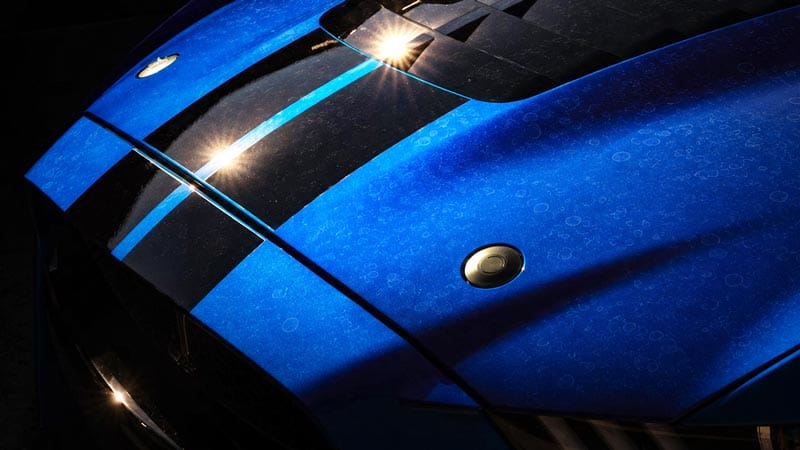
Knowing when a water spot will eventually etch the paint is a matter of understanding the different stages a water spot will go through before etching occurs.
Sitting on the paint
Water evaporates and leaves dissolved minerals or other impurities behind. The spot may still be a surface stain that is not bonded to the paint.
Bonded to the surface
Mineral deposits or chemical contamination can bake in the sun and bond with the surface. The spot remains a surface stain, but is getting closer to etching.
Etched into the paint
When hard water repeatedly dries in the same spot, hot sunlight creates a chemical reaction that eats away at the paint, leaving shallow crater(s) in the clear coat.
Factors that Accelerate Etching:

Free Printable Decision Tool
Use the decision guide to judge urgency using the source of the water, heat and sun exposure, dwell time and whether the same area is repeatedly getting wet.
 Classify the exposure as lower, moderate or high etching risk
Decide whether to monitor, clean promptly or inspect for etching
Separate a fresh deposit from a likely bonded or etched spot
Free PDF · Printable · Delivered by email