

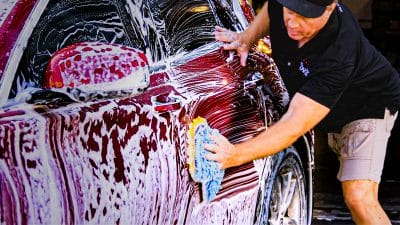

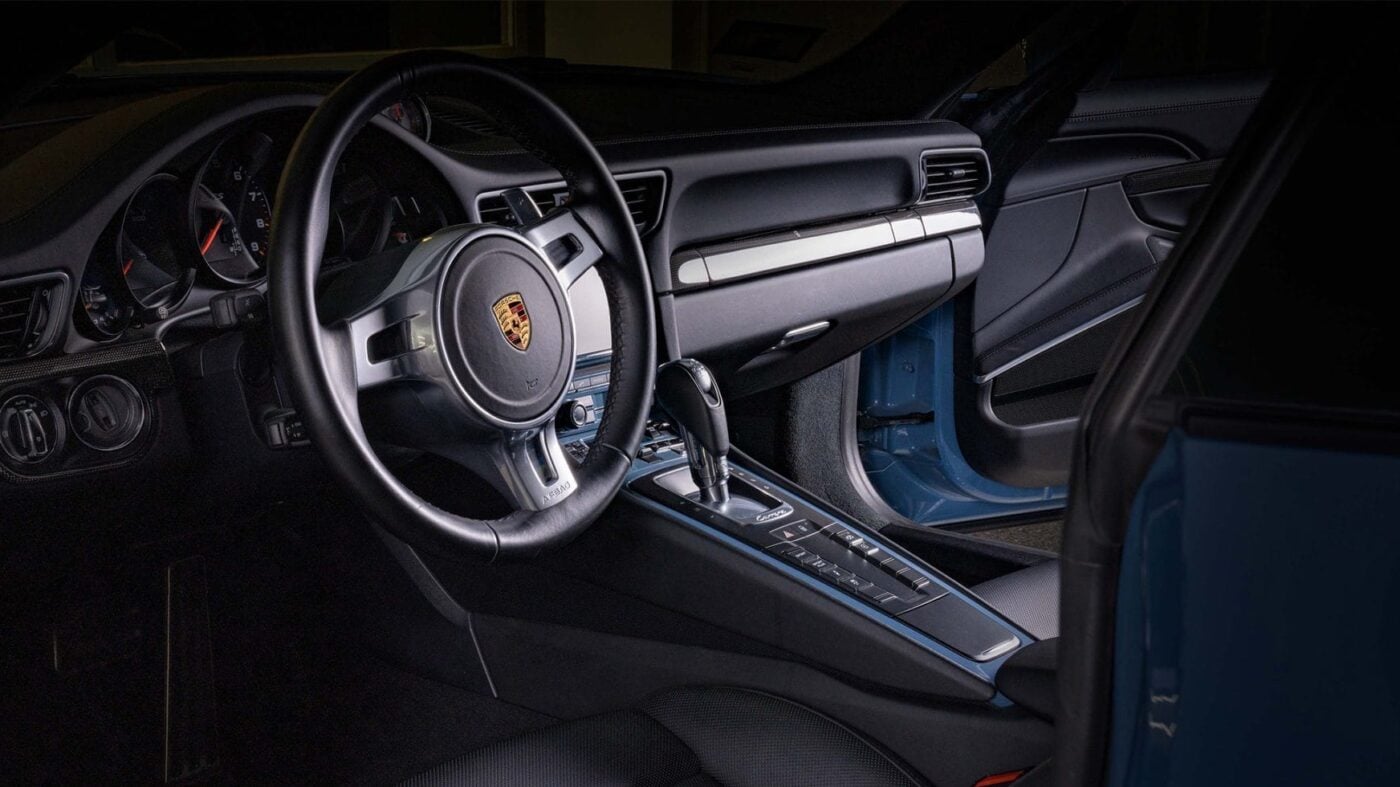
One question I heard a lot at Simon’s was, “How do I keep it looking like this at home?” I’d tell my customers to give their interiors a regular wipe-down between visits.
Sounds simple enough, but it got me thinking. Who wants to stop halfway across the dash to figure out which bottle to use on the console?
That’s what I had in mind when I formulated Interior Detailer Pro. You can go from the dash to the door panels, across the piano-black trim on the console, and right on to the coated leather seats, all with the same spray. It traps and lifts everyday dirt and grime and leaves behind ceramic protection without that greasy shine you get from some interior products.
Here’s how to clean your car’s interior and protect it in one simple routine.
Quick answer: You can keep your car’s interior looking freshly detailed at home. Apply Dr. Beasley’s Interior Detailer Pro to a clean microfiber towel and wipe the dashboard, trim, and other compatible surfaces one section at a time. For dirtier areas, you can apply it directly to a compatible surface if there are no electronics nearby. Finish with a clean, dry microfiber towel to remove any remaining product and leave a natural finish.
Before You Start
You don’t need much. A few clean microfiber towels will handle most of the job. Pair them with Interior Detailer Pro, our detail spray for interior plastic, coated leather, and piano-black trim. Start by removing loose dust and debris. Otherwise, you risk dragging those particles across the surface as you wipe.
Check the product label and your vehicle’s owner’s manual for compatibility, and test the product on an inconspicuous area first.
1. Shake Well and Choose How to Apply
Shake Interior Detailer Pro well before use.
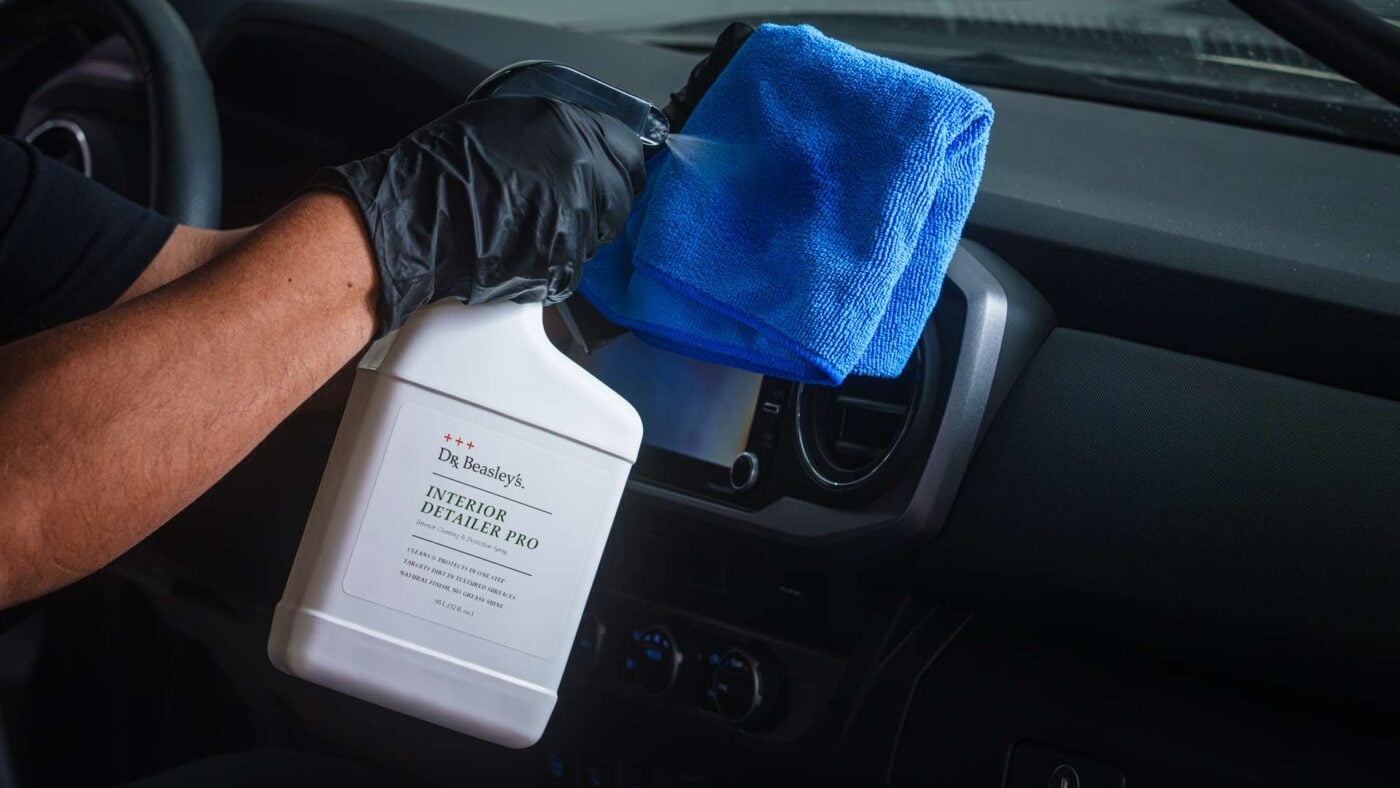
For dashboards, center consoles, and areas around electronic controls, I recommend spraying the product onto a clean microfiber towel.
Christyan Velasquez, our detail specialist, has been testing Interior Detailer Pro on vehicles at Simon’s. Here’s how he approaches those areas.
“When I’m working around dashboards, center consoles, or areas with electronic buttons and controls, I prefer spraying the product directly onto a microfiber towel. This gives me better control and helps prevent overspray around sensitive components.”
Christyan Velasquez, Detail Specialist at Dr. Beasley’s
For dirtier areas like door panels, plastic trim, or coated leather seats, Christyan takes a different approach.
When the surface is compatible and there are no nearby electronics or sensitive components, he prefers spraying directly onto the surface. This lets him work the product into areas where dirt and body oils have built up.
The rule is simple. Spray onto the towel when you need more control. For dirtier, less sensitive surfaces, direct application may be useful. Follow the directions on the product label.
2. Clean One Section at a Time
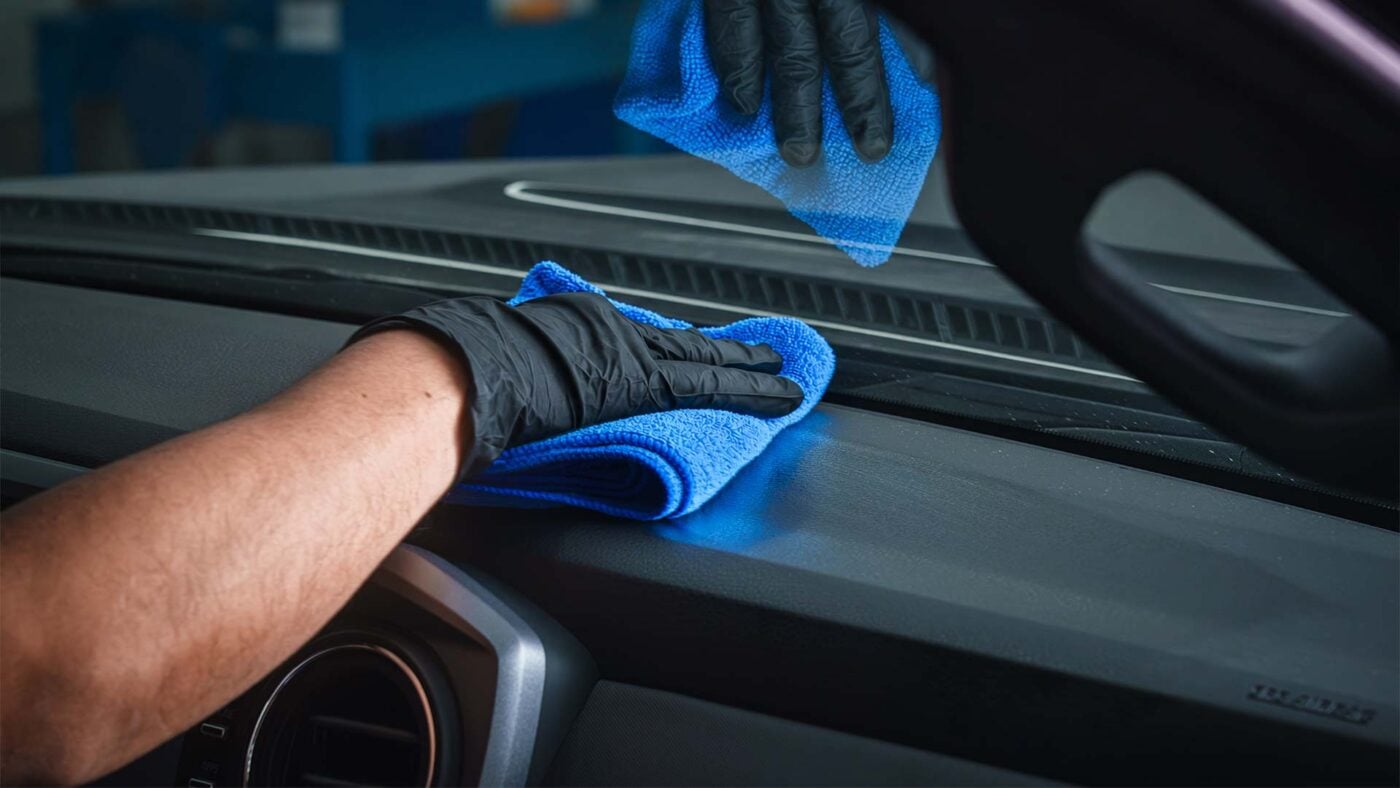
Work in manageable sections using light, even passes. Finish one part of the dashboard before moving to the next.
Pay attention to textured plastic, especially on door panels and center consoles. Dirt, skin oils, and everyday residue can settle into the fine grain, where a damp towel may not reach.
That’s where Interior Detailer Pro’s Microtexture Cleaning makes a difference. Its chemistry helps loosen and lift grime trapped in the grain so your towel can carry it away.
Christyan also pointed out something I think makes this product particularly useful.
“I don’t have to switch between different cleaners when working on a vehicle’s interior. I can use the same product on dashboards, door panels, plastic trim, center consoles, coated leather seats, and even piano-black surfaces.”
That’s the idea. You can move from one compatible surface to another without constantly changing products.
As you work, check your towel. If it’s visibly dirty, turn it to a clean side. When you’ve used all the clean sides, grab a fresh towel. There’s no point spreading the dirt you just removed onto another panel.
For Air Vents, a Brush Can Help
If you want to go a little further with your wipe-down, a soft detailing brush can reach between the vent slats and into corners your towel can’t quite get to.
Gently loosen the dust with the brush, then use a clean microfiber towel to pick it up and wipe away any remaining product. Keep liquid out of the vents and electronic controls.
You don’t need a whole collection of tools. For this extra step, a brush and a clean towel are all it takes.
3. Flip Your Towel and Check the Finish
Once you’ve cleaned a section, flip your microfiber towel to a clean, dry side and wipe away any remaining product.
This is another technique Christyan recommends. One side of the towel does the cleaning, while the clean side handles the final wipe.
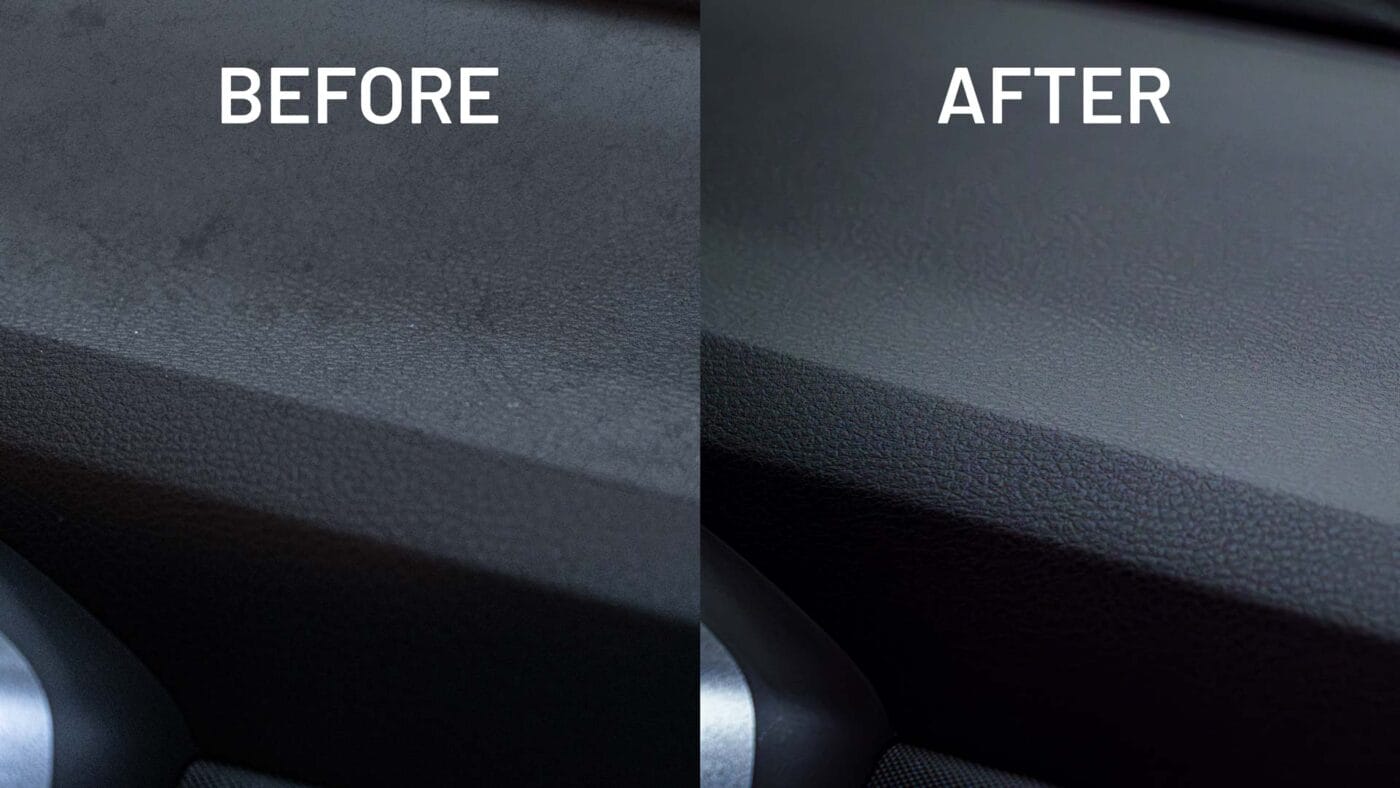
Now take a look at the surface in good light. You should see a clean, natural finish without an oily shine. The surface should feel clean, too, without any slickness.
That’s something customers bring up often at Simon’s. They want their interiors to look the way they did when they bought the car, without that heavy layer of dressing.
I formulated Interior Detailer Pro with that in mind. It cleans while leaving ceramic protection behind, so there’s no separate dressing step.
As Christyan puts it,
“The best part is that you’re not just cleaning. You’re also leaving behind a layer of ceramic protection that helps make future maintenance easier.”
4. Make It Part of Your Regular Routine
Interior Detailer Pro is designed for regular interior maintenance. If you’re dealing with a stubborn stain or a heavily soiled area, you may need a dedicated cleaner first. Once that’s taken care of, Interior Detailer Pro can help you keep the surface clean and protected.
The ceramic protection helps reduce grime buildup in the grain, making future cleaning easier. Regular use also refreshes that protection.
How often should you use it? That depends on how you use your car. Areas you touch every day, like door panels and the center console, may need more frequent attention than surfaces you rarely touch.
The goal is to make regular cleaning easier without having to do it more often than necessary.
A Few Surfaces That Need Something Different
Interior Detailer Pro works on several common interior materials, but some surfaces need different chemistry.
Do not use it on glass, Alcantara, suede, uncoated leather, or fabric.
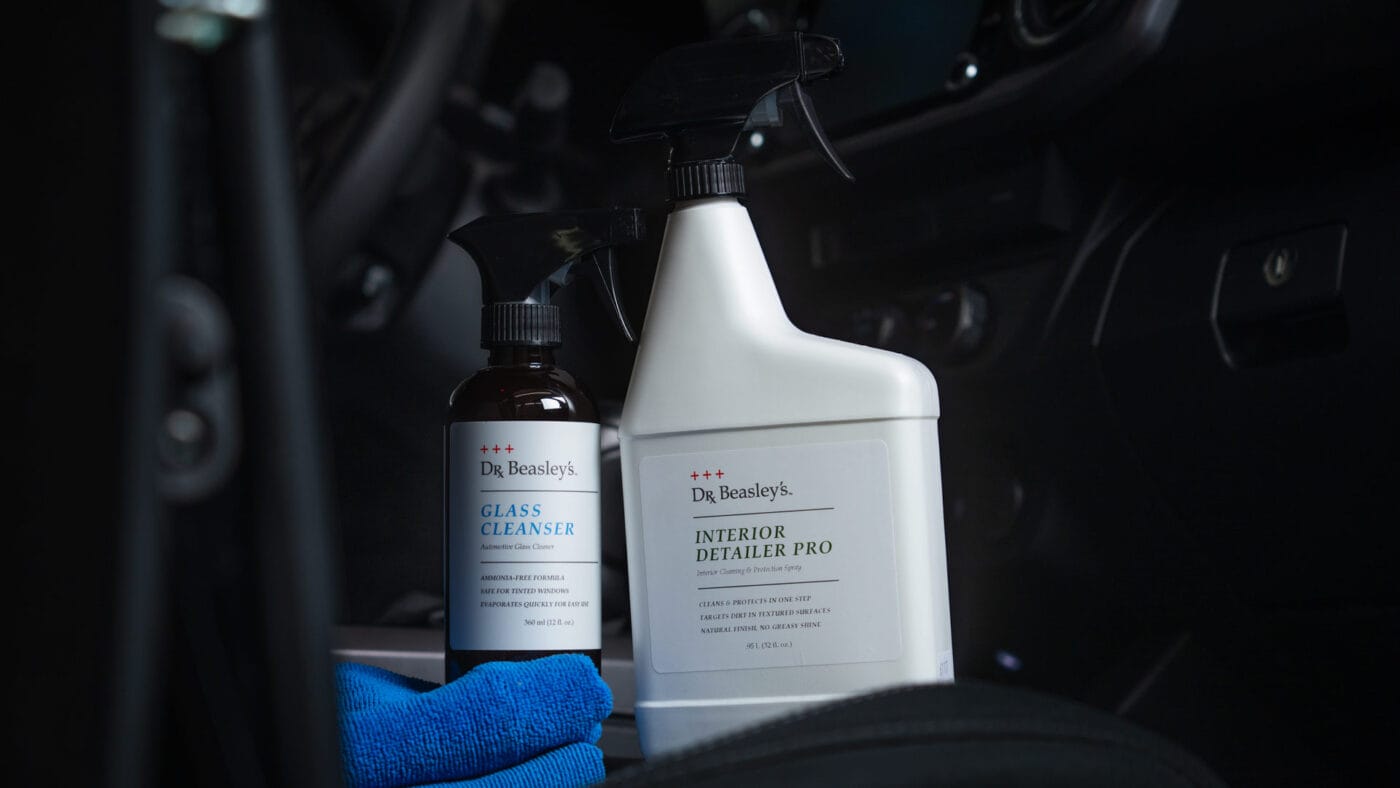
For vehicle glass, use Glass Cleanser. For navigation screens, use Glass IQ.
Once you know where one product can do more of the work, it’s easier to keep your routine simple.
Get Early Access to Interior Detailer Pro
Interior Detailer Pro officially launches November 27, but you can get access before Black Friday.
Our next round of early access opens November 23. Sign up below, and we’ll email you a link to the product page when early access opens.
When you buy a 32 oz. bottle of Interior Detailer Pro during our Black Friday launch, you’ll get a FREE 12 oz. bottle of Glass Cleanser and two FREE microfiber towels while supplies last.
I’ve always believed that good interior care should be straightforward. You don’t need to be a professional detailer or keep a dozen bottles on hand.
A few clean towels, the right technique, and chemistry that does more than one job can make a real difference. And that’s exactly what I wanted Interior Detailer Pro to deliver.
Questions? Comments?
Email Us