Last Updated July 9, 2026
If you have ever looked across a car’s paint under garage lights and noticed that the reflection looks wavy, bumpy, or slightly distorted, you may be looking at orange peel.
Orange peel is exactly what it sounds like: a paint texture that resembles the surface of an orange. Instead of reflecting light in a crisp, mirror-like way, the paint scatters the reflection across tiny highs and lows in the finish. The paint may still be glossy. It may still be clean. It may even be well protected. But the reflection will look uneven.
⚠️ Before You Start Polishing…
Paint correction feels intimidating until you understand the process. Our beginner’s guide to car polishing breaks down how to remove swirls and defects safely.
Go to Decision GuideThe important thing to understand is this:
Orange peel is not the same thing as swirl marks, scratches, oxidation, water spots, or contamination. It is a texture issue in the paint film itself.
That distinction determines how you fix it, and whether you should fix it at all.

What Is Orange Peel?
Orange peel is a pebbled, uneven texture in the paint or clear coat. It usually shows up as a distorted reflection rather than a visible stain or scratch.
On a smooth, well-leveled paint surface, a light, window, or overhead fixture should reflect clearly. On a panel with orange peel, that same reflection looks broken up, rippled, or blurry. The surface may look glossy from a distance, but up close the reflection lacks sharpness.
In detailing terms, orange peel affects what is often called “distinction of image.” That is the clarity of the reflected image in the paint. A car can have plenty of gloss while still having poor reflection clarity if the surface texture is uneven.
That is why orange peel can be confusing. The paint may look shiny, but not crisp.
What Causes Orange Peel?
Orange peel happens when the paint or clear coat does not flow out and level smoothly after it is sprayed.
Automotive paint is applied as droplets. Those droplets need to land, spread, and flow together into a uniform film. When that flow and leveling process is interrupted, the paint cures with a textured surface.
Common causes include:
- Paint or clear coat mixed at the wrong viscosity
- Reducer or hardener that flashes too quickly
- Spray gun pressure that is too high or too low
- Incorrect nozzle or spray gun setup
- Holding the spray gun too far from the panel
- Applying too much or too little material
- Spraying in temperatures that are too hot, too cold, or otherwise outside the product’s range
- Not allowing proper flash time between coats
- Poor airflow or drafts in the spray environment
- Surface preparation issues underneath the paint system
In simple terms, orange peel is usually a flow problem. The paint either does not have enough time, the right environment, or the right application conditions to level before it cures.

Is Orange Peel Normal on New Cars?
Some orange peel is common on modern factory paint. That does not necessarily mean the car was painted badly.
Factory paint is a balance of appearance, durability, cost, environmental regulations, production speed, and consistency. Automakers are not usually trying to create a concours-level, perfectly flat finish on every daily driver that leaves the assembly line. They are trying to create a finish that looks good, protects the vehicle, and can be produced consistently at scale.
This is why you may see orange peel even on brand-new cars. It is often more noticeable on darker colors because dark paint shows distorted reflections more clearly. It can also stand out more under fluorescent lights, LED inspection lights, or low-angle sunlight.
Repainted panels are another common place to find orange peel. If a body shop repaints a fender, bumper, door, or quarter panel, the new paint texture may not perfectly match the surrounding factory panels. Sometimes the repainted panel has more orange peel. Sometimes it has less. Either way, a mismatch in texture can make the repair more noticeable.
Is Orange Peel the Same as Bad Paint?
Not always.
Mild orange peel is often acceptable, especially on factory paint. Severe orange peel, however, can make the finish look hazy, cheap, or poorly repaired. The question is not simply, “Does the paint have orange peel?” The better question is:
How much orange peel is there, and is it worth removing?
That answer depends on the vehicle, the paint thickness, the owner’s expectations, and the amount of clear coat available to work with.
For most daily drivers, mild factory orange peel is not worth chasing aggressively. For a freshly repainted panel with heavy texture, it may be worth addressing with the body shop. For a show car, custom build, or high-end correction job, orange peel removal may be part of the finishing process.
The same defect can require three different decisions depending on context.

Can You Remove Orange Peel?
Yes, orange peel can be removed or reduced. But the real fix is not ordinary polishing. The real fix is leveling.
To remove orange peel, you have to abrade the high points of the textured paint surface until the surface becomes flatter. After that, the sanding or leveling marks must be refined through compounding and polishing until the gloss and clarity return.
That process can work beautifully when done correctly. It can also permanently damage the paint when done carelessly.
This is where the original question becomes more serious. You are not just “buffing out” orange peel. You are removing paint.
Can Polishing Alone Fix Orange Peel?
Polishing can improve how orange peel looks, but it usually will not remove meaningful orange peel by itself.
A polish or fine correction product can increase gloss, remove haze, clean up light defects, and make the paint look better overall. That can make orange peel less noticeable because the surrounding finish is clearer and glossier.
But polishing does not usually flatten the texture enough to truly remove orange peel. If the surface is visibly bumpy, you are dealing with a leveling problem. That means sanding, aggressive compounding, or a more deliberate paint correction process may be required.
For mild texture, a professional may be able to improve the look with a careful compound and polish. For heavier texture, the panel typically needs to be sanded flat, then compounded and polished. For very severe orange peel, especially on a repaint, the right answer may be to sand and respray the panel.

Why Orange Peel Removal Is Risky
The risk is simple: automotive clear coat is thin.
On a modern basecoat/clearcoat finish, the clear coat is the protective layer that gives the paint its gloss, depth, UV resistance, and environmental protection. Beneath it is the basecoat, which provides color but not the same gloss or protection.
If you remove too much clear coat, you can create several problems:
- Reduced UV protection
- Premature fading
- Clear coat failure
- Thin edges and body lines
- Dull spots where the basecoat is exposed
- A panel that needs repainting
This is why wet sanding factory paint should never be treated as a casual DIY correction method. Sanding removes paint. Compounding removes paint. Polishing removes a smaller amount of paint, but it still removes paint.
The question is not whether orange peel can be leveled. It can. The question is whether there is enough clear coat to safely level it.
Why Paint Thickness Matters
Before any serious orange peel removal, a professional should measure the paint.
A paint thickness gauge helps determine whether the panel has enough film build for aggressive correction. It can also reveal whether a panel has likely been repainted, whether one area is thinner than the rest, or whether a body line or edge needs to be avoided.

However, paint thickness gauges have limitations. Most common gauges measure total film build over metal. That total can include primer, basecoat, clear coat, and any previous refinish material. Unless you are using specialized equipment, the gauge may not tell you exactly how much clear coat is available.
That means the gauge is not a permission slip to sand. It is a decision-making tool.
A skilled technician uses paint readings, visual inspection, test spots, experience, and caution together. If the paint is thin, unknown, or inconsistent, the safest correction may be mild polishing only.
When You Should Leave Orange Peel Alone
For most daily drivers, the best answer is often to leave mild orange peel alone.
That may not be the answer an enthusiast wants to hear, but it is usually the most sensible one. If the orange peel is only visible under harsh inspection lighting, or if it does not bother you in normal daylight, there is little practical benefit to removing clear coat in pursuit of a perfectly flat reflection.
You should usually leave orange peel alone if:
- The vehicle has factory paint
- The texture is mild
- The paint readings are thin or unknown
- The car is a daily driver
- You are not prepared for the cost or risk of repainting
- The orange peel is only noticeable under close inspection
In those cases, the better approach is to improve the paint without trying to flatten it completely. Wash it properly. Decontaminate it. Polish lightly if needed. Protect it with a quality coating. Maintain it carefully.
That will not remove the orange peel, but it can make the entire vehicle look dramatically better while preserving the clear coat.
When Orange Peel Should Be Corrected
Orange peel is more worth correcting when it is severe, distracting, or the result of a repaint that should have been finished better.
Consider correction if:
- A repainted panel has obvious texture mismatch
- The reflection looks blurry from several feet away
- The paint looks cheap or poorly finished
- The vehicle is being prepared for show-level presentation
- The panel has enough clear coat or refinish material to safely level
- A professional has inspected the paint and confirmed a safe correction path
If the orange peel is on a recently repainted panel, start with the body shop. Heavy orange peel after collision repair or refinishing may be a workmanship issue. The shop may be able to sand and buff the panel, or they may need to respray it if the texture is too severe.
Do not rush to correct it yourself before speaking with the shop. Once you sand or polish the panel, you may complicate the warranty or repair conversation.

How Professionals Remove Orange Peel
A professional orange peel removal process usually follows a controlled sequence.
First, the paint is washed and decontaminated so the surface can be inspected accurately. Then the technician checks paint thickness, identifies repainted areas, studies edges and body lines, and determines whether the paint can safely be leveled.
Next comes a test spot. The test spot shows how the paint responds before the entire panel is touched.
If sanding is appropriate, the technician levels the surface with the least aggressive abrasive process that will achieve the desired result. The goal is not to remove as much paint as possible. The goal is to remove as little paint as necessary while improving the texture.
After the initial leveling step, the sanding marks are refined with progressively finer abrasives. Then the panel is compounded to remove the sanding marks. After compounding, the paint is polished to restore clarity and gloss.
Finally, the paint is protected.
That protection step matters. Once a panel has been leveled, compounded, and polished, you want to preserve the corrected surface and reduce the need for aggressive correction in the future.
Where Dr. Beasley’s Products Fit
A correction product does not magically remove orange peel. It has to be used as part of the right process.
For mild gloss improvement on paint with orange peel, a fine correction product can help clean up the finish and improve clarity without aggressively chasing texture. This is the conservative approach for many daily drivers.
For more serious correction, Dr. Beasley’s Nano Surface Primers can be used after the proper leveling step to refine the finish and prepare the paint for ceramic coating. The level of cut should be chosen based on the condition of the paint, the test spot, and the desired result.
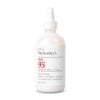
NSP 150 is the more aggressive option in the system and is appropriate when heavier correction is needed. NSP 95 is a fine cut primer for moderate defects like swirls, scratches, and oxidation. NSP 45 is the finishing primer used to refine gloss before coating.
The important point is this: do not present any polish, compound, primer, or ceramic coating as a shortcut around paint leveling. If the orange peel is texture, the texture has to be leveled to be removed.
After correction, a ceramic coating such as Nano-Resin can help protect the finish, increase gloss, improve hydrophobic behavior, and make future washing easier. But a ceramic coating does not flatten orange peel. It protects and enhances the surface that is already there.
Can a Ceramic Coating Hide Orange Peel?
A ceramic coating can make paint look glossier and better protected, which may make mild orange peel less distracting. But it will not remove orange peel.
Think of it this way: a coating follows the shape of the surface underneath it. If the paint is textured, the coating sits on top of that textured paint. It may improve the look, slickness, and protection, but it does not turn a bumpy paint film into a flat one.
That does not make coating useless. Quite the opposite. For many cars, coating is the smarter move because it improves the overall appearance while preserving the clear coat. But it should be described honestly.
A coating can enhance. It cannot level.
Should You Wet Sand Orange Peel Yourself?
For most people, no.
Wet sanding is not automatically wrong, but it is unforgiving. It requires the right abrasives, technique, lighting, thickness measurements, edge awareness, machine polishing skill, and judgment. It also requires knowing when to stop.
If you sand too aggressively, spend too much time on an edge, or fail to fully remove sanding marks, the repair can quickly become worse than the original orange peel.
If you are learning, practice on scrap panels first. Not once. Repeatedly. Learn how different paints respond. Learn how quickly edges heat up. Learn how sanding marks look before and after refinement. Learn how much work it takes to safely restore gloss.
Your car should not be your first practice panel.

What About Matte or Satin Paint?
Do not try to remove orange peel from matte or satin paint by sanding, compounding, or polishing it like gloss paint.
Matte and satin finishes depend on controlled surface texture to create their non-gloss appearance. Abrading or polishing them can create shiny spots that cannot be blended back in like normal gloss paint.
If a matte or satin panel has a texture issue, speak with a qualified matte paint specialist or body shop. The usual gloss-paint correction logic does not apply.
The Best Decision Path
If you are trying to decide what to do about orange peel, use this simple framework.
If the car has mild factory orange peel
Leave it alone. Improve the overall finish with safe washing, decontamination, light polishing if needed, and protection.
If the car has moderate orange peel but still looks good in normal light
Consider a conservative polish and coating. Do not chase a perfectly flat reflection unless you are willing to sacrifice clear coat.
If the car has severe orange peel on a repainted panel
Talk to the body shop. The panel may need to be sanded and buffed, or it may need to be resprayed.
If the car is being built for show-level presentation
Orange peel removal may be appropriate, but it should be done deliberately by someone who understands paint thickness, sanding, compounding, polishing, and finish matching.
If you are unsure
Do not sand. Get the paint inspected by a professional.
The Bottom Line
Orange peel is fixable, but that does not always mean it should be fixed.
To truly remove orange peel, you have to level the paint. Leveling means removing material from the surface. On factory paint, that material is your clear coat — the same thin layer that provides gloss, depth, UV protection, and long-term durability.
For most daily drivers, the better approach is to preserve the clear coat, improve gloss, and protect the finish. A careful polish and ceramic coating can make the paint look much better without taking unnecessary risks.
For severe orange peel, especially after repainting, sanding and polishing may be appropriate. In some cases, repainting is the correct answer. But that decision should be based on inspection, paint thickness, and the owner’s expectations — not frustration under garage lights.
Orange peel is not always a crisis. Sometimes it is just part of the paint. The art is knowing when to correct it, when to improve around it, and when to leave well enough alone.
Frequently Asked Questions
Is orange peel common on new cars?
Yes. Some orange peel is common on factory paint. It varies by manufacturer, model, color, panel, and production process. It is often more noticeable on dark colors and under strong inspection lighting.
Can orange peel be buffed out?
Minor texture may be improved with compounding and polishing, but true orange peel removal requires leveling the paint. If the texture is significant, normal polishing will mostly improve gloss rather than flatten the surface.
Does wet sanding remove orange peel?
Yes. Wet sanding or machine sanding can level orange peel when performed correctly. The sanding marks then have to be refined, compounded, and polished. This process removes clear coat, so it should only be done when there is enough paint to work with.
Is it safe to remove orange peel from factory paint?
Sometimes, but it is risky. Factory clear coat is thin, and most paint thickness gauges measure total film build rather than the clear coat alone. Heavy orange peel removal on factory paint should be handled very carefully, if at all.
Should I remove orange peel from my daily driver?
Usually, no. If the orange peel is mild and only noticeable under close inspection, preserving the clear coat is usually smarter than chasing a show-car finish.
Will ceramic coating remove orange peel?
No. A ceramic coating will not remove or flatten orange peel. It can improve gloss, slickness, hydrophobic behavior, and protection, which may make the paint look better overall.
When should a panel be repainted instead of sanded and polished?
If the orange peel is severe, if there is not enough clear coat to level safely, or if the defect is part of a poor repaint, the panel may need to be refinished instead of corrected.


I’ve got orange peel on my 2010 White Challenger and I’ve done some research. There are some inaccuracies as you report them. Repainting, sure if you messed up. 2500 grit sand paper followed by Machine Polishing by a three step procedure, such as Adam’s.
The whole affair is risky for an amatuer with out a paint guage and lots of practice on a junker. Here’s where you are correct: Is it worth it for a daily driver. For me no, I’ve learned not to look at the paint under the florescent lights in the garage. Outside, it’s not noticable. After sealer wax, the white paint glows, and no swirls.
Thank you for your comment, I agree I may have been a bit unclear… I added a few sentences to clarify.
As I stated, a wet sanding procedure (such as the one you mentioned) can be done to remove orange peel. This does, however, diminish the clear coat thickness significantly and does create scratches that polishes are only filling for the time being… this is why you end up seeing swirl marks down the road, no matter how good a polishing procedure is. If this weren’t the case, our cars would never have swirls in the first place.
The point I was making is that the only way to fully restore the finish to “perfect” factory-like quality and full clear coat thickness is by professionally repainting the affected area (whether it be swirls, orange peel, or etching that has hit the pigment layer). And because repainting isn’t something we look forward to, the only way to really keep your finish as close to factory-new as possible (based on thickness) is by keeping it protected at all times to avoid these problems. You seem to have a similar mindset seeing as you realize how great an albeit “imperfect” finish can look with a coat or two of wax.
Thanks again for reading and for contributing to the quality of our content.. I hope I clarified a little better this time around.
James
Thank you for the reply and clarification. I’ve been successful removing swirls and “scuffs” using a Porter Cable and a “Fine Machine Polish” on both a Black MDX and the White Challenger. It never lasts on Black as one drive through a car wash puts them right back on. The Challenger never sees the auto car wash and White is much more foregiving. However, only the owner loyalist is so critical of their paint, finish and protection.
Each pass with the Porter Cable does take the Clear Coat down, How much, I don’t know but would like to see the data on a factory finish American Car.
I plan on bringing it in to Simon’s for a wash and it would be interesting to see what the paint guage shows on the horizontal and vertical panels.
With all this said: James, you have my respect and attention!
agree. not everyone wiling to scarify the clear coat for the sake of mirror look effect..
dear James Detmer, kindly let me share this great info at my car detailing blog.thank you so much.
Reasonable description and advice… very well done!
I actually work in production paint and do this job 7 days a week working 12 hours a day fixing bad paint jobs for ford, gm, and Nissan let me tell you guys the sad truth when you buy your car off the lot with the factory paint it will have been painted 2 too 4 times and I will have sanded it and polished it out… The factory coat is never perfect and worrying about a good factory coat is just stupid. Your car goes through and electronic painting system unless it is too big or numbers are small enough then a batch painter can do it ( which your better off with than a robot doing it as a man can stop and correct vs a machine that will spray to thin or to thick and not care.)
Btw unless your car is pushing 60 grand and up don’t expect a good paint job and even then I’ve burned the smaller edges of a mustang window trim panel and still it sent out the door… Factory quality paint is a joke when it is a mass production car. But it isn’t just the production paint companies fault the car manufacturer’s allow a certain amount imperfection on a paint job.
Well although this pamphlet is already quite old i stumbled across it and have some remarks which need to be corrected as they are so blatantley wrong .
Bentleys and Ferraris and all other high priced / high end cars are actually less prone to orangepeel as they are flattened back after each single of up to 4 layers of clearcoat and then finally the car gets detailed/finished. So i wonder how you can conclude that these cars suffer mor of orangepeel. The other thing that is put wrong is that these High End cars are actually not Handpainted. put up a search on youtube and you can see that bentley and ferrari are robopainted. the only car manufacturer that still used handpainting was Aston Martin. Maybe McLaren
Sir,
I have a doubt in orange peel, I am doing in Bell electrostatic application in max atomization, high pressure condition facing orange peel. We are doing vertical paint application. Its due to manual error or equipment error or paint error. How to evaluate this?
Can you help on this
Recently I had a couple of my panels repainted due to a minor accident. I noticed that the fender has a fair amount of orange peel, but it’s only obvious if I look up-close, like 10-15cm away. It’s not noticeable when I am 2-3 feet away. I called up the bodyshop and they said they can buff it down, but it will take away a substantial layer of clear coat and the paint might look dull after a few months as it will have lesser UV protection due to the much thinner clear coat. I also consulted my detailer and he was strongly advising against wet sanding too. So I guess my only option now is to go through paint correction in the standard detailing and then apply ceramic coating. Hopefully it will further reduce the orange peel effect visually, like what you mentioned. It’s true that almost every car has some orange peel issue, regardless of whether factory painted or refinished. For me, the key consideration is that it should not be so bad to the extent that the paint looks blurrish. I also read somewhere that a panel which is fully corrected from orange peel will stand out starkly to the uncorrected neighboring panels with its “mirror-like” finish, not something desirable. But somehow, I am still disappointed that the painter wasn’t skilled enough to minimise the orange peel during the painting process.
Your recommendation after all that was simply “repaint”?…