


Last Updated July 1, 2026
A lot of people are skeptical of ceramic coatings, and I understand why.
They’ve been burned before.
Marketing makes ceramic coatings sound impervious. You hear it over and over:
“Years of protection!” “9H Hardness!” “Extreme water beading!”
And yet six months later, the gloss is gone, the finish is swirled and there’s no water beading to be seen.
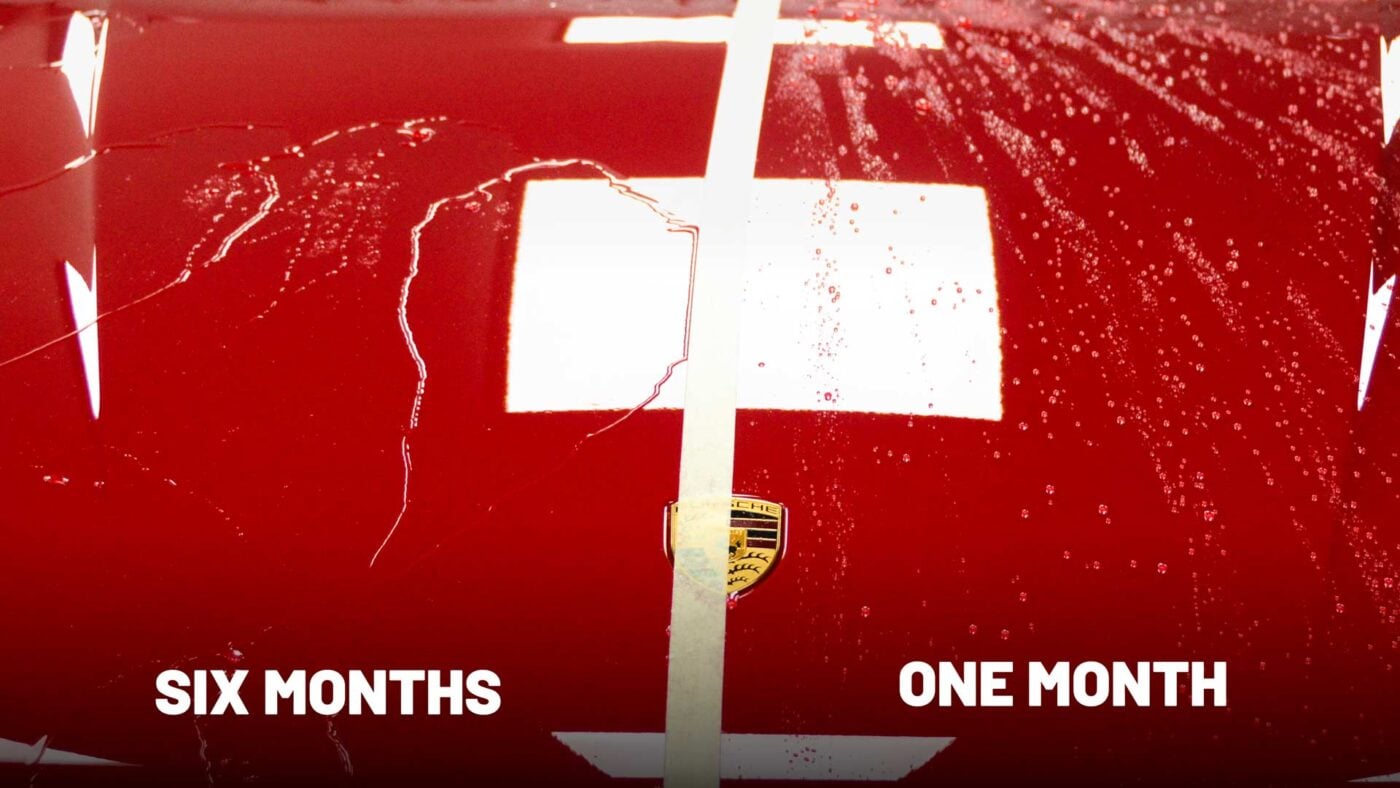
What’s going on? Aren’t these things supposed to last years, not months? Do ceramic coatings even work as advertised?
They do, under the right conditions. Coating failure isn’t random; it’s actually totally predictable.
The difference between expectations and reality probably comes from how coatings are described. Marketing terms don’t accurately explain the mechanics of how ceramic coatings hold up in real-world conditions. They emphasize dramatic claims over actual scientific understanding.
⚠️ Keep Your Coating Working Properly
A ceramic coating is only as good as how you maintain it. Follow our ceramic coating maintenance guide to learn the do’s and don’ts that keep your protection performing for the long haul.
Go to Decision GuideSo why do coatings fail? In order to understand, we need to explain the material science that dictates how they bond with the clear coat, and how they behave in real life versus the claims marketers make.
What Makes Ceramic Coatings Work?
In the context of automotive paint protection, ceramic coatings are thin films applied to the paintwork of a vehicle.[1][5]
Regardless of the type (graphene, self-healing, matte finish, etc) the function is the same: coatings act as a sacrificial layer for absorbing environmental exposure before it can affect the underlying clear coat.[1][6]
And because that layer bonds with the clear coat, it protects for longer than physical adhesion-based protection like waxes and sealants. Coatings don’t just sit on top like wax; they actually fuse with the clear coat.[4][7]
But that performance and durability doesn’t happen automatically. Ceramic coatings need to do four things in order to achieve that performance longterm:
- Fully Bond With Surface: Ceramic coatings need direct contact with the clear coat to bond properly, which means the surface has to be clean and free of oils, waxes, and contamination.
- Cure Into Stable Structure: Ceramic coatings need time to “build” their nanostructure by creating a tightly bonded network of polymer chains. This process is called “curing”. Exposure to water too soon can interfere with proper curing or cause surface defects. Ceramic coatings actually use moisture to cure, but they rely on small amounts from the air. If liquid water hits the surface too soon, it overwhelms the process, causing the coating to cure unevenly or incompletely in those areas.
- Resist Chemical Exposure: Harsh chemicals, especially strong acidic or alkaline cleaners, can wear down a ceramic coating nanostructure over time. More durable coatings are designed to resist this damage, so they keep working even with regular washing and everyday exposure.
- Maintain Structure: Ceramic coatings are constantly exposed to physical stress from washing, drying, temperature changes, and airborne debris. Over time, this repeated wear gradually thins and roughens the coating, reducing its performance.[1][3][6]
Why Ceramic Coatings Actually Fail
1. Applied to Contaminated Surface
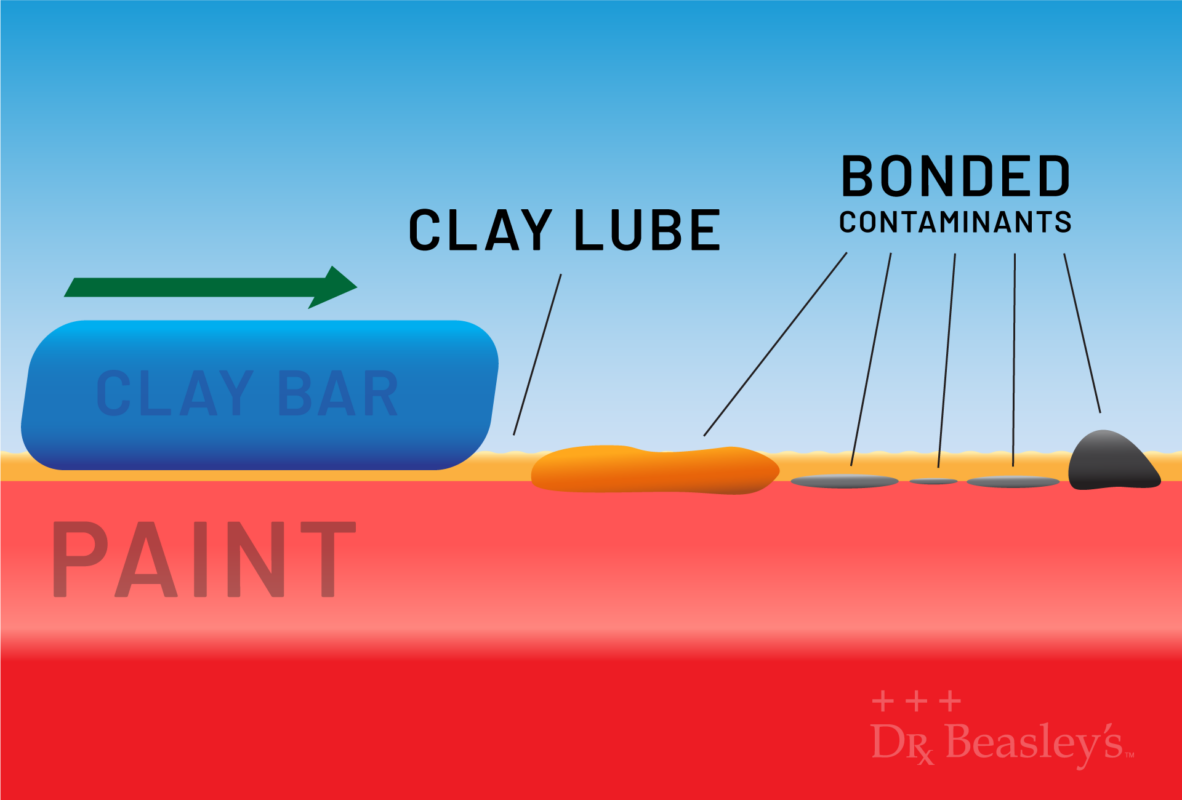
Ceramic coatings bond at the interface between the film and the clear coat. If that interface is blocked by a contaminating substance, the bond can’t form.[4][7]
Even when paint looks clean, it can still contain:
- polishing oils
- embedded contaminants
- thin residue films from previous products
That’s why professional detailers thoroughly clean the surface both before and after polishing. Ceramic coatings bond at a molecular level, and any residue left behind acts as a barrier that interferes with proper adhesion.
If contaminants or oils remain on the surface, the coating forms a weaker, less stable bond. As those residues degrade or are removed over time, the coating’s adhesion can fail prematurely.[4][7]
2. Coating Structure Too Weak
As a ceramic coating cures, it forms a connected structure across the surface. How strong that structure becomes depends on how tightly everything links together.[3][5]
When the structure is more tightly connected, the coating tends to be:
- More durable
- Better at blocking water and contaminants
- More resistant to chemicals and wear[3][5][6]
When it’s less connected, the coating is usually:
- Easier to apply
- More forgiving during installation
- But less durable over time[5][6]
How do you know if a ceramic coating is tightly or loosely connected? Look at the coating’s claims and instructions. Tightly connected coatings typically:
- Advertise long durability (multiple years)
- Claim strong chemical resistance
- Require stricter prep or curing conditions
On the other hand, coatings that emphasize quick application, wipe-on/wipe-off ease, and short cure times are typically less tightly connected. These weaker structures fail more easily.
3. Chemical Exposure Degrades Surface
Chemical exposure is one of the most common ways a coating fails after application. Vehicles are constantly exposed to:
- Alkaline soaps (especially strong degreasers)
- Acidic contaminants (bug remains, bird droppings, acid rain)
- Road salts (in colder climates)
- Mineral deposits (hard water spots)[1][6]
While these chemicals don’t always remove the ceramic coating, they damage the outermost surface. This changes surface chemistry:
- Hydrophobic behavior decreases
- Slickness is reduced
- Water behavior is inconsistent[6][8]
This type of degradation is more noticeable in coatings with higher organic content, which tend to be less chemically resistant.
More inorganic coatings are generally more resistant and degrade more slowly, but they are not immune to chemical exposure and can still lose performance over time.[5][6]
4. Real-World Stress Breaks Down the Film
Ceramic coatings don’t exist in a controlled environment. They operate in the real world, where the surface is constantly exposed to change.
Over time, coating films experience:
- Thermal expansion & contraction
Clear coat and coating expand/contract at slightly different rates, leading to stress at the interface - Friction from washing & drying
Even proper technique creates mechanical abrasion over time[1][3][6] - Airborne particle impact
Dust, sand, and road debris contribute to micro-abrasion[1][3]
Ceramic coatings that are too rigid (highly crosslinked, brittle):
- Can be less tolerant to stress and strain
- More prone to microcracking under extreme conditions[3][5]
While ceramic coatings that are too soft (lower crosslink density / more flexible):
- Wear faster
- Lower abrasion resistance[3][6]
Over time, these stressors cause coatings to develop:
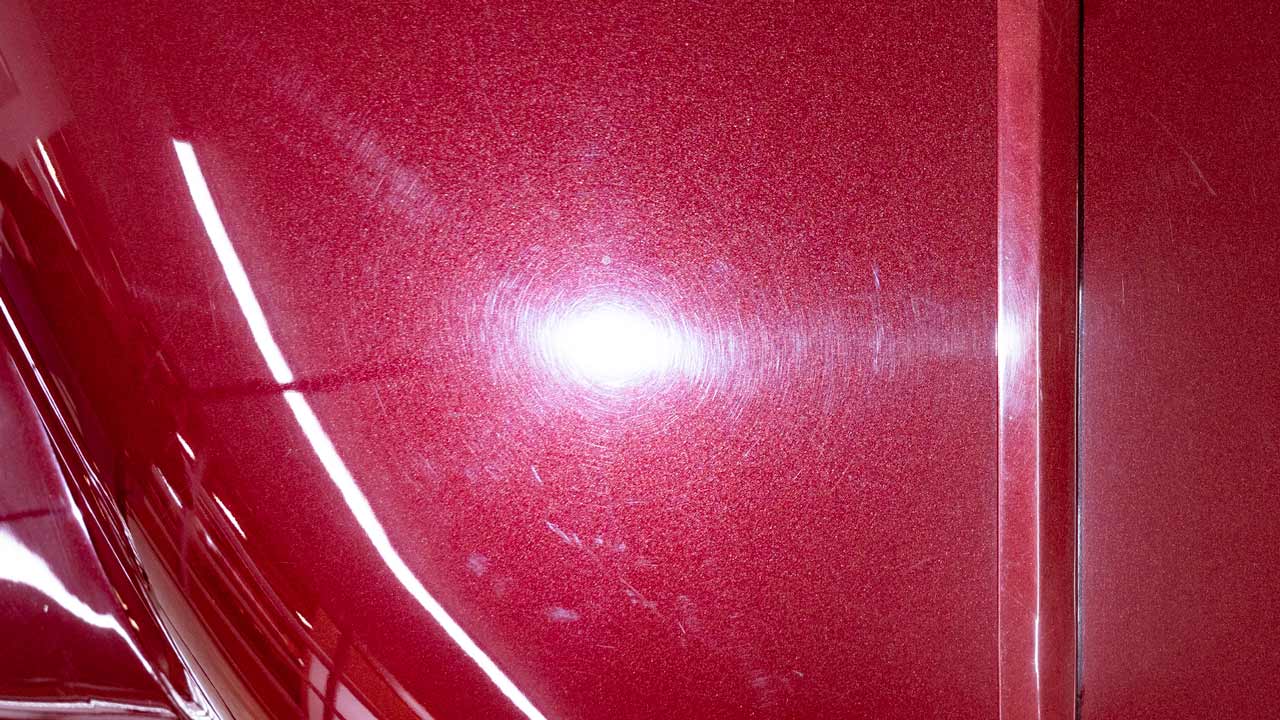
- Micro-marring
- Surface wear
- Minor structural degradation[1][3][6]
This contributes to:
- Reduced hydrophobicity
- Loss of slickness
- Thinning of the film
To put it simply: damage accumulates, the coating’s performance declines and eventually, when combined with other environmental factors, the coating fails.[1][3][6]
Aren’t Coatings Supposed to be Hard?
In ceramic coating marketing, hardness is often used as a proxy indicator for performance. Many people assume that a harder coating is more scratch resistant and more durable overall.
In reality? hardness is only one piece of the puzzle. It’s typically measured using pencil hardness testing, which evaluates scratch resistance under controlled lab conditions. [2]
This doesn’t directly translate to real-world resistance against:
- Wash-induced marring
- Friction from drying
- Repeated environmental stress[2][3]
Higher hardness can also come with tradeoffs. In some formulations, harder coatings are less flexible and may be more prone to microscopic wear or damage under thermal and mechanical stress.[3][5]
True durability is better understood as a coating’s ability to maintain its structure and performance over time under real-world conditions, not just its resistance to a controlled scratch test.[1][2][3]
Does No Beading Mean the Coating is Gone?
Another proxy indicator for coating performance? Water beading, or hydrophobicity.
Hydrophobicity (beading/sheeting) is often treated as:
- A visual indicator of coating health
- A shorthand for whether a coating is “working”
This is common in both marketing and user perception.
This isn’t always an accurate indicator of coating viability, however. Surface contamination can often inhibit hydrophobic properties even if the coating hasn’t failed outright.[6][8]
How much water is repelled from a surface depends on two things:
- Surface energy
- Contact angle[8]
Surface contamination can:
- Lower apparent contact angle
- Mask hydrophobic properties
- Create inconsistent behavior[8]
In these cases, the coating is still there; it’s just being covered up. After proper decontamination, the original behavior can often be restored.[6][8]
Other Factors That Affect Our Perception of Coating Failure
Coatings may degrade in the same way, but how they show up can vary based on specific conditions.
Common factors include:
- Paint Color: Darker surfaces reveal defects sooner. Coatings applied to white paintwork may appear to “last longer” because scratches aren’t as visible.
- Wash Frequency & Detergent Strength: Vehicles that are over-washed, especially with rough wash media or harsh soaps, tend to degrade more quickly.[6]
- Water Quality: Washing and rinsing your vehicle with hard water can lead to mineral deposits that can chemically degrade the coating surface.[6][8]
- Storage Conditions: The level of environmental wear is dependent on where the vehicle is. Garaged cars tend to see less wear due to lack of environmental exposure.[1][6]
These variations are largely driven by differences in environment and maintenance, although the coating’s formulation and application also play a role in how quickly these effects develop.[1][6]
What Should I Do If I Think My Coating is Failing?
If you think your coating might be failing, there could be more at play. It’s possible the issue can be repaired with cleaning, reinforcement or correction. Separate the perception from the mechanism by distinguishing between these scenarios:
Surface Contamination = Not Failed
The coating may still be intact, but its surface is masked by contamination. Proper decontamination can often restore hydrophobic behavior and overall performance.[6][8]
Degraded Surface = Reduced Performance (Not Always Full Failure)
The coating may be worn or chemically altered at the surface level. Light defects can sometimes be improved through polishing or by applying maintenance products that restore slickness and water behavior. However, these do not rebuild the original coating and may only provide temporary improvement.[1][6]
Structural Breakdown = Coating Failure
When the coating has been significantly worn away, chemically broken down, or has lost adhesion to the surface, it has failed. At this point, correction and re-application are necessary.[4][7]
Final Thoughts
Ceramic coating durability does not come from a single property. It comes from the entire system working together:
- proper surface preparation for adhesion
- crosslinked film structure that balances hardness and flexibility
- sufficient resistance to chemical and environmental stress
- maintenance that preserves functional performance over time
Coatings should not be judged as standalone products. Their real-world performance depends on the formulation, how they are applied, the conditions they are exposed to, and how they are maintained afterward.
Longevity should also not be treated as a fixed number.
A coating’s lifespan is better understood as a performance window shaped by climate, wash frequency, chemical exposure, and storage conditions.
UV radiation, temperature cycling, detergents, road salts, and mineral deposits all contribute to gradual degradation, often in combination rather than isolation.
As a result, the same coating can perform very differently from one vehicle to another depending on the full process of preparation, application, and maintenance.
The Bottom Line
Ceramic coatings do not fail unpredictably.
They degrade when:
- The bond to the surface is weak
- The internal structure is not robust
- The surface chemistry is altered
- The film cannot withstand real-world stress
They perform well when these variables are managed.
Understanding this shifts the focus away from evaluating coatings as standalone products and toward evaluating the system in which they operate.
Consistent performance is a function of that system, not the coating alone.
References
[1] Ohring, M. Materials Science of Thin Films
https://www.sciencedirect.com/book/9780125249751/materials-science-of-thin-films
[2] ASTM D3363 – Standard Test Method for Film Hardness by Pencil Test
https://www.astm.org/d3363-22.html
[3] Callister, W. Materials Science and Engineering
https://www.wiley.com/en-us/Materials+Science+and+Engineering%3A+An+Introduction-p-9781119405498
[4] Mittal, K. L. Adhesion Measurement of Films and Coatings
https://brill.com/display/title/12612
[5] Brinker, C. J. Sol-Gel Science
https://shop.elsevier.com/books/sol-gel-science/brinker/978-0-12-134970-7
[6] Jones, F. N. Organic Coatings: Science and Technology
https://onlinelibrary.wiley.com/doi/book/10.1002/9781119337140
[7] Kinloch, A. J. Adhesion and Adhesives: Science and Technology
https://link.springer.com/book/10.1007/978-94-015-7764-9
[8] Adamson, A. Physical Chemistry of Surfaces
https://onlinelibrary.wiley.com/doi/book/10.1002/0471746149
Questions? Comments?
Email Us