




Last Updated August 3, 2026
Every few years, the detailing industry finds a new “game changing” feature for ceramic coatings.
In the late 2010s, it was all about “9H” hardness.
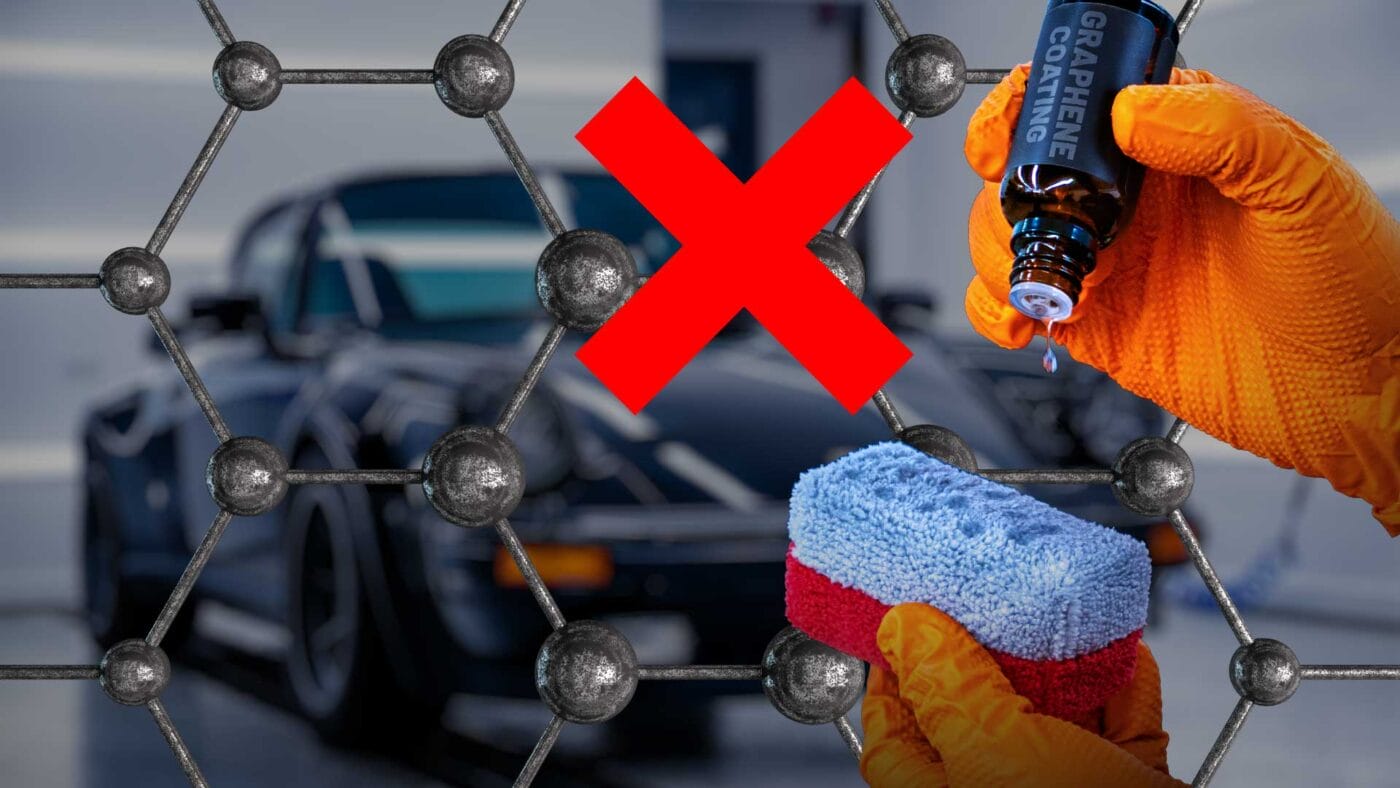
Now the new buzzword is “graphene”.
You see it on labels. You hear it in product launches. You read claims about “heat dissipation”, “anti-static behavior”, increased durability, superior protection.
So why aren’t we using graphene in our formulas?
You might assume it’s because we’re “different”. But it’s not about avoiding trends.
It’s scientific. And it starts with understanding what graphene actually is, versus how it’s currently used in automotive surface care.
What Graphene Actually Is (In Real Materials Science)
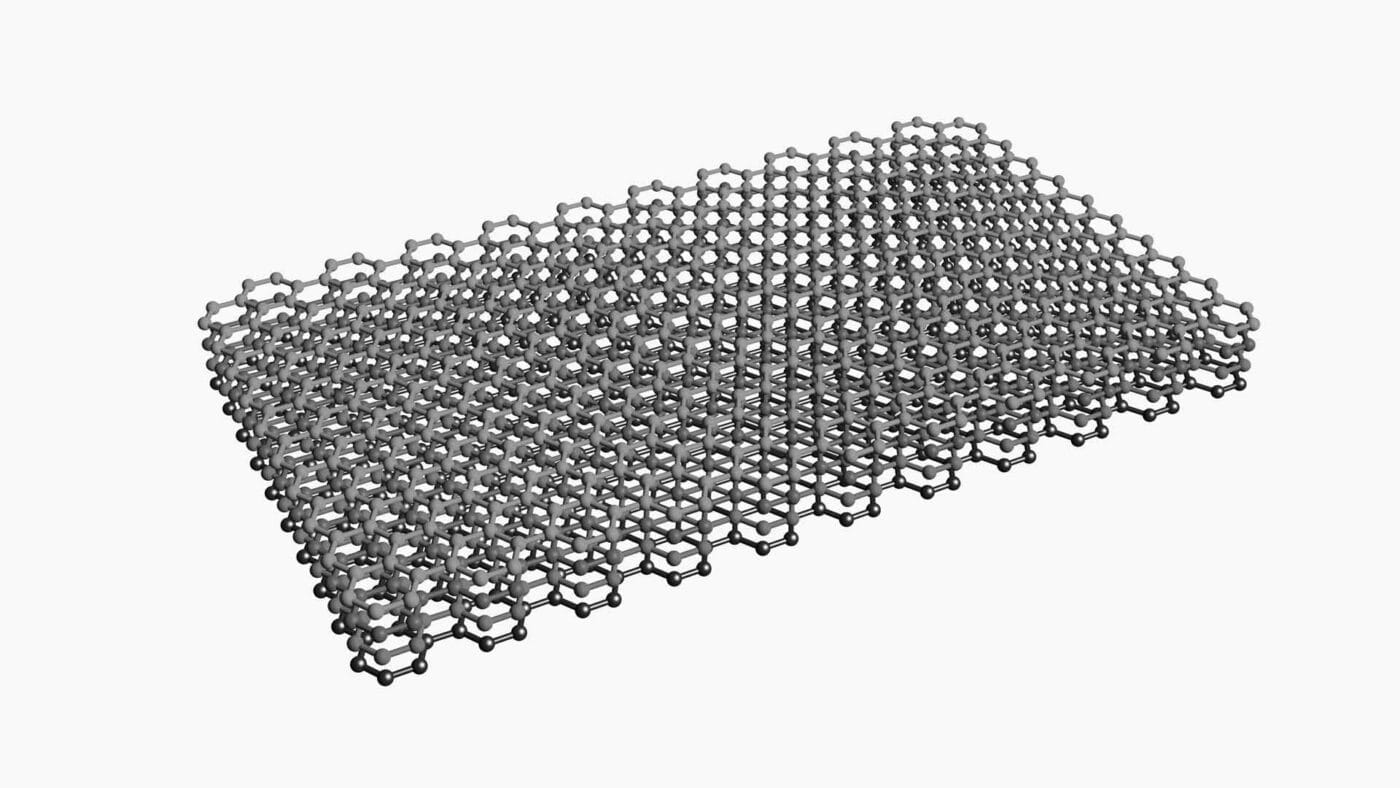
Graphene is a single layer of carbon atoms arranged in a two-dimensional hexagonal lattice.
In controlled lab settings, it exhibits exceptional properties: high tensile strength, chemical stability, barrier resistance to gas and moisture.
These properties are well-documented in the scientific literature, so it’s an active area of research for aerospace applications, corrosion-resistant coatings and advanced composites (Novoselov et al., Science, 2004; Geim & Novoselov, Nature Materials, 2007).
Here’s the problem: those amazing properties don’t automatically apply to consumer grade graphene ceramic coatings.
That’s because the graphene studied in research settings is not the same as graphene used in automotive ceramic coatings.
Why Graphene in Ceramic Coatings Doesn’t Work Like Laboratory Graphene
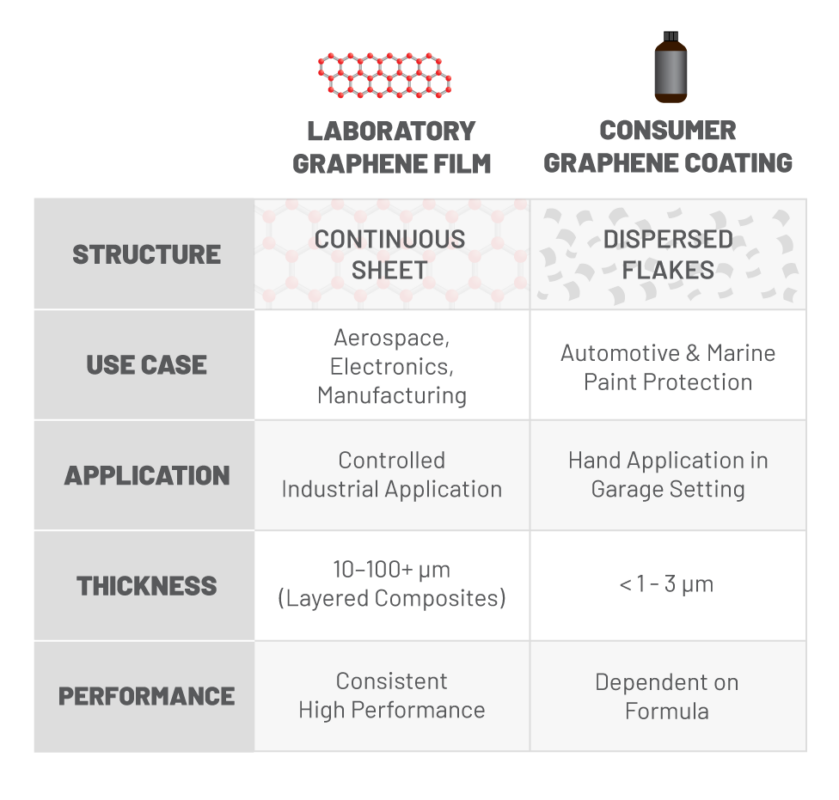
In order for graphene to exhibit the properties I mentioned earlier — heat dissipation, anti-static, etc — it needs to be in the form of a pristine, continuous graphene sheet.
Graphene ceramic coatings do not apply a continuous graphene sheet to automotive paint.
Instead, graphene ceramic coatings use:
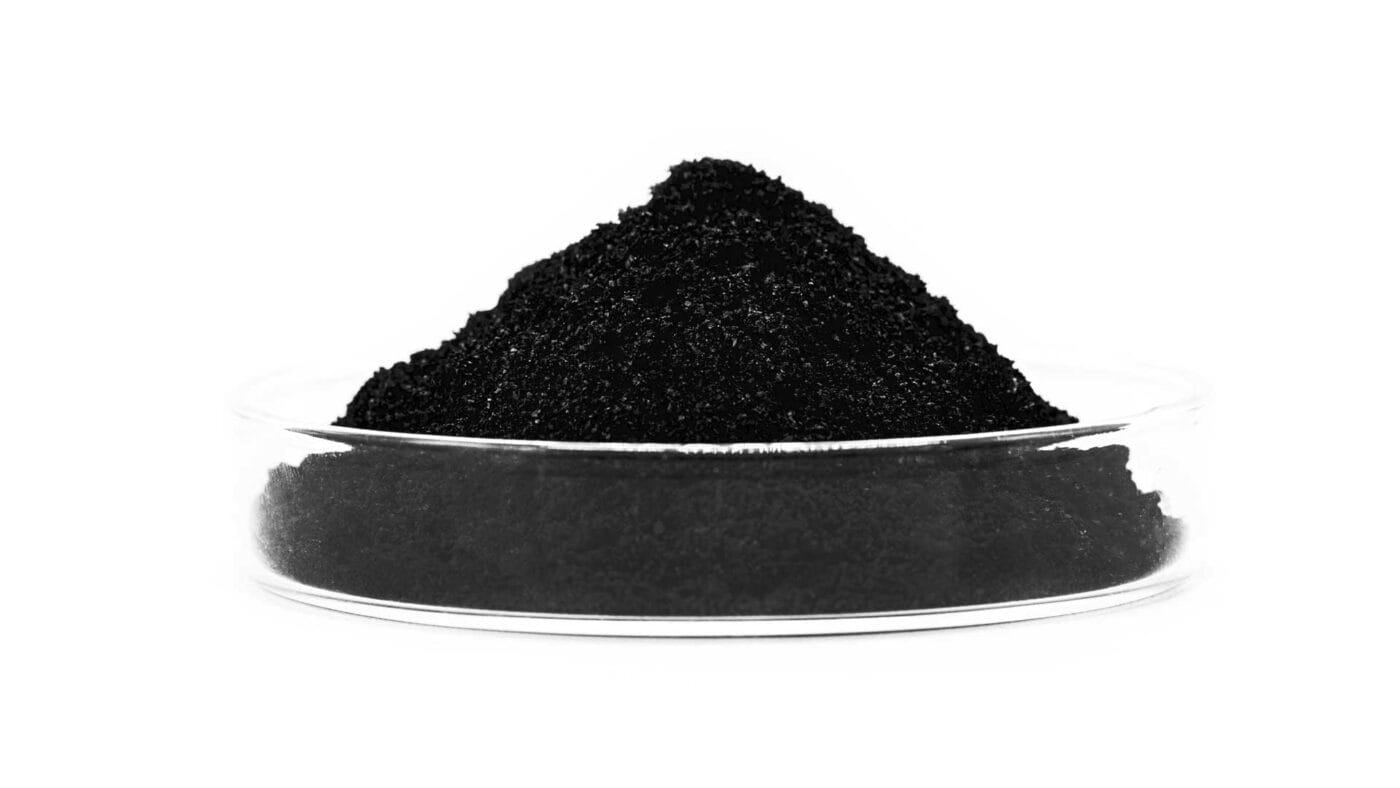
• Graphene oxide (GO)
• Reduced graphene oxide (rGO)
• Graphene nanoplatelets as fillers in polymer matrices
These are graphene derivatives, incorporated as nano-additives into the ceramic coatings.
This is because coating research has proven structural films are infeasible for ceramic coatings due to scalability and process constraints (Papageorgiou et al., Progress in Materials Science, 2017; Singh et al., Coatings, 2020).
This distinction is critical.
Dispersed nano-additives do not behave like a continuous graphene lattice.
Once fragmented and suspended in a liquid formulation, graphene additives lose the amazing protective properties observed in lab settings.
Why Don’t Graphene Additives Work Like Graphene Sheets?
The major problem scientists face in formulating automotive graphene ceramic coatings is maintaining stable dispersion.
Nanosheets made from graphene additives like graphene oxide tend to re-stack and cluster due to van der Waals forces between layers. This poor dispersion and aggregation cause issues like:
- Structural Defects
- Reduced Barrier Performance
- Permeation Pathways for Contaminants
In short, improper dispersion makes a coating less uniform, not more protective. (Jena et al., ScienceDirect, 2022).
From a formulation standpoint, that creates variability. And variability is the enemy of repeatable protection, which you need for mass-produced ceramic coatings.

Laboratory Coatings vs. Consumer Wipe-On Coatings
Another issue is film architecture.
Graphene coatings studied in academic literature are often:
- Multilayer engineered coatings
- Thick composite films
- Applied through controlled deposition methods
- Cured under tightly controlled conditions
That is fundamentally different from an ultra-thin, wipe-on automotive coating that is applied by hand in a garage, driveway, or shop environment (MDPI Coatings Review, 2020; Rafiee et al., ACS Nano, 2009).
So even when graphene performs well in an engineered lab coating, that does not mean the same result carries over to a consumer detailing product.
That’s not speculation. It’s a reality of how graphene is processed and scaled.
⚠️ Before You Apply a Ceramic Coating…
Thinking about protecting your paint with a ceramic coating but not sure where to start? Walk through everything you need to know with our DIY ceramic coating application guide, from prep work to final cure.
Go to Decision GuideThe Myth of Automatic Durability Gains
A common assumption is that adding graphene automatically makes a coating more durable.
But graphene-polymer composite research shows that any improvement depends on factors like:
- Filler loading percentage
- Dispersion quality
- Matrix compatibility
- Cross-link density of the base resin
In other words, graphene does not create durability by itself. The surrounding chemistry still has to do the real work (Papageorgiou et al., 2017; Tang et al., 2023).
Graphene additives function more as a marketing differentiator than meaningful structural reinforcement.
And in the low concentrations used in many consumer products, graphene additives function more as a marketing differentiator than a meaningful structural reinforcement.
If the base coating chemistry is already well-optimized, adding a small amount of graphene does not necessarily produce measurable long-term gains in real-world exposure.
Visuals Matter, Too
There is also the issue of appearance.
Graphene derivatives are carbon-based and naturally dark in color.
Coating studies note that graphene fillers can affect film clarity and optical behavior depending on concentration and dispersion quality (Tang et al., Coatings, 2020).
For a product designed to protect beautiful automotive paint, this matters. A lot.
When it comes to cars, protection should never come at the cost of clarity, reflectivity, or color neutrality.

How We Evaluate New Materials & Technologies
When we evaluate a new material or technology (including graphene) we don’t ask if it’s trending.
We ask:
- Does it improve bonding?
- Does it improve chemical resistance?
- Does it improve longevity in both controlled and uncontrolled environments?
- Does it increase formulation stability?
- Does it produce consistent film formation?
If a material adds dispersion complexity, alters appearance, or offers only marginal real-world performance gains, it does not meet our standard.
Why Advanced Polymer and Ceramic Systems Are More Predictable
Well-engineered polymer and ceramic coating systems form continuous, cross-linked protective networks.
That makes their behavior more predictable, more uniform, and more repeatable from batch to batch.
These systems also have decades of real-world validation across automotive, marine, and industrial surface protection.
Graphene additives, by contrast, are still being actively studied for long-term coating integration, stability, and scalable performance in composite systems.
We’re Not Against Graphene — We’re Against Hype
Graphene is a legitimate material with real potential in engineered coatings, corrosion control, and advanced composites.
The scientific literature supports that.
What the literature does not support is the idea that simply adding graphene particles to a consumer ceramic coating automatically creates a superior protective system.
That’s wishful thinking at best, and mindless hype at worst.
The Bottom Line
We do not exclude materials or technologies because they’re new.
We exclude them when they do not produce measurable, repeatable performance advantages in real-world applications.
Right now, graphene additive systems in automotive ceramic coatings don’t live up to the hype. Their dispersion challenges, structural inconsistency, optical side effects and limited evidence of superior durability can’t be ignored.
Until those limitations are overcome in a way that materially improves bonded protection, we will continue to prioritize chemistries that are proven, stable, and predictable.
Not because graphene sounds impressive.
But because performance has to be demonstrated, not implied.
That standard applies to every formula we make. And it always will.
References (Scientific & Materials Science)
Novoselov, K. S. et al. (2004). Electric Field Effect in Atomically Thin Carbon Films. Science.
Geim, A. K., & Novoselov, K. S. (2007). The Rise of Graphene. Nature Materials.
Questions? Comments?
Email Us