

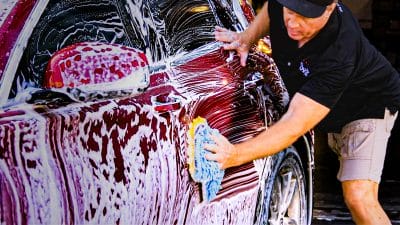

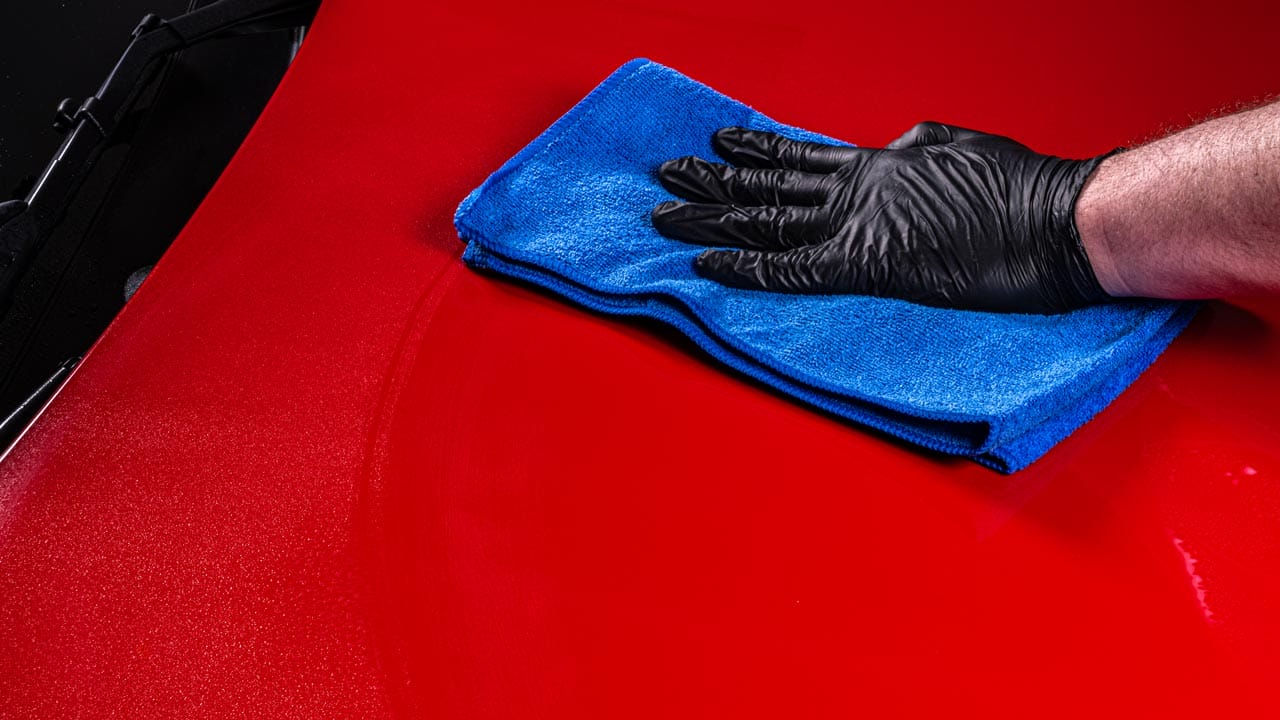
Drying a vehicle is often perceived as a quick, final step after washing with little risk.
It is not. Drying is actually one of the highest risk steps in the wash process if your goal is maintaining paint clarity and preserving the clear coat long-term.
Although they are often called “wash marks”, most swirl marks, light marring, and fine scratches are not inflicted during the wash step.
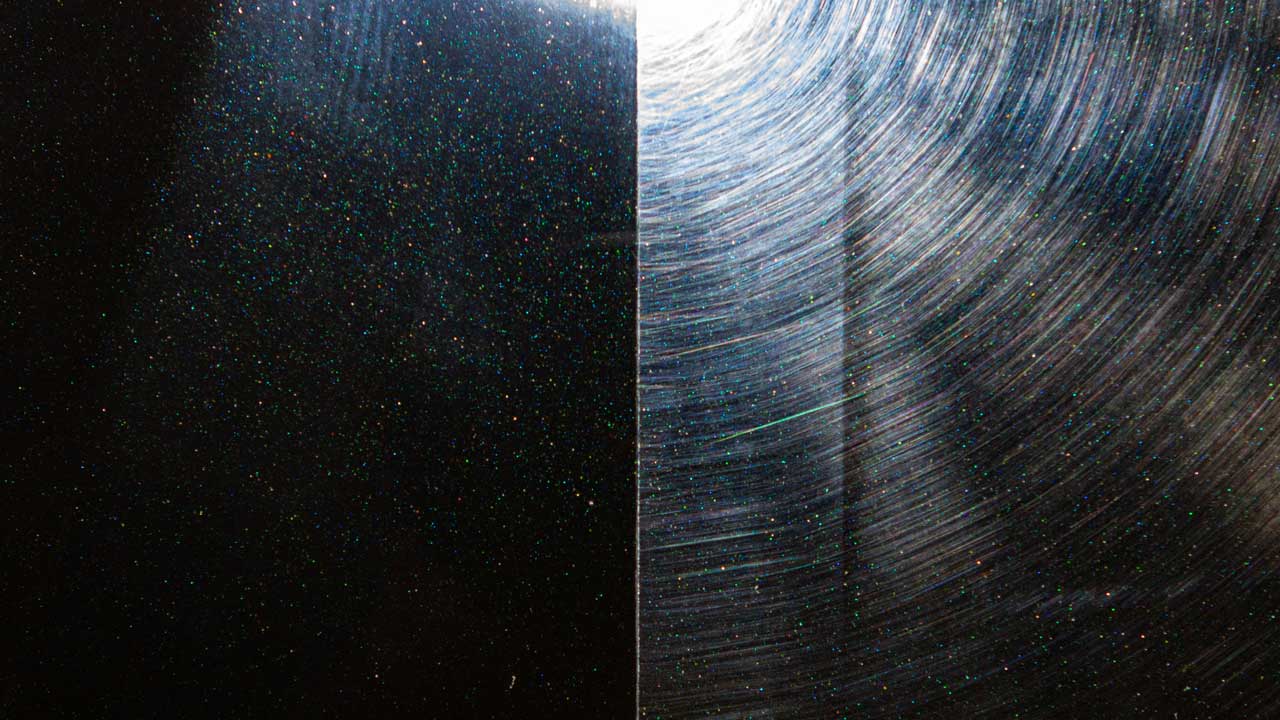
Rather, they are introduced during the drying step. With no soap left to lubricate the paint, towels make direct contact with the surface, increasing friction, abrasion and therefore scratches.
If your goal is to maintain clarity, reduce how often you polish, and preserve the clear coat protection overall, you need to approach drying as a controlled, intentional process as opposed to a quick finishing task.
In this guide, I’ll explain why drying can cause scratches, how friction and paint damage happen from a surface science perspective, contact-free wash methods and a complete drying process that minimizes paint damage.
Why Drying a Car Can Cause Scratches
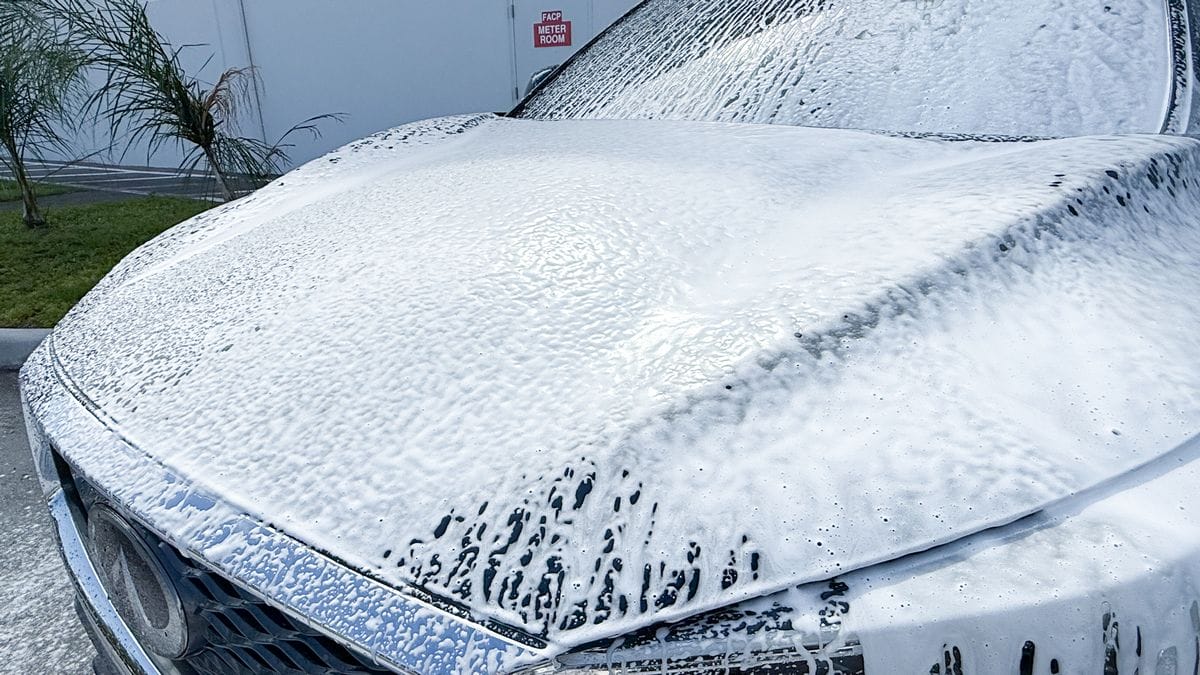
During the wash step, soap and water lubricate the surface. Surfactants in the soap surround and lift dirt so less friction is required to remove it.
Drying removes that lubrication layer.
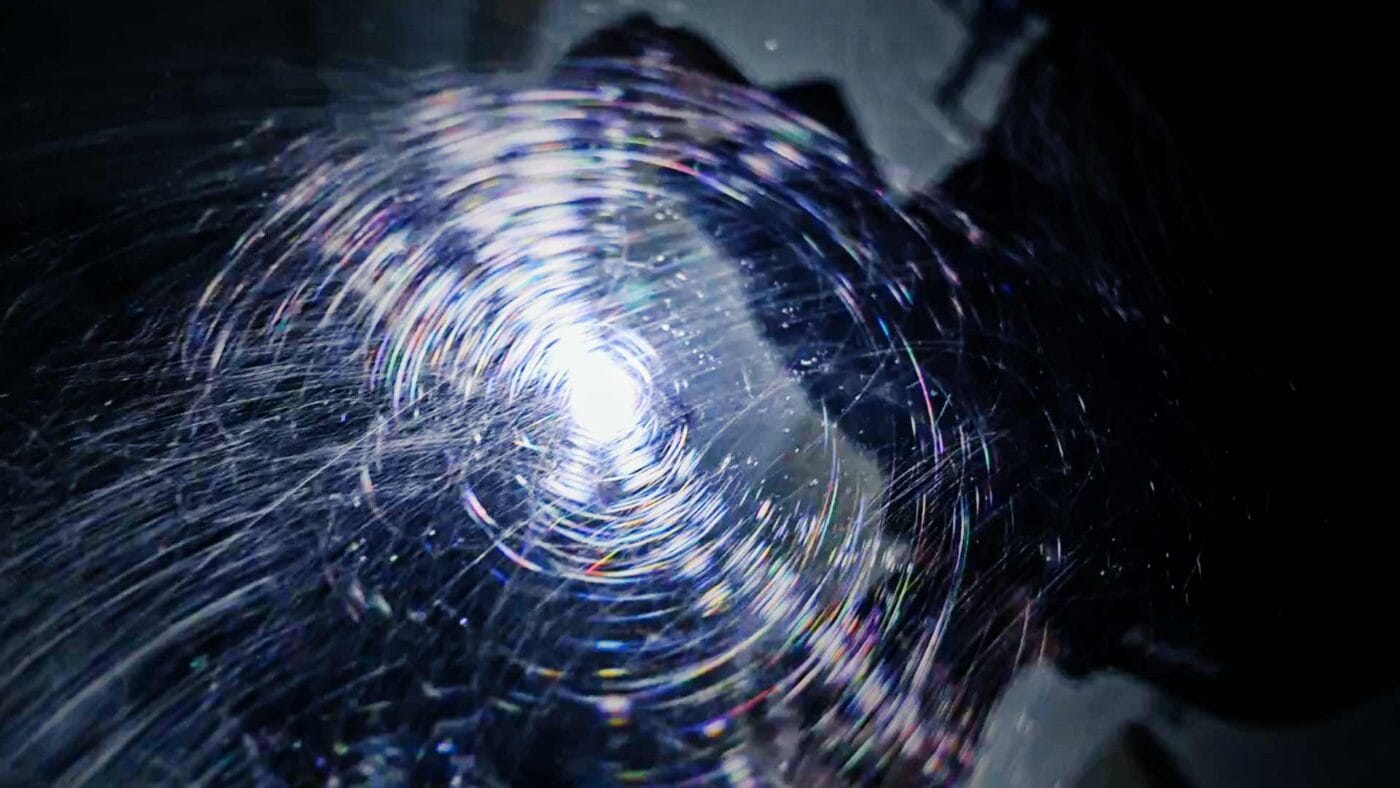
With lubrication removed, your towels contact the paint directly. Any residual contamination (even microscopic particles) can be picked up by the towel and dragged across the paint, inflicting scratches.
That may sound surprising, but after a wash—even if you’re careful—invisible bits of grime can still be left behind. That is why, after all, paint needs to be decontaminated before polishing.
It is for this reason a vehicle can look totally flawless while wet, then reveal uniform light marring when dried and viewed in direct sunlight. For the most part, it’s from towel drying.
The Science Behind Paint Damage During Drying
Clear Coat Is Softer Than You May Think
The clear coat featured on modern cars is engineered for durability, but that does not make them impervious. While clear coat hardness differs depending on the manufacturer, for the most part, clear coat is softer than you realize.
Particles like fine dust, silica and even mineral residue are harder than clear coat and will inflict scratches if caught by a towel fiber and rubbed against the paint.
Friction, Pressure, and Particle Movement
Scratches from drying are by-products of three factors: friction, pressure, and particle movement.
First, friction. Friction is the force resisting the motion between two solid surfaces. Friction is low when lubrication exists between the two solid surfaces. When lubrication is removed, as it is by drying, friction increases.
Second, pressure. As towels absorb water, they become heavier, increasing the downward force on the surface, regardless of how gently you press.
Third, particle movement. Residual contamination gets caught in the towel fibers and dragged across the paint, making even the softest towels abrasive.
This is why scratches can be inflicted even without aggressive friction. It is the repetitive, low-level friction over time that causes swirl marks — not wash mitt scrubbing.
Why Towel Saturation Changes Behavior
A dry towel does not interact with the paint in the same way a water-saturated towel does.
When a towel fills with water, its fiber structure collapses. This reduces absorption and prevents the fibers from entrapping particles. Instead, particles remain on the upper surface of the towel, grinding into the paint as the towel is moved over the panel.
This is why you should never use one towel to dry an entire vehicle, especially on lower panels where more residual contaminant particles can be picked up.
Drying Methods: Towels, Air, and Other Options
Microfiber towels are the most common drying tool, but they are not the only option. Each drying method manages friction, contact, and water removal differently, and those differences affect how severely fine scratches are inflicted.
Forced Air Drying
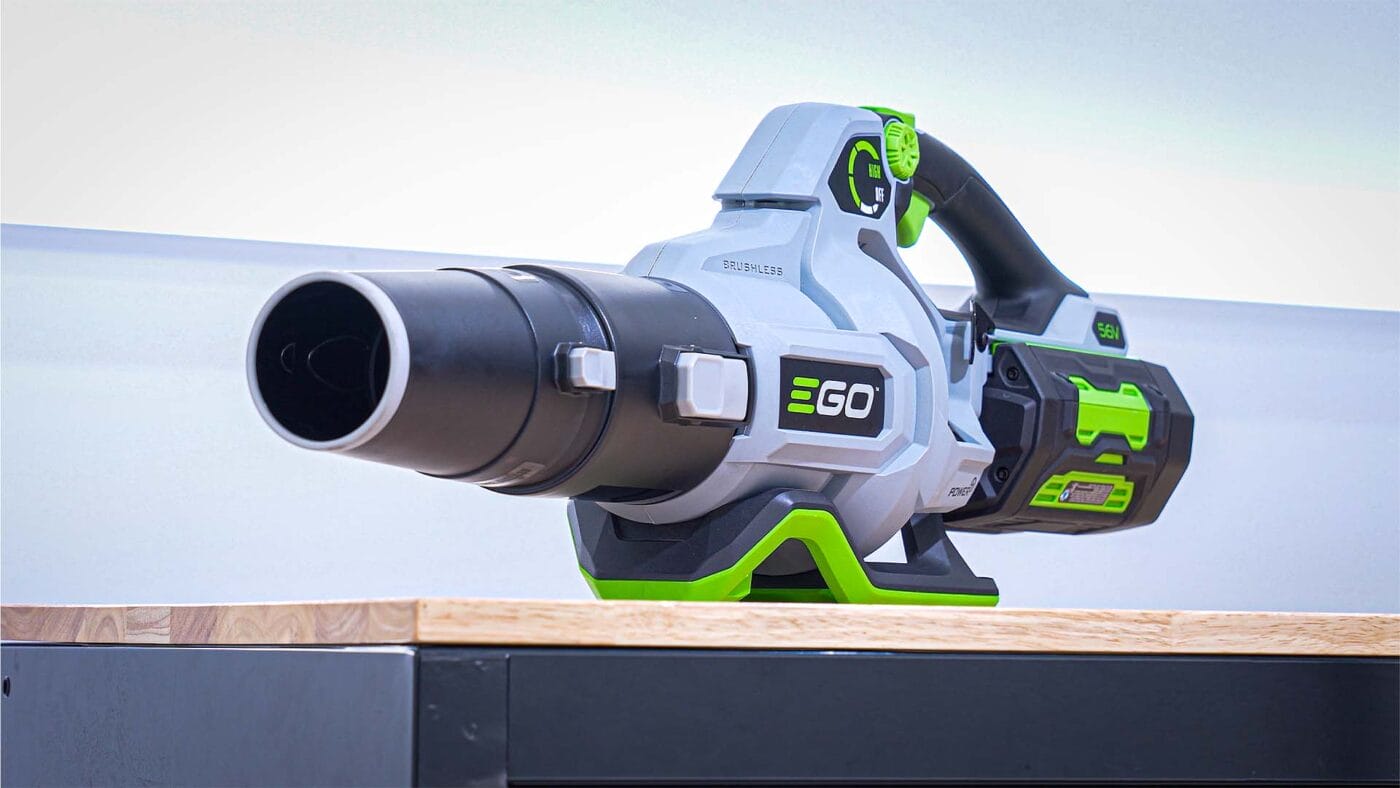
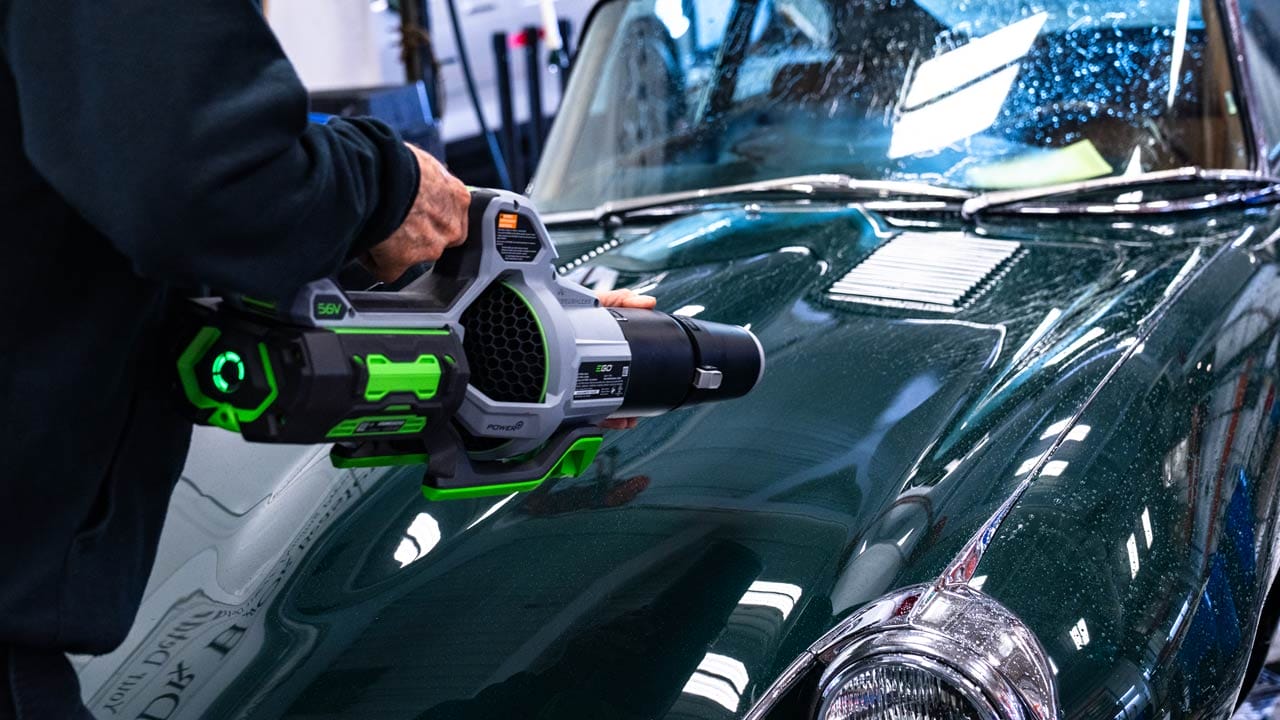
Forced air removes water without paint contact, making it the lowest-friction drying method available. This is usually achieved with an electric blower. Although often used for landscaping and lawn care, electric blowers can be powerful tools for drying a car without scratching the paint.
Beyond the lack of any friction-inducing contact, forced air excels at drying hard-to-reach areas that towels struggle to fit inside, like mirrors, trim, badges, grilles and crevices.
It tends to work best on ceramic coated automotive paintwork, as the hydrophobic properties make it easier for air pressure alone to move water off the surface.
That said, forced air has limitations. It does not remove mineral residue, and without a ceramic coating to repel water from the surface, it struggles to push off water clinging to unprotected paintwork. And even on a ceramic coated surface, it can be difficult to find and remove every last drop of water.
For those reasons, I recommend using air drying only as a first step — not a full replacement for towel trying.
Microfiber Towel Drying
Microfiber towels are still the most practical and complete drying solution when used properly.
They remove both standing water and residual moisture effectively, work in nearly any environment, and give you a high degree of control during the drying process.
However, they can also introduce friction if used aggressively, increase pressure as they become saturated, and drag particles if technique is poor.
So the towel itself is not the real problem. The problem is poor technique and poor saturation management.

Chamois and Squeegees
Traditional chamois and synthetic squeegees remove water quickly, but they carry more risk on painted surfaces.
They may leave very little water behind, but they also provide very little particle encapsulation, create a high-contact interface, and increase the likelihood of linear scratching over time.
In other words, they prioritize speed over surface safety. That makes them more appropriate for glass than for painted panels.
Drying Method Comparison
| Method | Paint Contact | Friction Risk | Water Spot Risk | Recommended Use |
| Forced Air | None | Very Low | Moderate | First pass water removal |
| Microfiber Towel | Yes | Low–Moderate (technique dependent) | Low | Primary finishing method |
| Chamois/Squeegee | Yes | High | Low | Glass or speed-focused drying |
| Natural Evaporation | None | None | Very High | Not recommended for paint |
The Proper Car Drying Process
Step 1: Remove Bulk Water First
Start by removing standing water with forced air whenever possible.
Focus on mirrors, trim, badges, grilles, panel gaps, and anywhere else water collects.
This reduces how much towel contact is needed later, and less contact means less opportunity for friction and marring.
Step 2: Use the Right Drying Towels
A proper drying towel should have a deep, plush nap, high absorbency, and the ability to stay soft under load.
Flat microfiber towels, worn towels, stiff towels, household towels, and chamois should be avoided on painted surfaces.
A deep fiber structure helps pull residual particles away from the paint instead of dragging them across it.
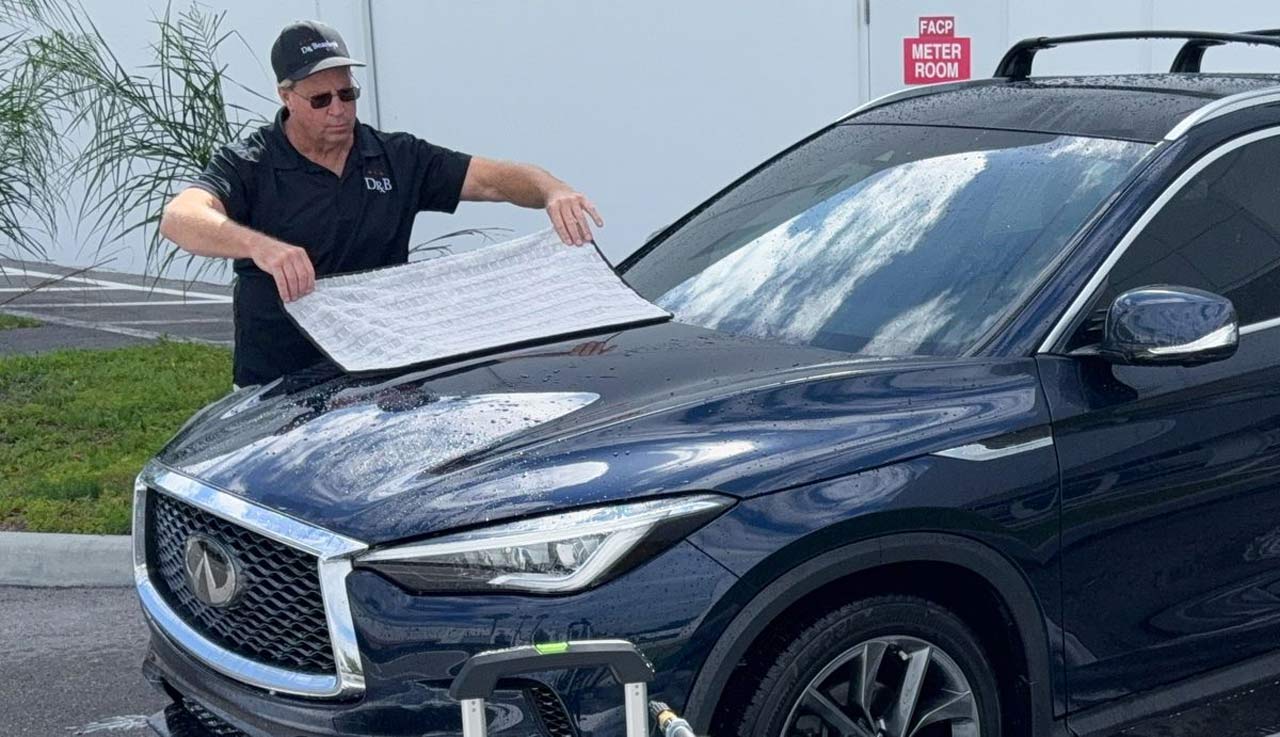
Step 3: Blot Before Wiping
Blotting is safer than dragging a towel across the paint.
Lay the towel flat on the panel, allow it to absorb water naturally, then lift it straight up.
This removes most of the moisture while minimizing lateral friction.
Wiping should be reserved for small traces of leftover water after most of the moisture has already been removed.
Step 4: Manage Towel Saturation
One of the most overlooked parts of safe drying is saturation management.
Use multiple towels. Switch towels once absorbency starts to drop. Do not dry the entire vehicle with one towel. Use separate towels for upper and lower panels.
A saturated towel increases drag, increases pressure, and increases the overall risk of marring.
Step 5: Use Light Lubrication During Final Passes
Light lubrication can reduce friction in the final stages of drying.
A proper drying lubricant improves towel glide, reduces resistance, and helps lower the risk of micro-marring. It should be used lightly and evenly. The goal is to assist glide, not soak the panel.
Some detailers use a dedicated drying aid or light protective spray during this step. A product designed to improve surface lubrication, such as Dr. Beasley’s Paint Hero, can be used subtly and intentionally to enhance glide without turning drying into a heavy application step.
Lubrication does not replace proper towels or proper technique, but it can meaningfully reduce friction when used correctly.
Step 6: Dry From Top to Bottom
Always work from the cleanest areas downward.
Start with the roof and glass, then move to upper panels, mid-level panels, and finally lower panels and the rear bumper.
This helps prevent heavier contamination from being transferred to the most visible surfaces and reduces the chance of dragging abrasive particles across cleaner paint.
Common Car Drying Mistakes to Avoid
Using one towel for the entire vehicle, applying too much pressure, drying in circular motions, wiping completely dry paint without lubrication, allowing the vehicle to air dry in direct sunlight, and treating drying like a rushed finishing step all increase the risk of paint damage.
Most paint defects are not caused by one major mistake. They are caused by many small abrasions repeated over time.
Protection Changes the Drying Equation
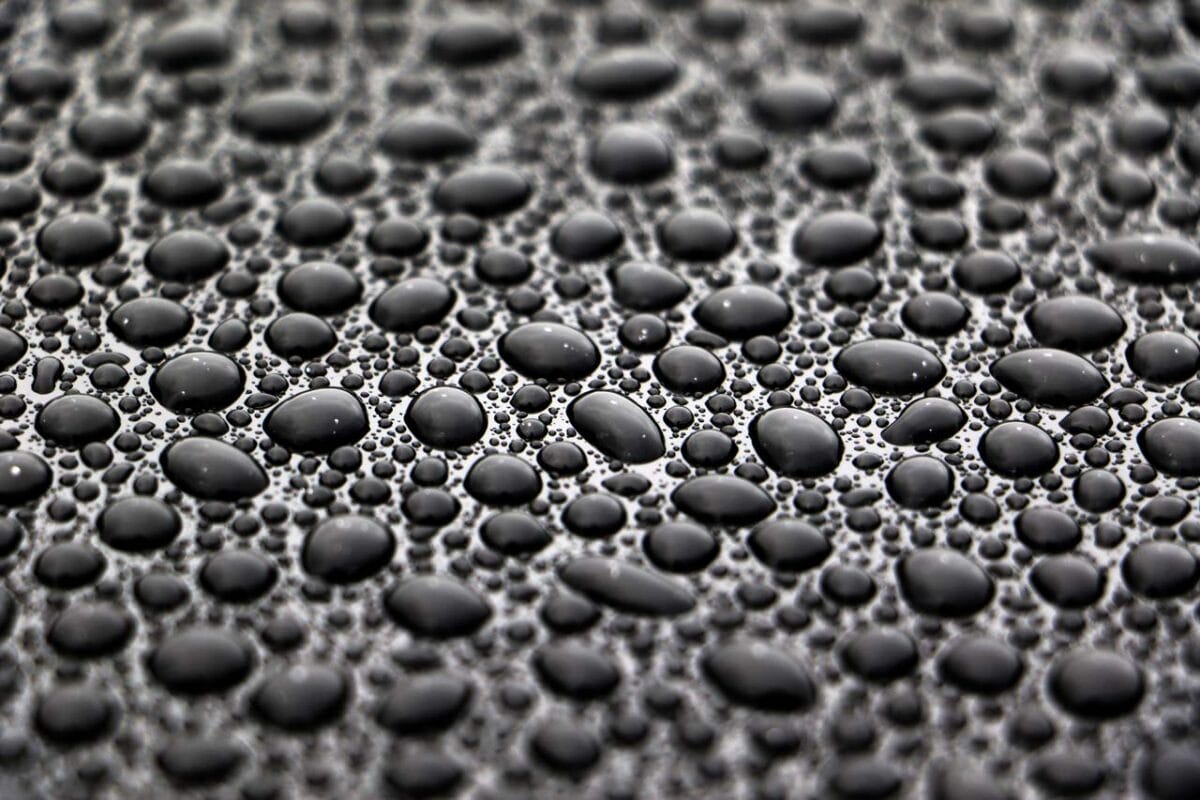
Protected paint behaves differently during drying.
A protected surface typically offers lower friction, better water sheeting or beading, less contamination adhesion, and easier overall drying.
Protection does not eliminate risk entirely, but it does widen the safety margin during routine washing and drying.
Speed vs. Safety: The Wrong Metric
Many drying methods are marketed around speed, but speed should not be the main standard for judging a drying process.
Better criteria are how much friction the method introduces, how much pressure it creates, how much contact it requires, and how well it preserves the paint long-term.
Drying faster at the expense of surface safety usually leads to more polishing, more correction work, and a gradual reduction in clear coat thickness over time.
Final Thoughts: Drying Is Paint Preservation
Drying is not just a finishing step. It is a preservation step.
Every time a vehicle is dried, some amount of friction is introduced. The goal is not to eliminate contact completely, but to control friction, pressure, and technique as effectively as possible.
When drying is done correctly, gloss lasts longer, swirl marks develop more slowly, correction becomes less frequent, and the finish stays clearer over the long term.
Intentional drying is one of the simplest and most effective ways to preserve modern automotive paint.
Questions? Comments?
Email Us