


Last Updated May 28, 2026
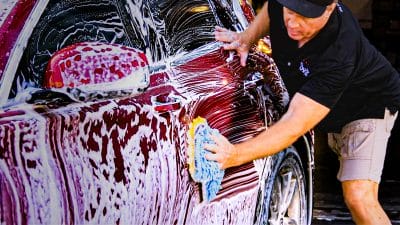
You can spend hours washing and polishing a car until everything looks right. The paint is dialed in, the glass is clean, and overall the car feels well cared for.
Then you step back, and something still looks off.
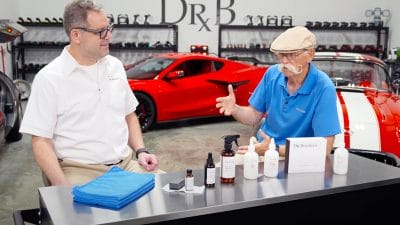
Over time, through working with customers and partners like The American Muscle Car Museum and OEMs, and from feedback from detailers and enthusiasts in a wide range of conditions, we started noticing a pattern. Even on well-maintained vehicles, the tires and trim were often the first areas to fall off visually. The paint would still look solid, but the lower section of the car told a different story.
In most cases, it wasn’t a lack of effort. These were people doing the right things and using the products they were told to trust. The issue was that those products weren’t designed to hold up the way people expect them to in real conditions.
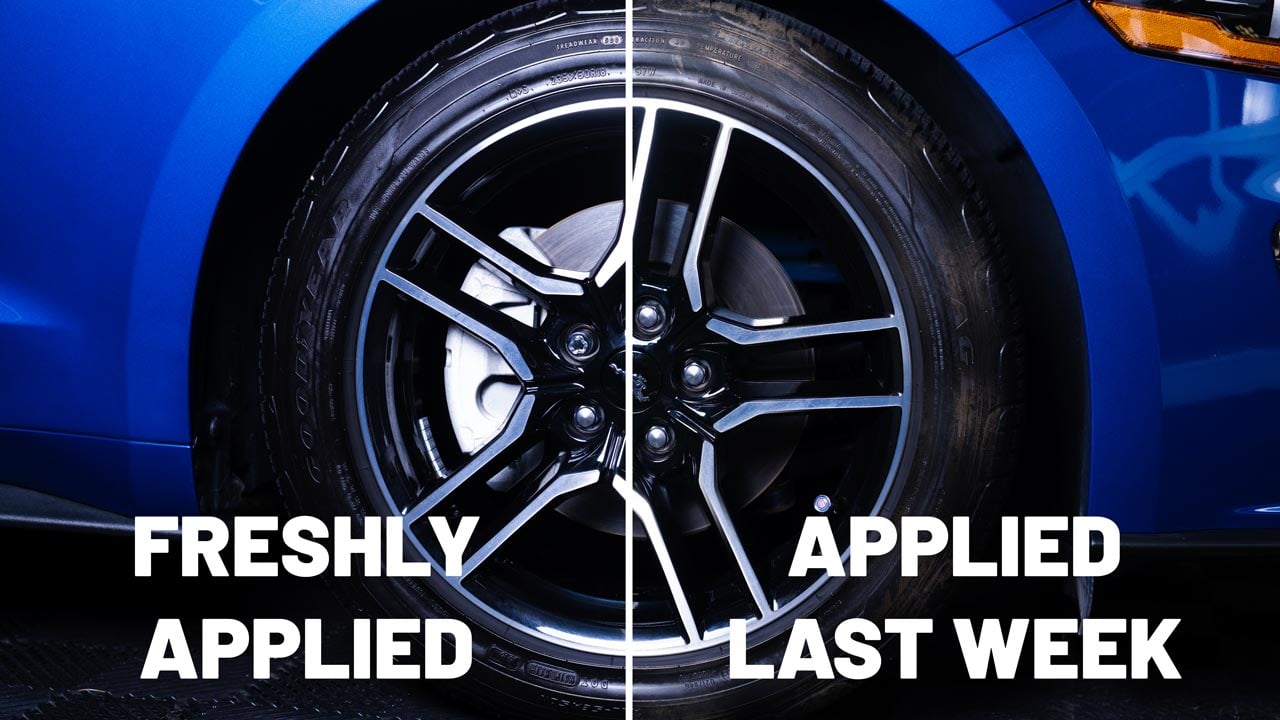
Where Tire Dressings Start to Break Down
Most tire dressings look good right after application, and that quick initial improvement is what makes them appealing. You get a deep, dark finish that helps complete the look of the car in a short amount of time.
The real test is what happens after that first drive.
You drive through a wet road or a puddle, you come back to the car, and suddenly the finish on your tire isn’t uniform anymore. Some areas still look dark, while others look like the product has thinned out or disappeared.
That’s because traditional dressing technology doesn’t actually bond to the rubber. It sits on the surface, and when water hits the dressing with any force, it slowly starts to wash away.
Over the next few days, normal driving continues that process. Dust sticks, road film builds, and the appearance fades, but not evenly. The dressing becomes patchy. Sometimes, the tires look even worse than before you applied it.
We’ve seen this most often on daily drivers that get washed regularly but driven in all conditions. The tires look great when they leave the driveway, and then a few days later the clean black look is already starting to fall apart again.
It’s a little frustrating, especially when you did everything right.
The Part Nobody Talks About: The User Experience
There’s also the experience of using these products, which doesn’t get discussed much.
If you’ve ever touched a tire that has dressing on it, you already know what it feels like. It’s not a dry, finished surface. It’s soft, slightly sticky, sometimes even a little tacky, and if you run your hand across it, you’ll often pick up some of that black residue.
We hear this directly from customers. Someone leans against the car without thinking and ends up with a dark mark on their pants. Or they’re drying lower panels and the towel gets covered with residue after it accidentally brushes against the tire.
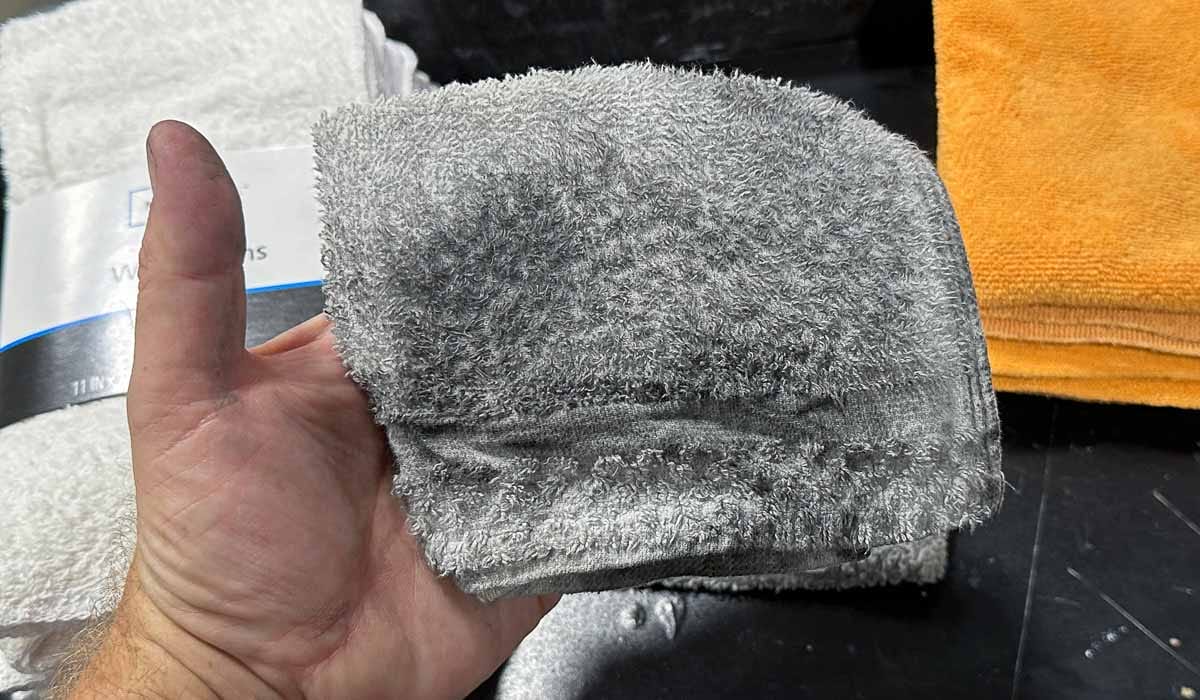
That’s not just a minor inconvenience. It’s a signal that the product isn’t fixed to the surface; it’s still mobile. Think about it: if it’s coming off onto your hands or clothing, it’s also coming off when you drive, when it rains, and when you wash the car.
The Hidden Tradeoff Most People Don’t Realize
There’s a built-in tradeoff with many of these products that isn’t obvious at first.
The ingredients that create that rich, dark appearance are often the same ones that never fully adhere to the tire. They remain flexible and slightly oily on the surface, which is why you see sling behind the wheel wells or small dots along the lower panels after driving.
That same characteristic also makes the surface more prone to attracting dirt. If it never stabilizes, contamination has something to cling to. So while the product improves the look initially, it actually ends up making the surface harder to maintain over time.
Exterior Trim Restorers Often Follow the Same Pattern
Trim products tend to behave in a similar way, just with a different set of tradeoffs.
You apply them and the improvement is immediate. Faded plastic looks darker and more uniform, sometimes even close to new. But after a few washes, the fading starts to return, and not always evenly.
Some products act like dressings for plastic, offering a temporary visual improvement, while others rely on dyes that restore color more dramatically but don’t stop the underlying material from continuing to degrade. As a result, the cycle of fading continues and reapplication becomes part of the routine.

You start to feel like you’re chasing it. You get it looking right, and then you’re already thinking about when you’ll have to do it again.
Trim Products Can Be Just as Messy
The application side of trim restorers can be just as frustrating.
Some of the darker products, especially those with dye, are difficult to control. If you’re not careful, they get onto surrounding paint, into seams, or onto your hands. Even with careful application, there can be light splatter or transfer from the applicator.
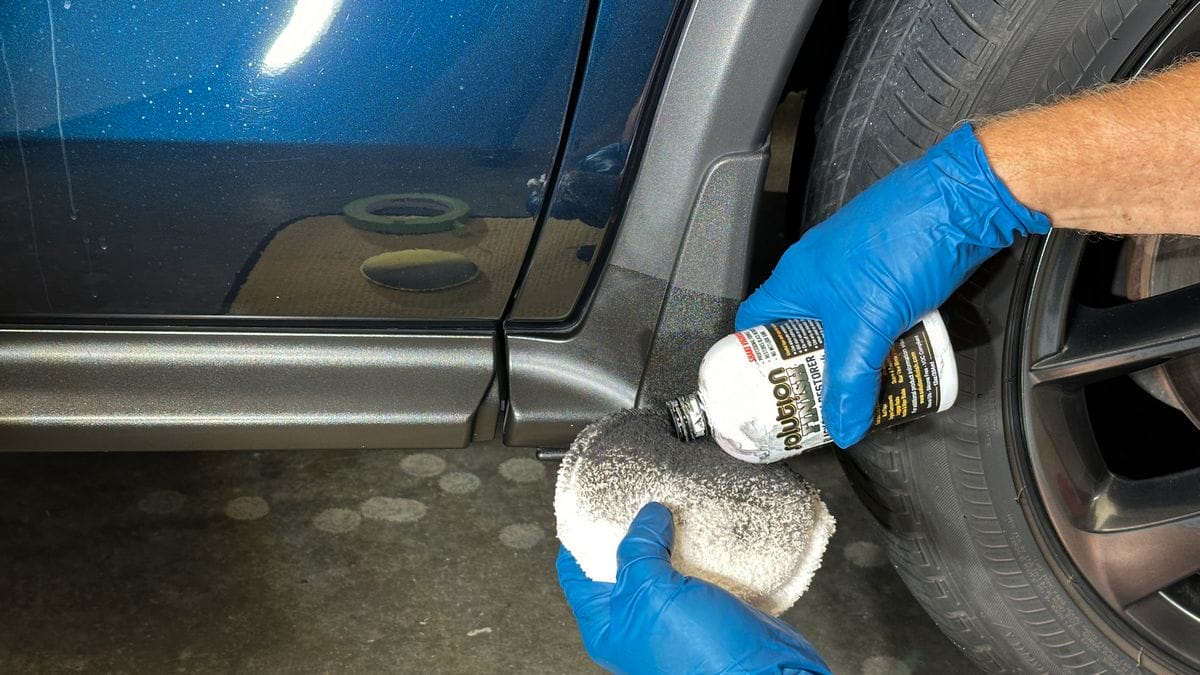
You finish the job, step back, and then notice product residue on areas you didn’t intend to touch. Gloves help avoid residue on your fingers, but they don’t fully eliminate the issue. At the end of the day, you’re still working with something that doesn’t stay exactly where you put it.
Degradation, Not Dirtying
Rubber and plastic don’t exist in a vacuum. They live in the real world and are constantly exposed to UV, heat, moisture, and environmental contaminants. Over time, that exposure breaks them down.
The fading isn’t just surface dirt — it’s the material itself changing under the stresses of the environment it lives in.
We see this clearly in vehicles that spend a lot of time outdoors. Upper trim fades faster than lower sections, and panels exposed to direct sunlight are typically lighter in color than those in shade. Even within the same panel, variation in vibrance starts to show.
At that point, fixing the issue isn’t a matter of cleaning. You’re dealing with material degradation, and most products aren’t designed to address that at a deeper level.
The Cycle of Re-Application
After a while, most people fall into a routine. A cycle of re-application.
They apply a dressing, it looks good, then a week or two later it doesn’t, so they apply it again. The same thing happens with trim. Restore it, watch it fade, repeat the process.
It feels like maintenance, but in reality, it’s a short-term fix being applied over and over again.
What We Started Noticing
As we paid closer attention to vehicles that held up well over time, a difference became clear.
It wasn’t about how often something was applied. It was about how the product interacted with the surface.
The products that performed better didn’t just sit on top. They resisted being washed away, didn’t attract the same level of contamination, and didn’t break down unevenly. They behaved more like part of the surface, not something separate from it.
It’s one of those things you don’t really question at first, until you start seeing the same result over and over again.
A Different Way to Think About Tires and Trim
That observation led to a shift in how we approach these areas.
Instead of treating tires and trim as a final cosmetic step, they need to be approached more like paint, where protection comes from something that bonds and forms a stable layer rather than something that sits loosely on top.
When you apply that same thinking to rubber and plastic, the process changes. It becomes less about how it looks immediately after application and more about how it holds up over time.
What’s Coming Next from Dr. Beasley’s
That shift is what led to the development of something new.
Not a stronger dressing or another restorer that needs constant reapplication. Rather, a system built around how these materials actually behave.
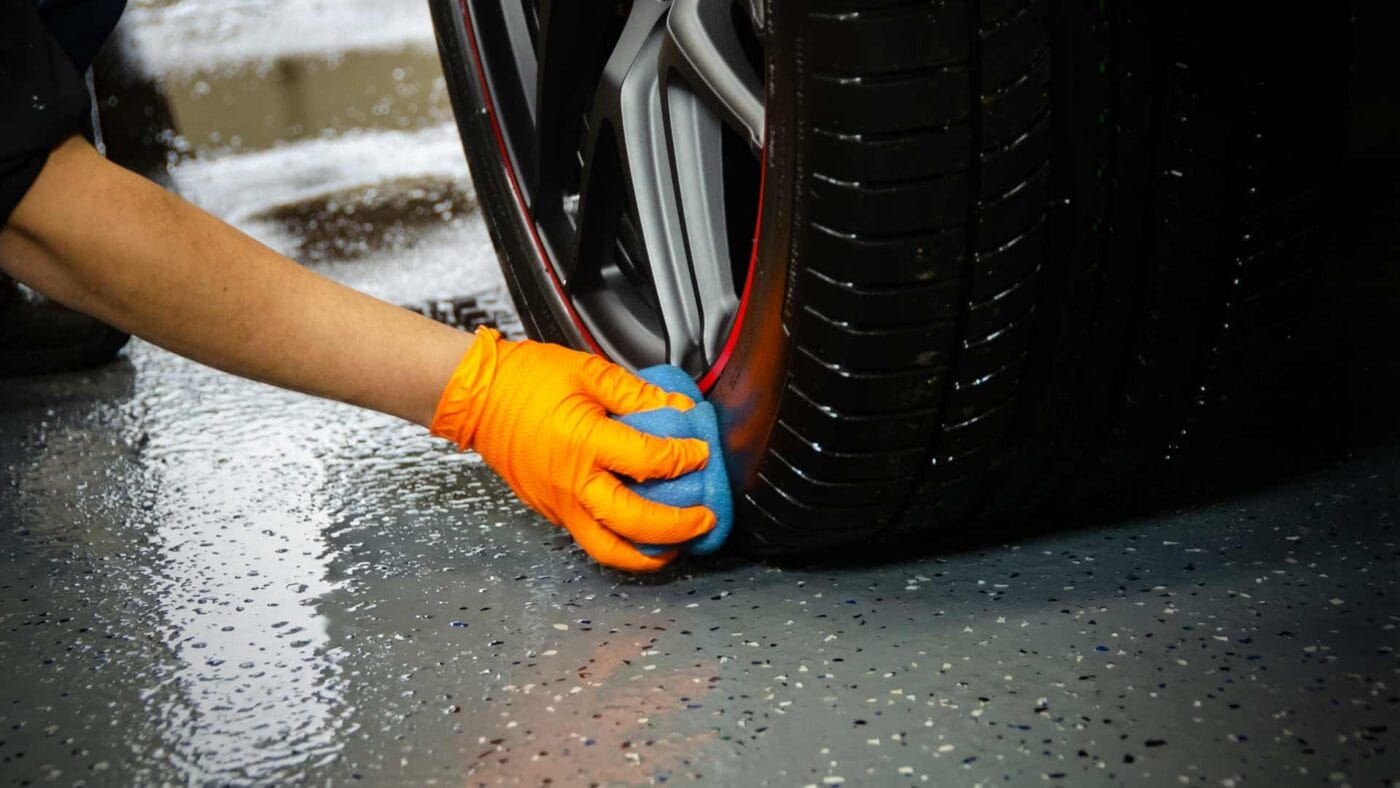
This system starts with proper cleaning, moves through preparation, and finishes with a layer of protection that becomes one with the material instead of washing away every time the surface gets wet.
The difference in this system is in the type of chemistry being used. Instead of relying on surface-level products, our new approach draws from coating technologies used in industrial settings, where surfaces are exposed to constant weather, heat, moisture, and contamination and short-term performance isn’t acceptable.
It’s not the technology that’s new. What’s new is applying that level of engineering to rubber and plastic in a practical, repeatable way.
One of the goals was simple. Eliminate the experience people have come to expect. A surface that doesn’t transfer onto your hands, doesn’t sling when you drive, and doesn’t break down unevenly after a few days, but instead stays consistent through real conditions.
If you’ve been frustrated with how quickly dressings fade or how inconsistent trim restorers can be, this is where things begin to change.
We’ll be sharing more soon, including the prep process that makes the difference.
Next Step
If you’ve made it this far, you’re probably seeing the same pattern:
The products work at first. They slowly fall apart. You repeat the same process again.
And again.
And again.
Most people focus on the product. What actually determines the result happens before that.
What we’ve been working on is a different approach, but it only works if the prep and application are done the right way. That’s where most people get stuck.
Our new Trim & Tire Coating Kit is here — be among the first to get access now.
Questions? Comments?
Email Us