


Last Updated July 1, 2026
I’ve been formulating products for tires and trim for a long time.
When I first started in 2004, I wasn’t trying to reinvent anything. I was trying to match what was already out there and make it better. At the time, most tire products followed a similar formulation structure: silicone oil for shine, mineral oil for richness, and a thickener to hold everything together.
It was a simple system, and it worked. But it also had its limits.
⚠️ Before You Dress or Coat Tires…
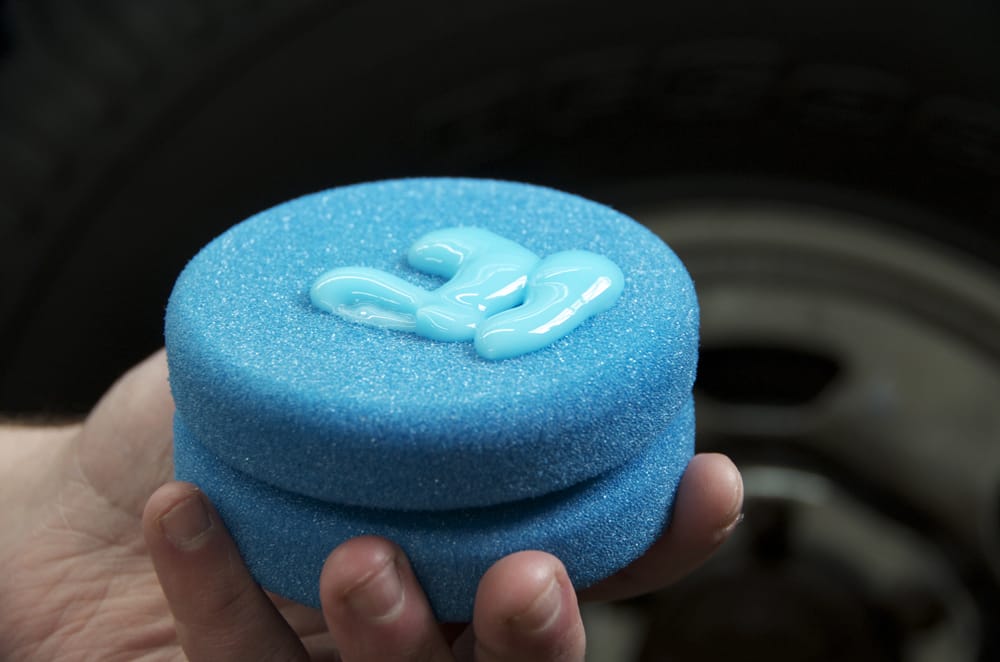
Cracked, faded, or perpetually grimy tires are a detailing problem worth solving properly. Our step-by-step tire cleaning guide shows you how to clean and care for your tires so they look fresh and last longer.
Go to Decision GuideWhat I Got Right At The Beginning (And What I Got Wrong)
As I began formulating my first tire product, I quickly learned surfactants, while useful for blending oil and water, created a tradeoff I didn’t like. While surfactants made products easier to formulate, they also made products easier to break down.
When a tire got wet, the structure would loosen. The look would fade. What you gained in formulation convenience, you lost in durability on the surface.
So I avoided surfactants.
Instead, I built a system around a specialized thickening structure that could hold oils together without relying on surfactants. It lasted longer and resisted breakdown better than most products at the time.
We called it Tire Conditioner.
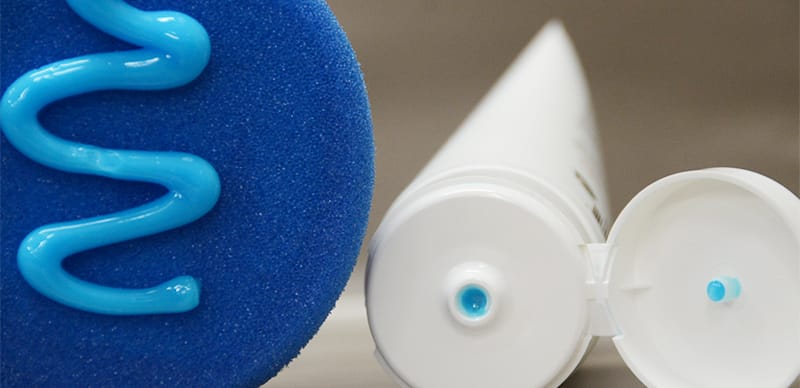
For the era, it was high performance.
But looking back, I was solving the wrong problem:
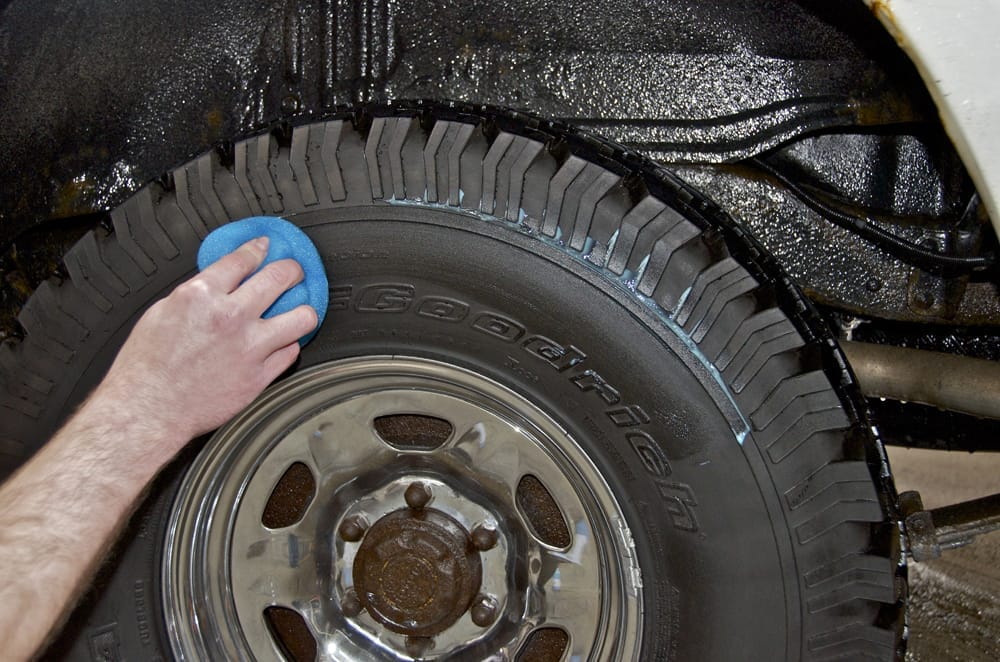
Everything I made still sat on the surface.
The Real Decision
That realization changed how I was thinking about tire care.
My goal had been making dressings hold together on the surface as long as possible.
The problem was that one phrase – “hold together on the surface”.
I had to ask myself this question: “Are you trying to maintain the look, or change how the surface behaves?”
Those are not the same goal.
If you’re maintaining the look, you’re using dressings. You’ll reapply regularly, and performance depends on how much product remains on the surface.
If you’re trying to change how the surface behaves, you’re moving into coatings. You’re relying on interaction, not layering, and performance comes from how the product bonds with the material itself.
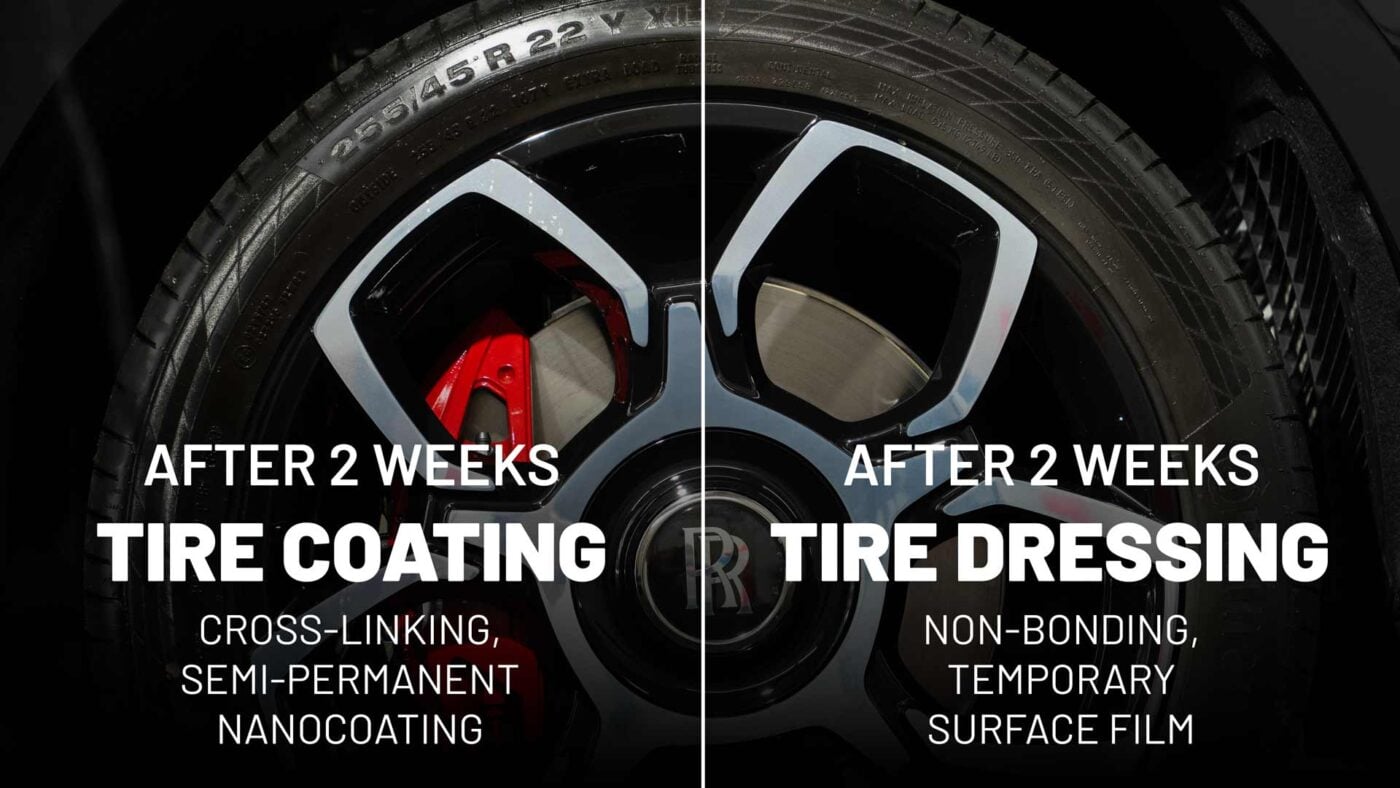
Most products in this category are built for the first path. We’ve been working on the second: a true ceramic coating system for tires and trim.
Where Traditional Dressings Hit the Ceiling
Whether they’re for tires or trim, the best dressings follow the same basic rule: they sit on the surface.
You can optimize them, make them more water-resistant, or tune the finish, but they are still temporary films. You’re maintaining an appearance, not changing the relationship between the product and the material.
That’s the limit.
What Actually Changed
The real shift didn’t come from better oils or adjusting viscosity. It came from asking a different question:
What if the product didn’t sit on the surface at all? What if it became part of it?
That’s where ceramic and nano-scale chemistry comes in.
Instead of forming a layer on top, these systems are designed to interact with the substrate itself. Rubber and plastic aren’t smooth surfaces. They’re porous, irregular, and constantly exposed to heat, UV, and washing.
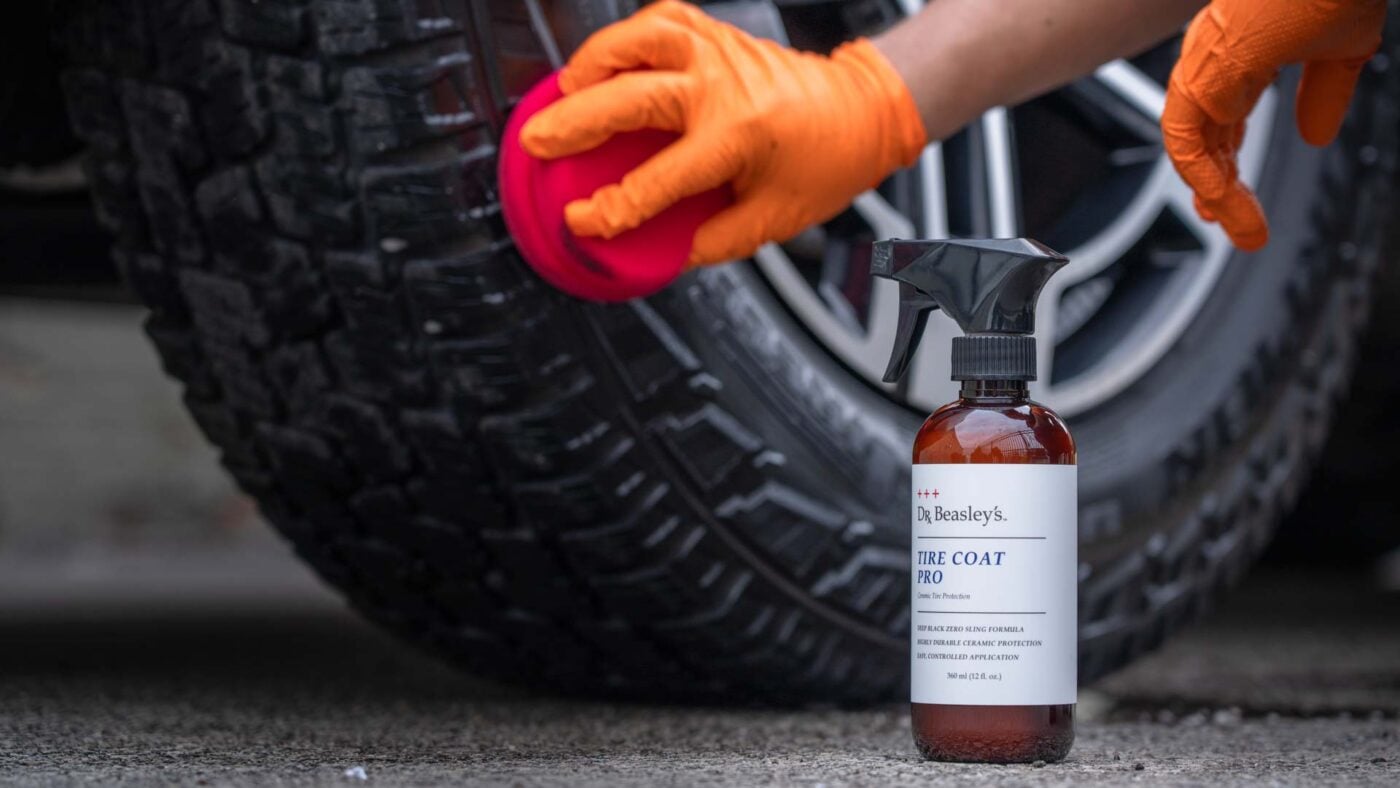
Traditional products fill that structure loosely. A coating system anchors into it.
At a technical level, you’re creating a structure that anchors into microscopic surface variation, forms a cross-linked network as it cures, and resists movement when exposed to water, heat, and UV.
That’s why the behavior changes. Not because it’s thicker or stronger, but because it’s attached differently.
What That Looks Like in the Real World
We saw this play out in a way that got our attention.
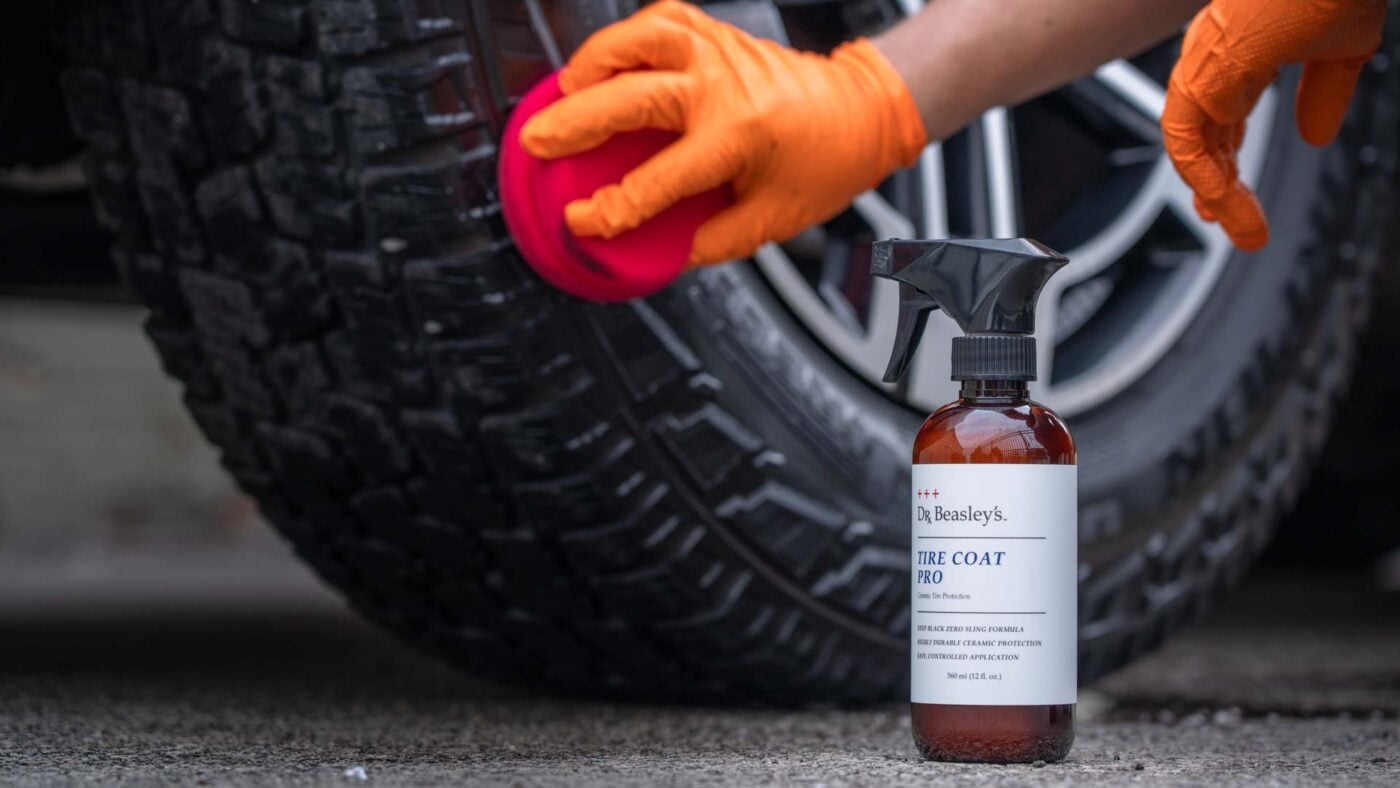
Mike Phillips, our Chief Education Officer, had our Tire Coating Pro on his vehicle in Florida and just kept washing it like normal. Wheels, tires, everything.
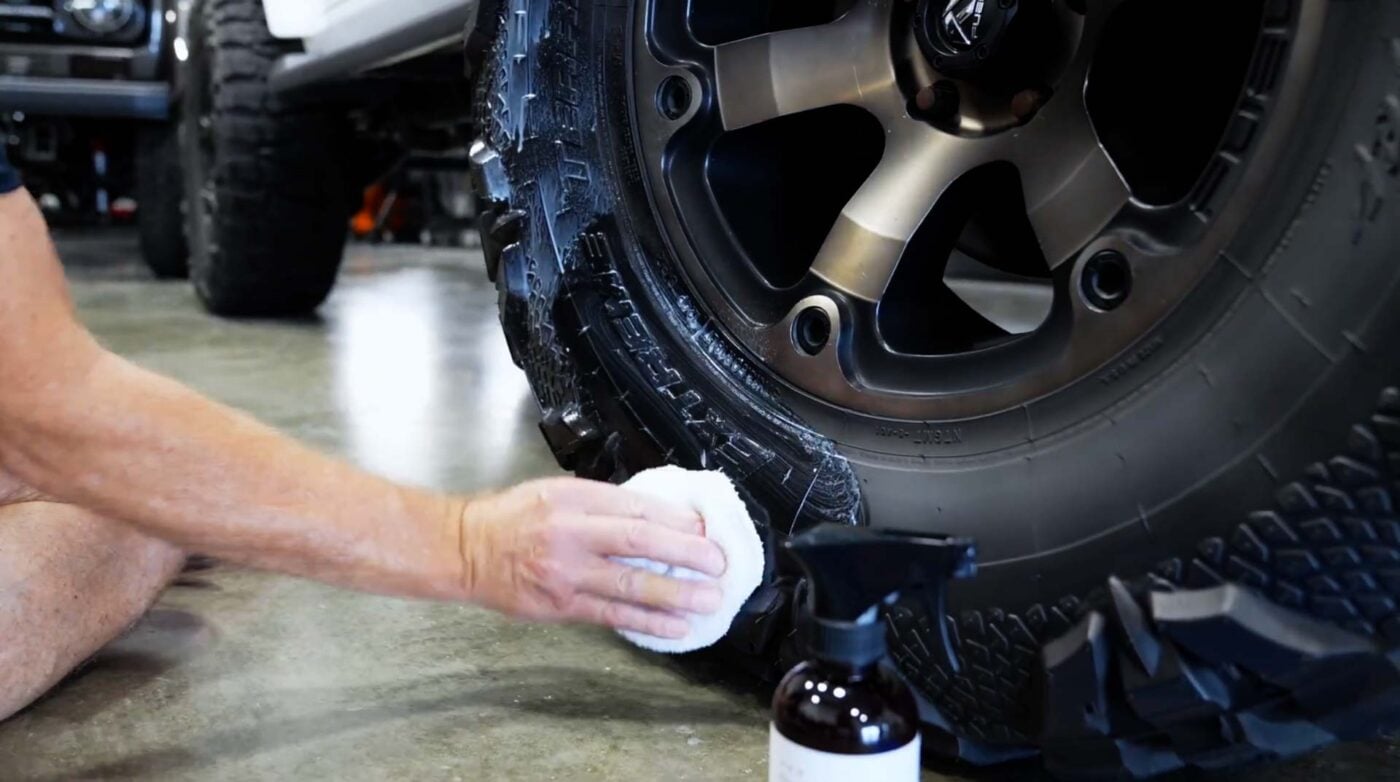
No special treatment. No careful avoidance. No reapplication after every wash.
Weeks went by.
Then more weeks.
Eventually, it had been months, and Mike realized something: it was still the same ceramic coating he applied months ago. He hadn’t reapplied anything. No dressing, no conditioner. No maintenance products of any type.
When water hit the tire, it was still forming tight, consistent beads. The appearance was still jet black.
Not uneven. Not fading in patches. That’s not how traditional tire products behave. That’s how a ceramic coating behaves.
Trim: Where This Matters Even More
Tires were one thing. Trim has always been harder to get right.
Most solutions fall into two categories: temporary restoration using oils or silicones, or dye-based systems that recolor the surface.
The first fades. The second covers.
Neither actually restores what’s there.
We tried all of it over the years: oils, polymers, dyes, and carbon-based color systems.
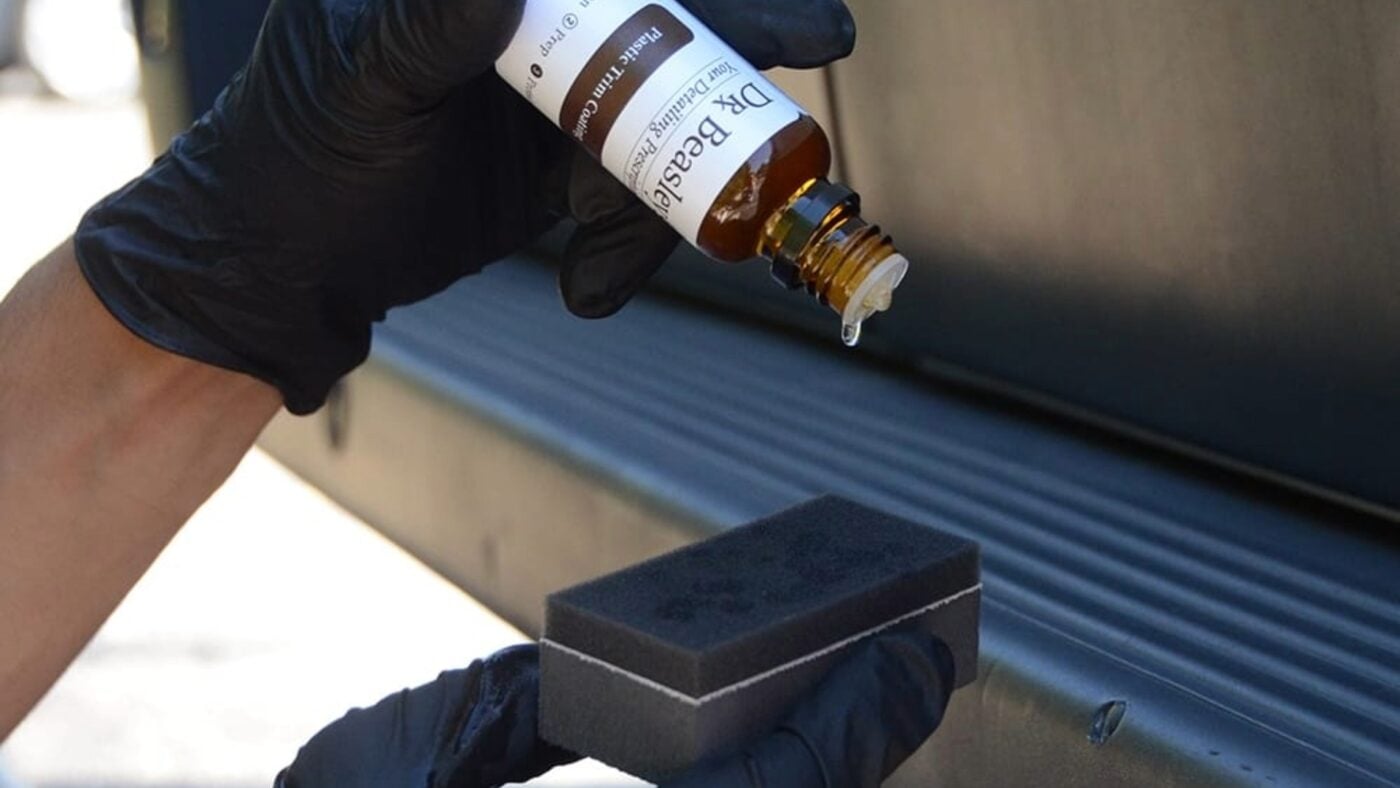
Some looked good at first, and some lasted longer, but none of them felt right because they were replacing the appearance instead of restoring it.
What We Do Differently With Trim
The breakthrough wasn’t adding better color. It was removing the need for it.
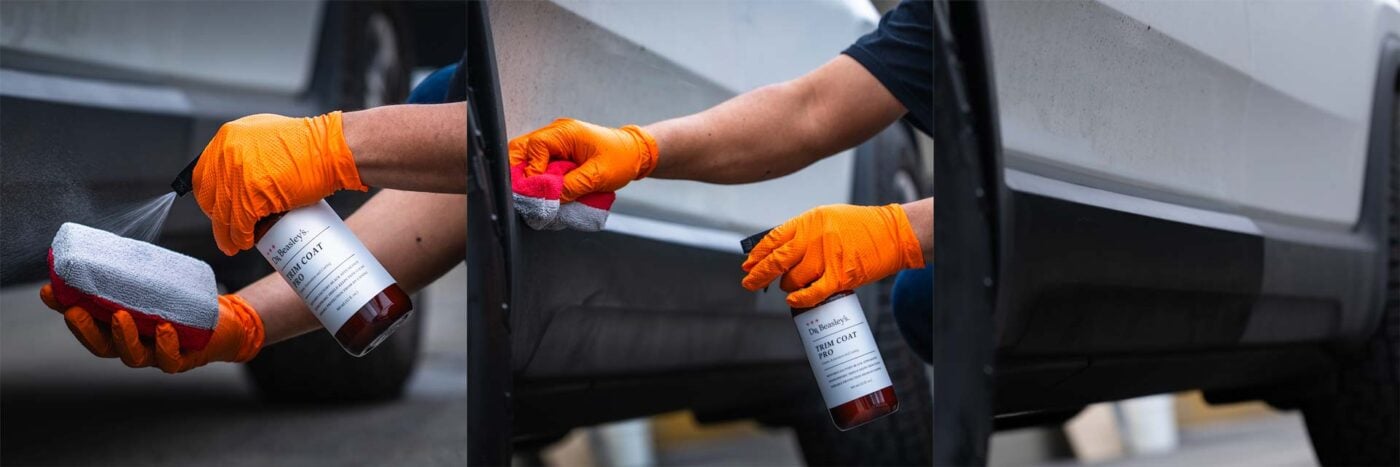
Our trim coating doesn’t come out black. It actually comes out white—that’s intentional. It’s not applying color.
Instead of laying pigment on top, the system interacts with the material and restores its natural appearance.
If the trim is matte, it returns to matte. If it has a slight gloss, the gloss bounces back. If it was gray to begin with, it restores that muted tone.
You’re not painting over the surface. You’re restoring how it reflects light.
And because it bonds, it doesn’t transfer, it doesn’t bleed into other materials, and it doesn’t wash away like a dye that was never truly fixed in place.
Where Dressings & Conditioners Still Have a Place
That all being said, ceramic coatings for tires and trim aren’t for everyone.
If your goal is quick shine, something you reapply every wash, or a temporary look you can change week to week, a dressing is the better option.
And if proper, thorough surface prep isn’t something you want to do, you may want to stick with a dressing—you won’t get the benefits of a ceramic coating if it can’t bond properly.
The ceramic coating approach is for something different. It’s for people who want the surface to behave differently, not just look different for a few days.
Why This Is a Different Category
This isn’t about making a better dressing. It’s about moving out of that category entirely:
Dressings and Conditioners: maintain the look
Ceramic Coatings: change how the surface behaves
Once you see what’s actually happening, it changes how you think about tire and trim products altogether. It’s not the same category anymore.
Where This Is Going
For years, tires and trim were treated as surfaces that needed to be dressed, darkened, or refreshed.
We think they can be treated differently.
Cleaned properly.
Prepped properly.
Coated properly.
Then maintained as protected surfaces, not constantly refreshed cosmetic surfaces.
That is the thinking behind our new Trim & Tire Coating Kit.
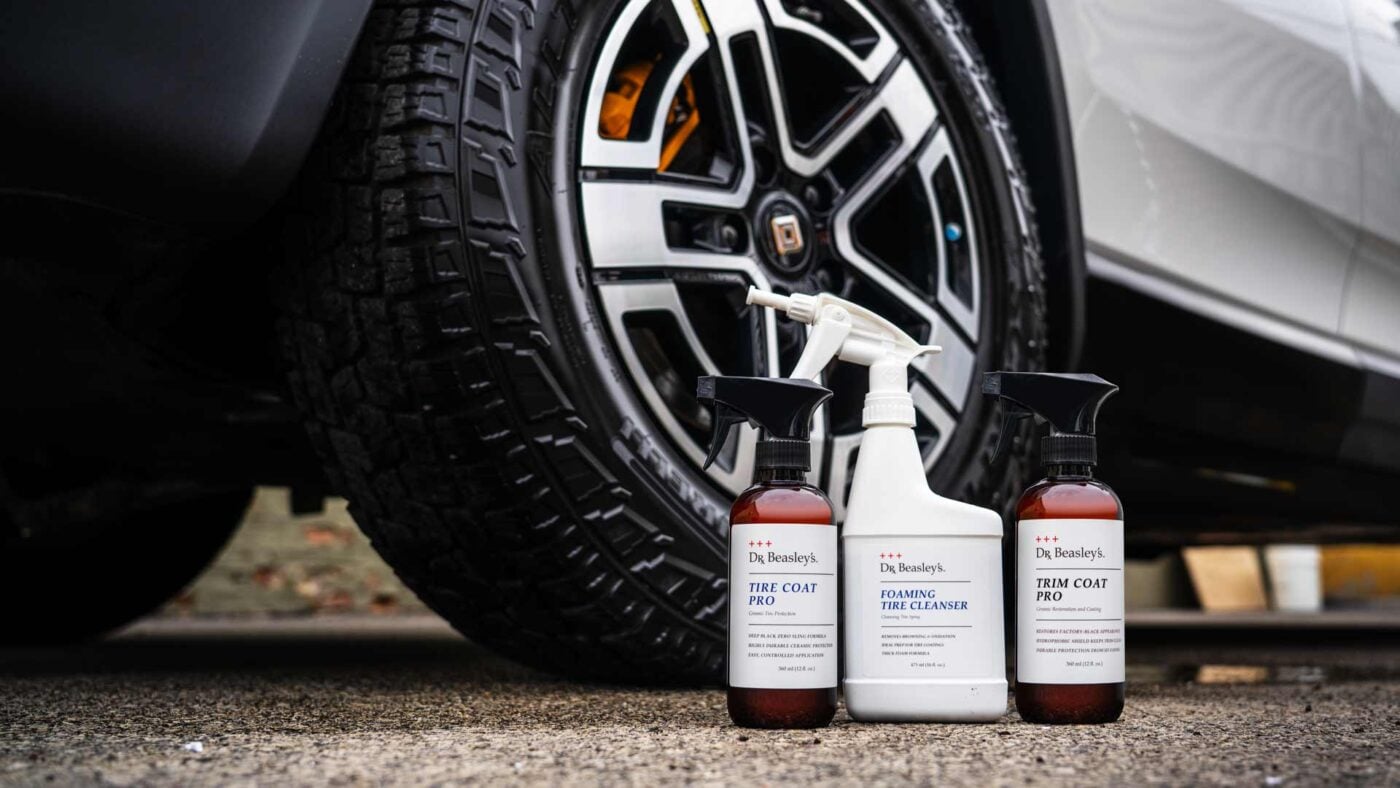
We built this kit for people who want more than a quick tire shine or a temporary trim refresh.
It is for people who want tires and trim to look right, behave differently, and stay protected longer with the right prep, the right coating, and the right process.
Questions? Comments?
Email Us