

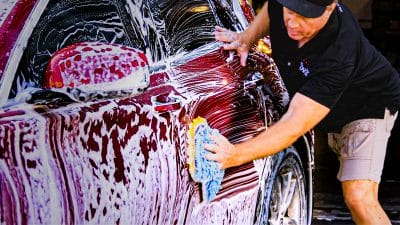

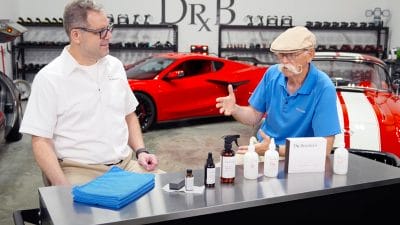
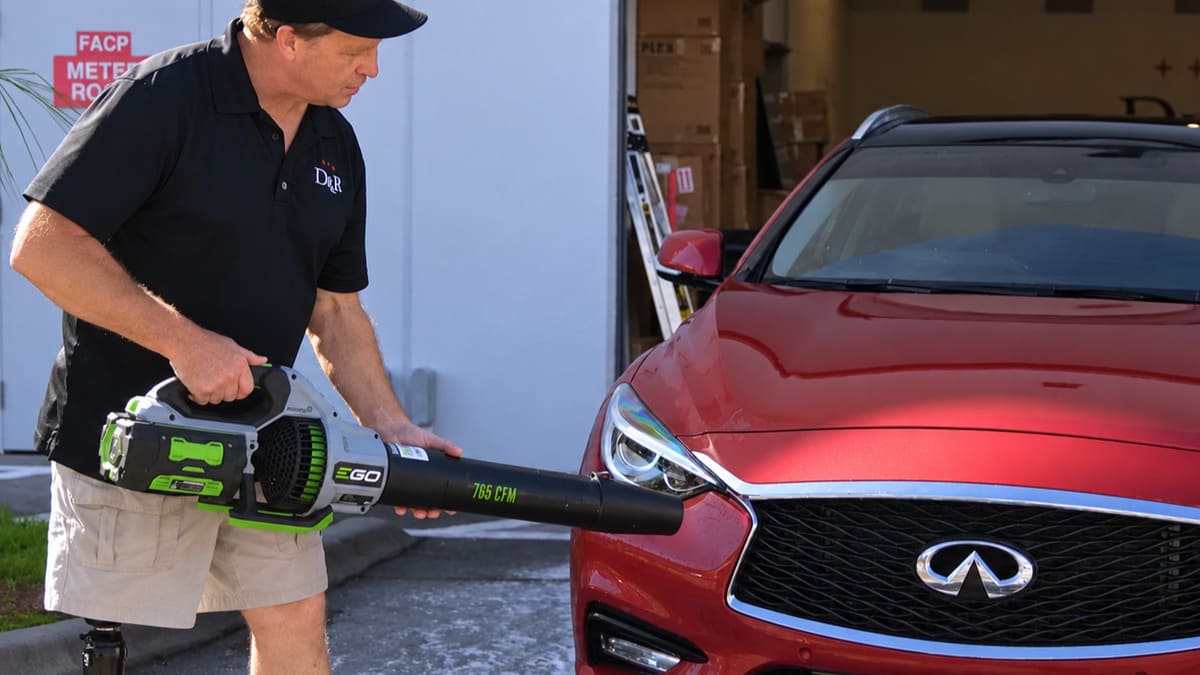
It’s fall, which means a lot of people are pulling their leaf blowers out of the garage. If you already have one for clearing leaves off your driveway, there’s another job I’d encourage you to try it on. Here’s how to dry your car with a leaf blower, and why it might be a better way to protect your paint.
I know that sounds a little unusual if you’ve always dried your car with a towel. But think about what we’re trying to accomplish when we dry a vehicle. We want to get the water off the paint without introducing scratches in the process. And if we can remove most of that water without touching the paint at all, that’s a pretty good place to start.
That’s the advantage of using a leaf blower. You’re letting moving air do the work instead of dragging a towel across the finish.
Now, that doesn’t mean drying towels are bad. I use them too. But there’s a difference between using a towel to dry an entire wet vehicle and using one to pick up a little remaining moisture after most of the water has already been blown away.
Why I Like Touchless Drying
One of the things we talk about a lot at Dr. Beasley’s is reducing unnecessary physical contact with the paint.
Every time you touch the finish, there’s some potential for micro scratching in the form of swirl marks. It doesn’t matter whether you’re washing, drying or applying a product: if your towel, wash mitt or applicator is dirty, rough or applied with too much pressure, it can and will inflict scratches.
That doesn’t mean you should be afraid to touch your car. It means you should understand when contact is necessary and when there’s a way to avoid it.
Drying is a good example.
After you wash a car and rinse all the soap off, water remains on the paint. You can remove that water by absorbing it with a towel, or you can use moving air to push it off the surface. Both methods work, but only one doesn’t involve touching the paint.
Knowing that, I prefer to use air to remove as much water from the car as possible first, and only then make physical contact with a towel to dry off the remaining water.
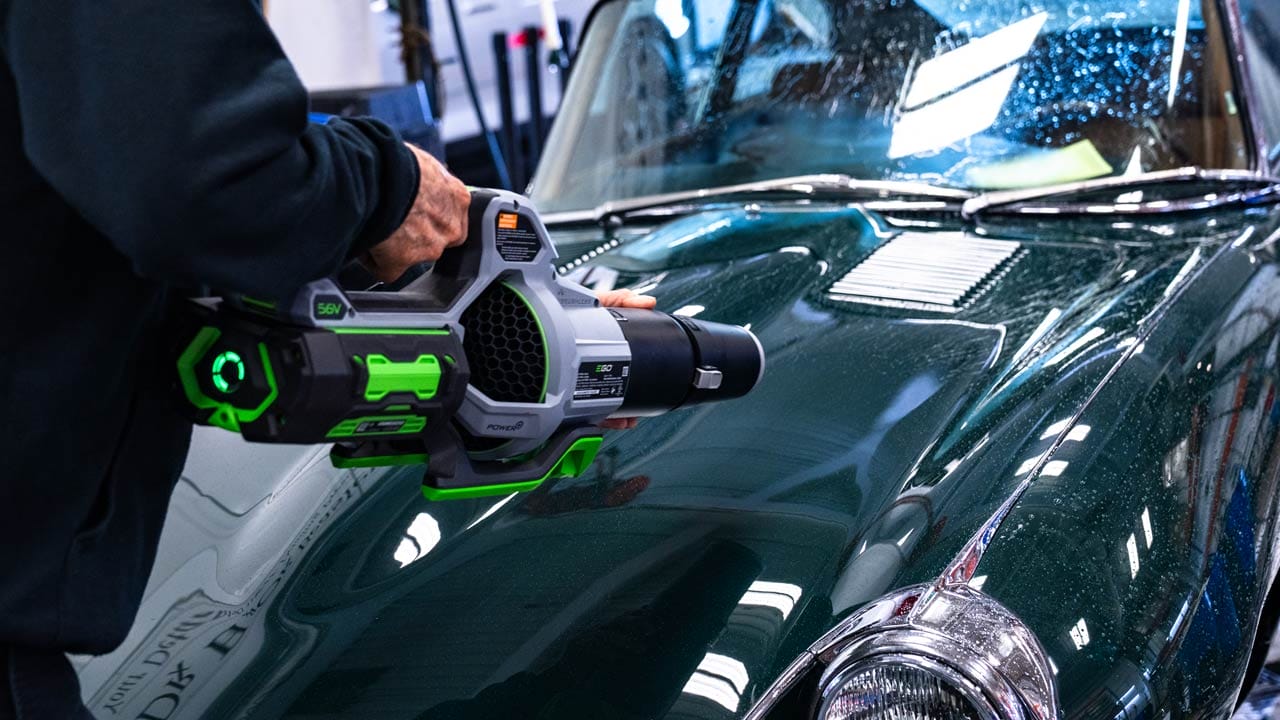
Three Reasons to Try Drying Your Car With a Leaf Blower
1. You’re Removing Water Without Touching the Paint
That may seem obvious after what I’ve just explained, but it’s worth understanding why it matters.
Even after a careful wash, there can still be small amounts of contamination on the surface. If that material gets caught beneath a drying towel, you may drag it across the clear coat as you wipe.
That’s how a simple drying step can introduce fine scratches or swirl marks.
A blower eliminates that particular source of friction when drying. You’re not pressing anything against the finish. You’re using non-abrasive airflow to move the water off the panel.
This type of approach is especially important on dark-colored vehicles, where even minor scratches can be easy to see.
2. You Can Get Water Out of Places a Towel Can’t Reach
Anyone who’s ever washed and dried a car knows this problem: you’re all done drying the vehicle. You put your towels away. Then you see it: water running down the door from the side mirror. A little stream coming out from behind an emblem.
It’s because the water was trapped in a place your towel couldn’t reach. Once the car moves, or you open a door, that water finds its way out.
This is where a blower is especially useful. You can direct air into those hard-to-reach areas and push the trapped water out before it becomes another drip down your freshly cleaned paint.
Typical areas where this happens include mirrors, door handles, emblems, grilles, trim and panel gaps. Pay special attention when blowing out those specific cracks and crevices.
You may be surprised how much water comes out of those areas even after the rest of the car looks dry!
3. Less Time and Effort for You
For a certain type of person, this is the most important benefit of all: a quicker and easier drying experience.
With a blower, instead of slowly working your way around the entire vehicle with a drying towel, you can dry most of the water off in a matter of minutes. You’re not constantly swapping out towels or making repeated passes over the same panels.
And because there’s less water left to absorb, your drying towel has a much smaller job to do.
You spend less time drying, use less effort and make less contact with the paint. That’s a pretty good combination.
Why Touchless Drying Works Better on Protected Paint
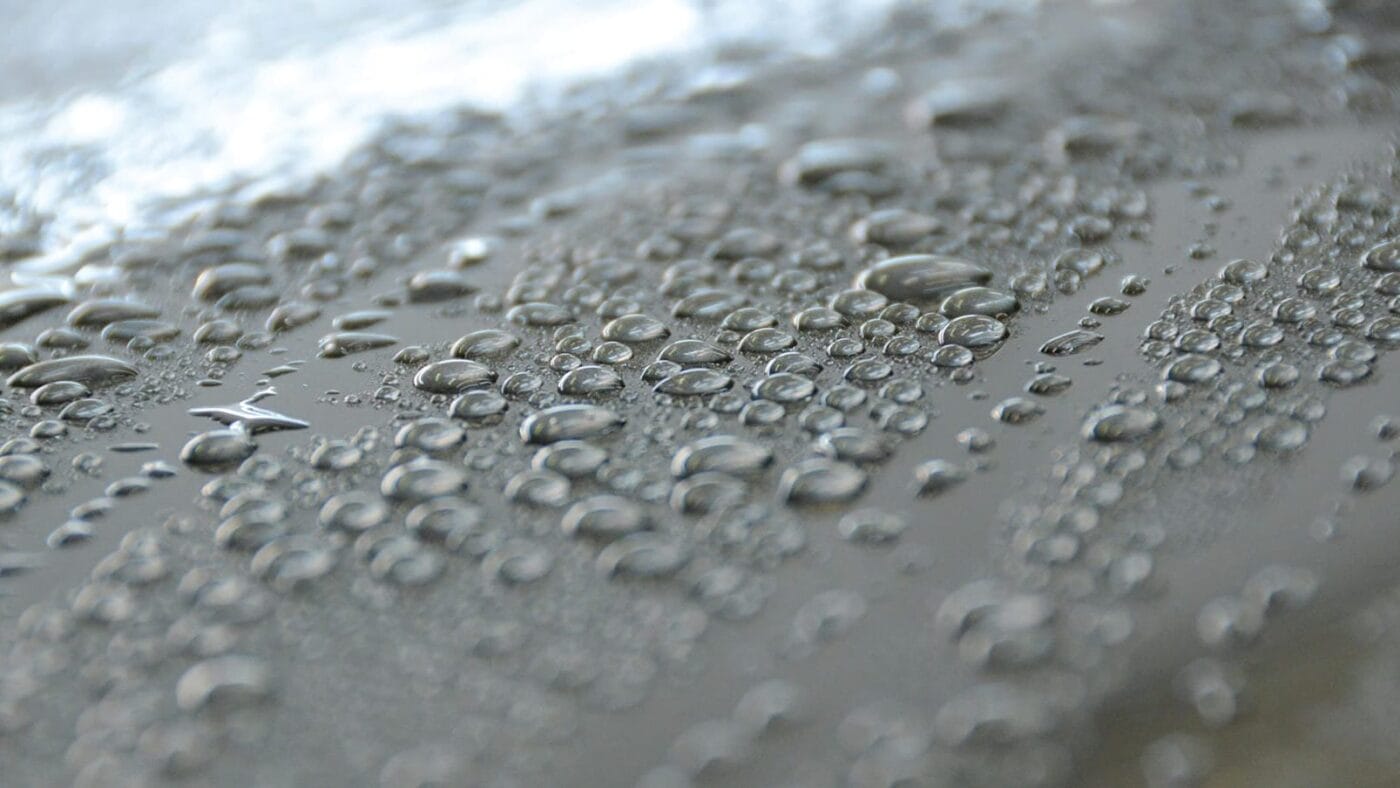
If you’ve ever blown water off a ceramic-coated vehicle, you’ve probably noticed how easily the droplets move.
There’s a reason for that.
Ceramic coatings create a hydrophobic surface. Instead of spreading into a broad film, water repels itself away from the paint, forming tight individual droplets that move easily when pushed by strong air flow currents.
On unprotected paint, water may spread out more and cling to the panel. You can still use a blower, but you may need to spend more time moving the water off.
This is one of the practical benefits of maintaining good paint protection: it doesn’t just make the vehicle easier to wash; it can make drying easier too.
And when water leaves the surface more readily, there’s less moisture remaining to evaporate and leave mineral deposits behind.
Can You Use Any Leaf Blower?
You don’t need to purchase a dedicated car dryer just to try touchless drying. If you already have a clean electric leaf blower, that’s a reasonable place to start.
But I would pay attention to a few things.
First, make sure the blower isn’t carrying dirt or debris from your yard. You’re trying to protect the paint, not blow grass clippings or dust across it.
I prefer an electric blower for this job because you don’t have to deal with gasoline exhaust near the vehicle. A dedicated automotive dryer with filtered air is another option if you want equipment designed specifically for detailing.
Keep the nozzle away from the paint and make sure you’re not directing air across loose dirt on the ground. Be especially careful around gravel, fallen leaves and other debris that could get blown toward the vehicle.
You also want to be mindful of the blower’s intake. Don’t operate it where it can pull loose material into the airflow.
The point is to remove water safely. There’s no benefit in avoiding towel contact if you’re replacing it with flying debris.
What About the Water the Blower Doesn’t Remove?
Here’s where I think people sometimes take touchless drying a little too far.
They assume that because using air is safer, they should never need to touch the paint with a towel.
But that isn’t necessarily practical.
A blower can remove a substantial amount of water, particularly on protected paint, but you may still have small droplets sitting on the hood, roof or other panels.
If you leave those droplets to evaporate, dissolved minerals in the water can remain on the surface. Now you’ve traded a drying problem for a water spot problem.
You could keep blowing air across the panel trying to chase every last droplet. Or you could remove the remaining moisture with a clean microfiber towel.
I would use the towel.
We’ve already eliminated most of the contact by removing the bulk of the water with air. There’s no reason to make the last part of the job more complicated than it needs to be.
The important thing is how we handle that final wipe.
Reduce Friction With Paint Hero
When I use a towel on paint, I want it to move across the surface with as little resistance as possible.
That’s one of the reasons we developed Paint Hero.
Paint Hero is a drying lubricant designed to reduce friction between the microfiber towel and the paint. It helps the towel glide over the surface while also adding hydrophobic protection.
Think about what happens when a towel drags across a panel. There’s resistance between the fibers and the finish. The more resistance you have, the more force it may take to move the towel.
Lubrication helps reduce that resistance.
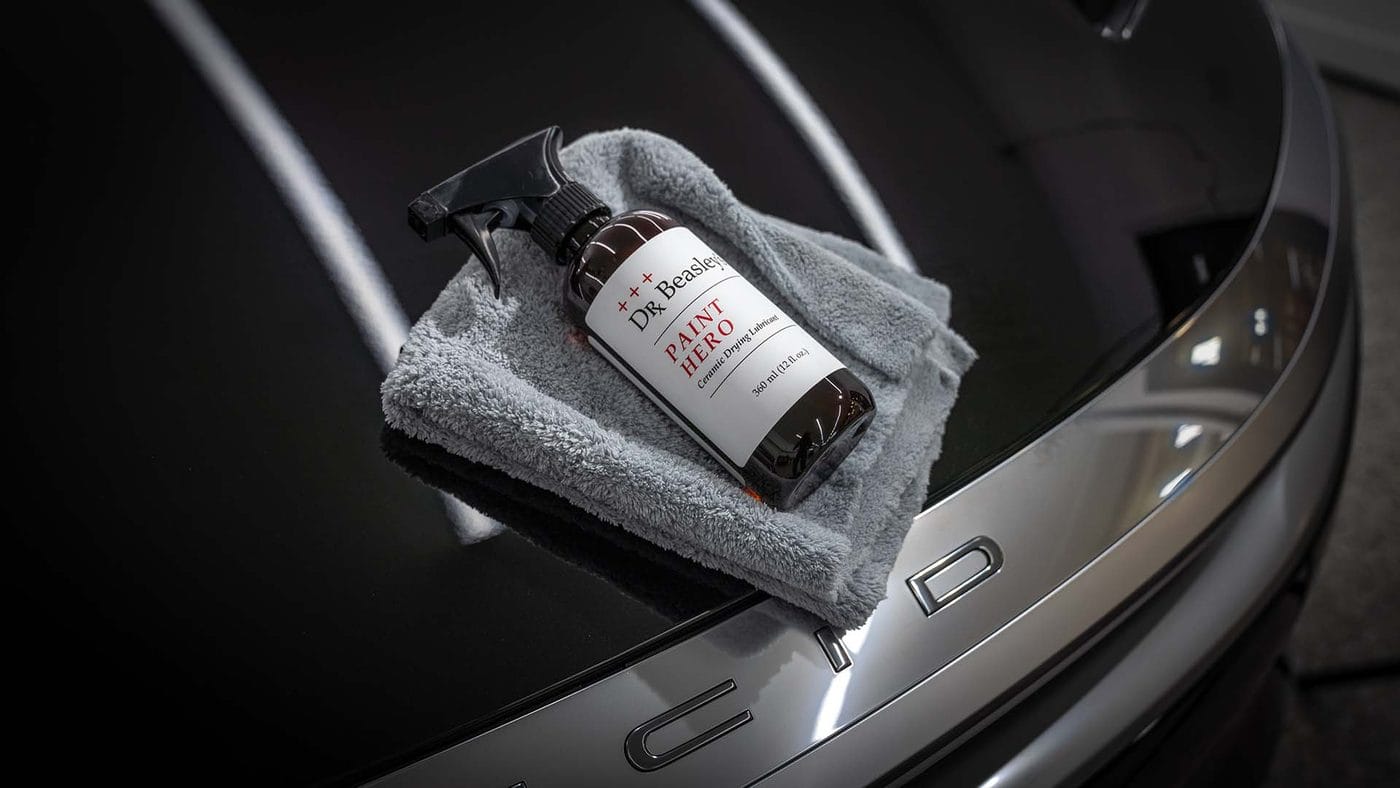
After using a leaf blower, you’re already dealing with much less water. Applying Paint Hero according to its directions gives you lubrication for the small amount of towel drying that’s left.
Now, I want to be clear about something. A drying lubricant doesn’t make a dirty towel safe. You still need clean microfiber, and you still need to avoid unnecessary pressure.
We’re simply making the contact we do need as gentle as possible.
Why a Compact Drying Towel Makes Sense
Most people associate drying towels with large pieces of microfiber designed to absorb water from an entire vehicle.
Those towels have their place. But after using a leaf blower, you don’t necessarily need something that large.
You need a towel that can absorb the remaining moisture efficiently and is easy to maneuver around the vehicle.
That’s where our new SafeDry Microfiber Towel comes in.
SafeDry Microfiber Towel is a compact 16″ × 16″ towel made with long-pile, twist-loop microfiber. At 1,100 GSM, it has the density and absorbency to pick up water without the bulk of a much larger drying towel.
The smaller size is useful when you’re working around mirrors, door handles, trim and other areas where you need more control.
It also has a soft, dual-sided construction with concealed in-seam edges and no exposed tag.
I like pairing it with Paint Hero because the two products serve different purposes. Paint Hero provides lubrication, and SafeDry towel absorbs the remaining water.
The blower has already done most of the work. Now we’re just finishing the job.
How I Would Dry a Car With a Leaf Blower
You don’t need a complicated process. Here’s how I would approach it.
- Wash and rinse the car thoroughly. You want to remove as much dirt and loose contamination as possible before drying.
- Start with the leaf blower. Work from the roof downward, pushing water toward the edges of the panels and off the vehicle.
- Blow out the trapped water. Spend extra time around mirrors, door handles, emblems, grilles and trim. These are the areas that tend to drip later.
- Check what’s left. Look for small droplets on horizontal panels and moisture around the edges of the vehicle.
- Use Paint Hero and SafeDry for the final wipe. Follow the lubricant’s directions and let the dense, highly absorbent microfiber towel absorb the remaining water with minimal pressure.
- Inspect the finish. Make sure there are no remaining droplets or water running out of the crevices.
Notice that we’re still using mechanical action at the end. We haven’t eliminated it completely.
We’ve simply changed how much of it we need.
Instead of using a towel to remove all the water, we’re letting air handle most of the job and reserving towel contact for the areas that need it.
Your Leaf Blower Has Another Job This Fall
If you’ve already got a leaf blower sitting in the garage, give it a try the next time you wash your car.
It’s particularly useful for getting water out of tight spaces and reducing how much towel drying you need to do. And if your paint is ceramic-coated or otherwise well protected, you’ll probably notice how easily the water moves off the surface.
Just don’t assume that touchless drying means you can never use a towel.
A clean SafeDry towel and Paint Hero are useful for removing the moisture that air leaves behind, without having to rub or press harder than necessary.
We’ve always believed in using the least aggressive process that gets the job done. Drying your car should follow that same principle.
Let the air do most of the work. Use a lubricated towel for what’s left. Preserve the car’s paint in the process.
Questions? Comments?
Email Us