


Shop for a ceramic coating and you’ll quickly run into a confusing set of choices: 1 year, 3 years, 5 years, 10 years, lifetime.
It’s easy to assume a 5-year coating must be five times better than a 1-year coating, or that “lifetime” means your paint will stay protected forever. It isn’t that simple.
The number of years is not a universal quality score. It usually describes an expected service life under certain conditions, or a warranty term. Check which one the seller means.
How long a coating performs depends on the product, how the vehicle is used and washed, what it is exposed to, and how it is maintained.
Ask: “Which coating makes sense for me and how long do I plan to keep my vehicle?”
What Changes as Coating Life Gets Longer?
| 1-YEAR | 3-YEAR | 5-YEAR | LONG-TERM / LIFETIME |
|---|---|---|---|
| Refresh more often Fits frequent refreshes Lower commitment | Fewer full applications* A middle ground Match your ownership | Longer ownership Less frequent recoating* Plan for ongoing care | Read the terms May require servicing Ask what lifetime covers |
More years does not automatically mean more gloss, hardness, water repellency or scratch resistance.
If the coating achieves its stated useful life. Actual performance depends on the product, use and care.
1. What Does the Year Rating Really Mean?
A coating doesn’t contain a timer that runs out after exactly one, three or five years. Think of a durability rating as a service-life estimate, not an expiration date.
Performance usually changes gradually. Washing, weather, road contamination, minerals, chemicals and abrasion can affect different properties at different rates. Water behavior may fade while some coating remains on the paint.
2. Does a Longer-Lasting Coating Protect Better?
Not necessarily. A longer-lasting coating may use a different resin system, form a more durable film or better withstand chemicals and environmental exposure. But the year number alone doesn’t establish those differences.
A 5-year coating is not automatically five times thicker, harder, more water-repellent or more scratch resistant than a 1-year coating. No duration label makes your paint scratch-proof.
Some products emphasize easy DIY application; others emphasize slickness, water behavior, chemical resistance or long-term durability. Some are built around professional installation and maintenance programs.
More years may mean fewer complete coating applications. That can be valuable, provided the product delivers that useful life in your conditions.
3. If My Coating Stops Beading, Is It Dead?
Not always. Road film, oils, minerals and environmental fallout can build up on top of a coating and change how water beads or sheets. Poor water behavior doesn’t automatically mean the coating underneath is gone.
Is My Coating Dead?
Water behavior has faded. Start with cleaning, then reassess.
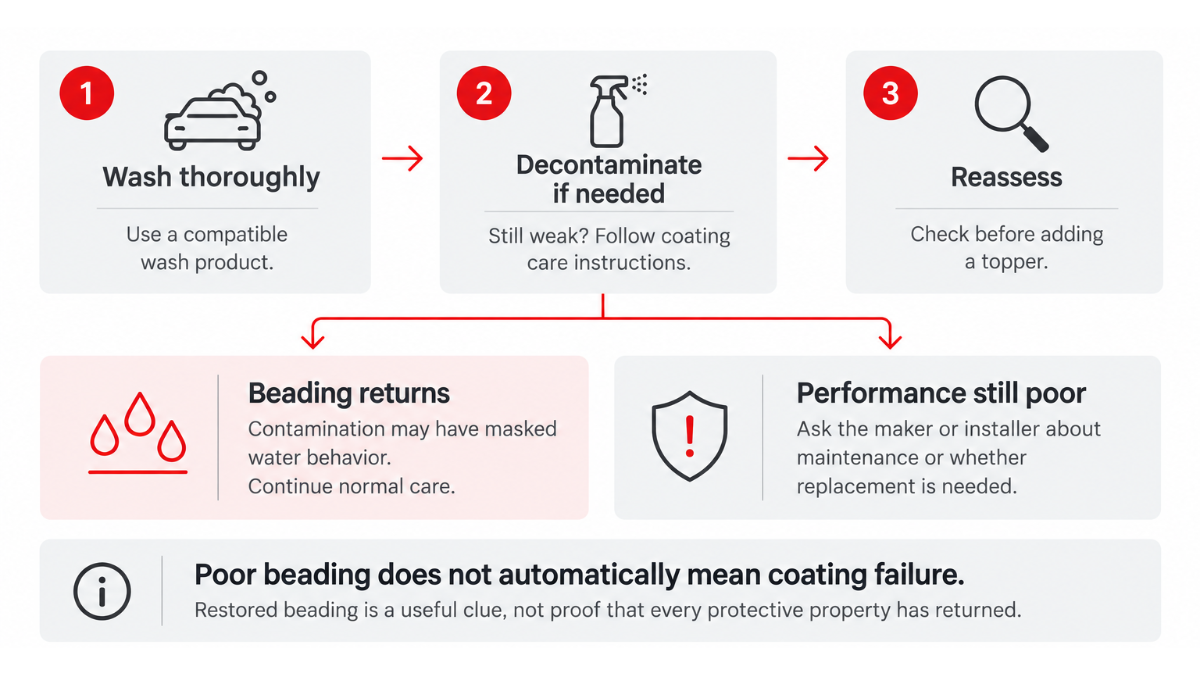
Use cleaning and decontamination methods approved for your coating and paint finish. Do not jump straight to clay or polishing: abrasive methods can alter or remove the coating. If normal water behavior returns after washing, additional decontamination may be unnecessary.
Beading is a clue, not a complete coating-health test. Great beading does not prove every protective property is intact, and poor beading does not prove there is no coating left.
4. Do Ceramic Coatings Really Need Maintenance?
Yes. A ceramic coating is exposed to everything the car encounters. It still needs to be kept clean, and some systems require more than routine washing.
Depending on the product and conditions, care can include periodic decontamination, removal of mineral deposits, inspections and sometimes a maintenance product or topper. Follow the coating maker’s instructions rather than assuming every system needs the same schedule.
Cleaning a Coating and Adding Protection Are Different Jobs
A decontamination wash removes material sitting on the coating and may reveal its original water behavior. A topper deposits material that can add protection or water repellency at the surface.
Both can be useful. But beading after a topper does not tell you how much performance the original coating still has. You may be seeing the original coating, the maintenance layer or the combination.
Evaluate a clean surface before adding a topper when you are trying to understand a change in performance.
5. What Does Lifetime Ceramic Coating Really Mean?
When you see “lifetime,” ask: lifetime of what? A claim about the coating film, an expected service life and a warranty are different promises.
The Coating Film
A manufacturer may be describing a film intended to remain bonded for a long time. Physical presence alone does not establish that every original performance benefit lasts equally long.
The Expected Service Life
The system may be designed to remain useful for many years with proper care. That still leaves questions about the vehicle’s exposure, maintenance and what counts as useful performance.
The Warranty
“Lifetime” may refer to the period of warranty coverage, subject to its written terms. Some programs require inspections or professional maintenance. Coverage and exclusions vary, so do not assume scratches, chips, water spots or every reapplication expense are covered.
Before paying extra, ask what maintenance is required, what it costs, what happens if you miss it, exactly what is covered and who pays for labor if service or reapplication is needed.
A lifetime system can be a reasonable choice. Its value depends on the actual product, service requirements and coverage—not the word “lifetime” by itself.
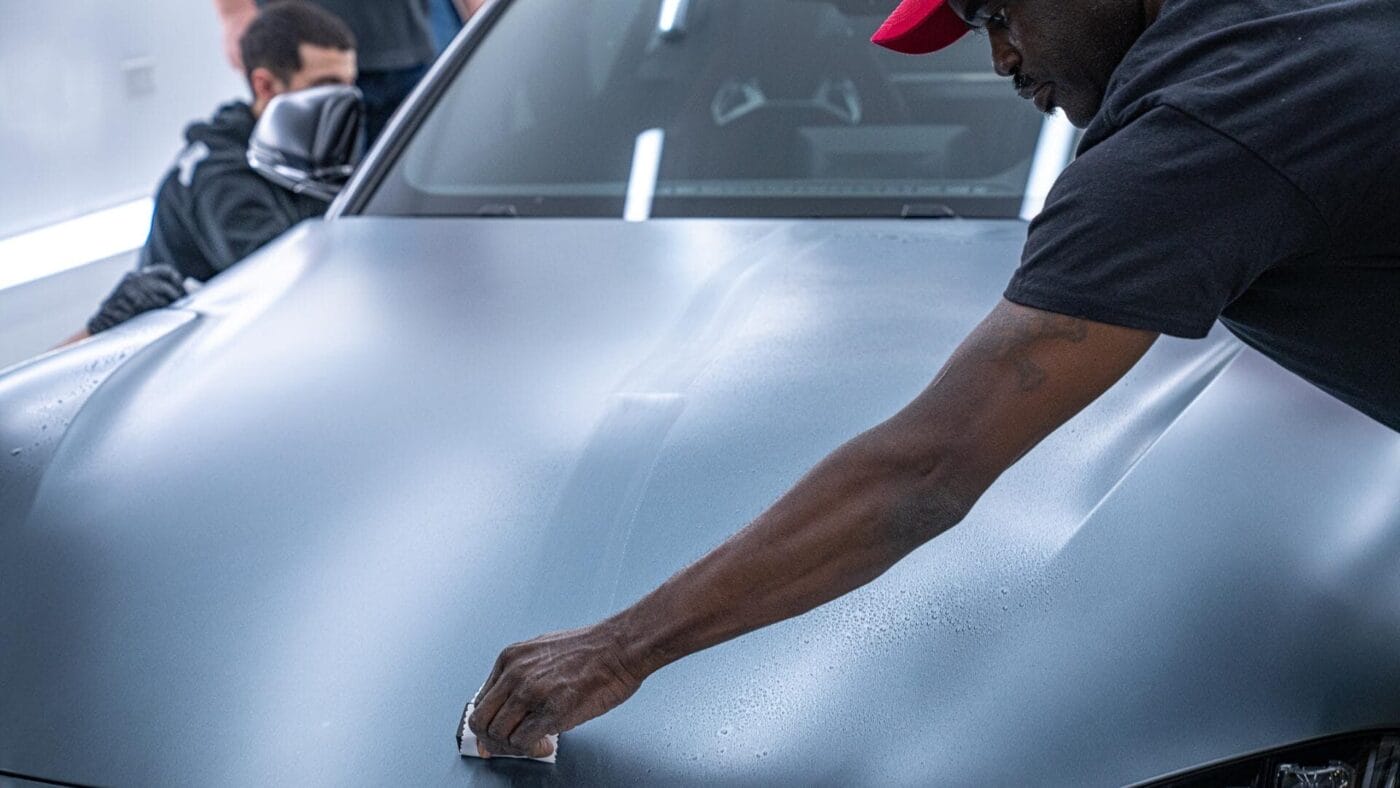
6. What If My Paint Is Matte or Satin?
The same questions about coating life, maintenance and ownership apply—but choose a coating formulated to preserve your paint’s existing matte or satin appearance.
Added gloss isn’t a benefit on a finish you want to keep matte. And unlike glossy paint, matte paint should not be polished to remove defects or prepare for a coating, because polishing can permanently change its sheen. Follow the coating manufacturer’s preparation instructions for your finish.
A longer-lasting matte coating may reduce how often you need to reapply protection, but it still needs regular care. If your matte finish comes from a vinyl wrap or paint protection film, choose a coating intended for that material.
7. Which Coating Duration Makes Sense for Me?
1-Year Coating
A shorter-term coating can fit someone who enjoys refreshing protection regularly, is trying coatings for the first time or expects to sell the vehicle soon. Check the application instructions: a shorter rating does not automatically mean easier installation.
3-Year Coating
This can be a middle ground if you want fewer full applications and expect to keep the car for roughly three years. Compare the actual product’s care requirements and application process with your needs.
5-Year Coating
A longer-lasting coating becomes more interesting when you plan to keep the vehicle for several years and want to reduce repeat preparation and application. Its value depends on achieving useful performance through that period.
Lifetime or Long-Term Coating
Consider these systems if you plan to keep the car for many years and accept the care or service program involved. Compare total cost and effort over your ownership period, including required maintenance.
The Cost Most People Forget
For DIY owners, the bottle is only part of the investment. A full application can involve washing, decontamination, inspection, polishing if needed, the specified surface preparation, application and curing. Your time matters.
Questions? Comments?
Email Us