


If Dr. Beasley’s already makes a wheel cleaner, why would you need a Wheel Detailer too?
Because not every dirty wheel needs the same type of cleaning — and the science behind why wheels get dirty explains why one product was never going to cover every stage.
Why Wheels Get Dirty So Fast (and Why Chemistry Matters)
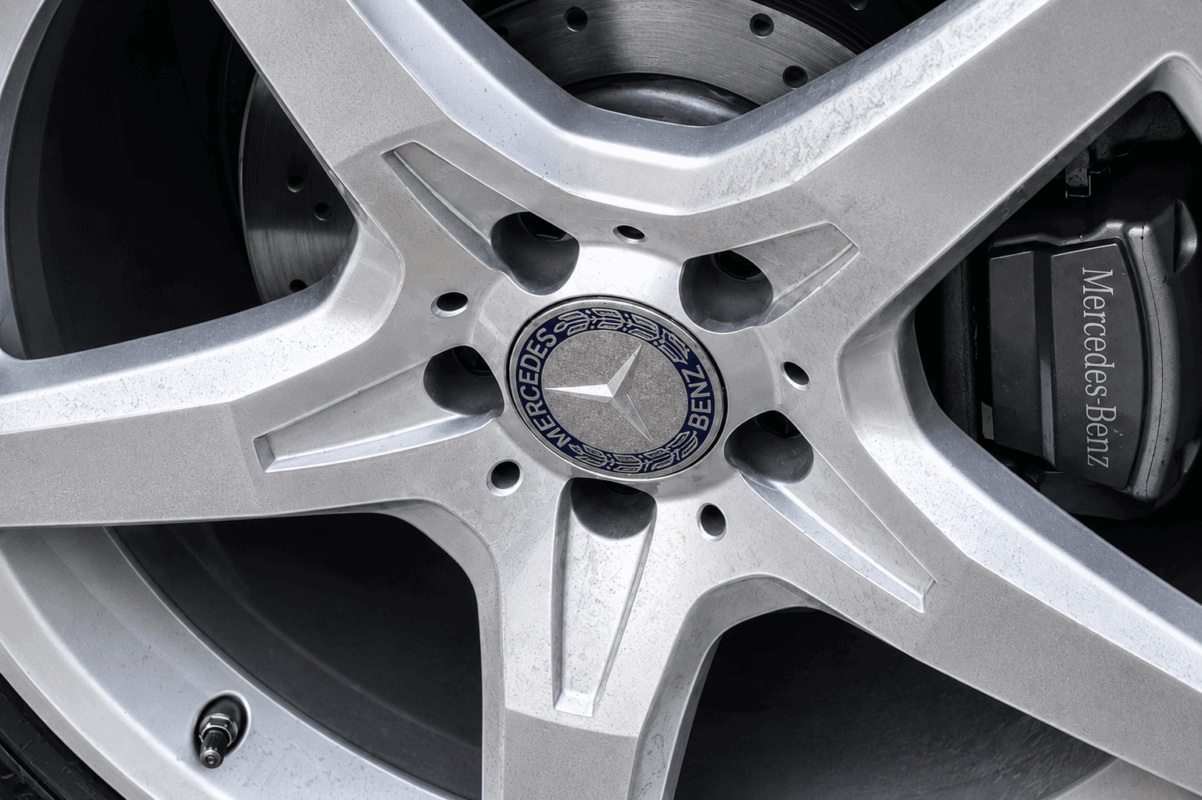
Wheels sit in one of the harshest environments on your vehicle. Every time you brake, friction between the pad and rotor generates heat exceeding 300°F at the contact surface. That heat breaks down the brake pad material and wears on the rotor, releasing a fine spray of metallic and organic particles — primarily iron, but also carbon, copper, and resin binders, depending on the pad compound.
The moment those hot, freshly-exposed iron particles hit the air, they begin to oxidize. That’s why brake dust so often carries a faint rust-colored tint: you’re watching iron rust in real time, on your wheel, within minutes of it landing there. Combine that with ambient road film, moisture and airborne grit, and a wheel can be visibly dull days before the rest of the car looks dirty at all.
But fresh oxidation and bonded, baked-on contamination are chemically different problems. That’s why we think about wheel care in three stages:
Maintain → Clean → Decontaminate
Stage 1: Light Contamination — Maintain with Wheel Detailer
A few drives after washing, you’ll typically see a light film of brake dust and road grime across the face and spokes. At this stage, the iron particles are sitting on the surface rather than chemically bonded to it — which means they respond to a much gentler chemistry than a full wheel wash requires.
That’s the job of Wheel Detailer (coming soon!): routine maintenance between washes that lifts fresh brake dust, dust, and minor water spotting before it has a chance to accumulate or oxidize further.
How to use it:
- Spray & Wipe — Apply to a cool wheel and wipe with a clean microfiber towel. Using a cool wheel matters chemically: heat accelerates evaporation, which can cause the product to flash-dry and streak before it finishes lifting contamination. This method creates a waterless wheel wash when you don’t have or don’t want to use running water.
- Spray & Rinse — Apply and rinse thoroughly for a faster maintenance wash without a full wheel-cleaning process.
The science behind the shine: Wheel Detailer is formulated with ceramic (silica-based) technology. As it’s applied, silicon-oxygen (Si–O–Si) compounds bond to the wheel surface and cross-link into a thin, hydrophobic layer — the same chemistry family behind long-term ceramic coatings, just applied in a lighter, faster-curing form. The result is visible the next time water hits the wheel: it beads and sheets off rather than spreading into a film.
This matters even more if your wheels already have a dedicated ceramic coating. A coating doesn’t stop brake dust from landing on the surface — it just makes that surface easier to clean. As contamination builds up, it can physically sit on top of the coated layer and block the water-beading behavior you’re used to seeing. Wiping that layer away with Wheel Detailer exposes the coating again, and the fresh spray-applied ceramic layer adds another round of hydrophobic protection on top.
Wheel Detailer isn’t a replacement for a hand-applied ceramic wheel coating — a dedicated coating is cured onto a fully prepped surface and built for months of durability, while Wheel Detailer’s ceramic layer is designed to be reapplied every time you maintain the wheel, trading long-term durability for speed and convenience.
Frequency: Wheel Detailer is designed for use as part of your between-wash wheel maintenance — it’s meant to be part of your routine, not saved for when the wheel already looks dirty. Some even use it after every drive!
What About Matte or Satin Wheels?
Matte and satin wheels follow the same maintenance logic, but they require finish-specific products that clean and protect without adding unwanted gloss or shine.
For light contamination, use Matte Wheel Detailer (coming soon!). For accumulated grime, use Matte Wheel Cleanser for stronger cleaning without stripping the finish’s flat appearance or causing an ashy look. For heavier contamination, use a matte-safe decontamination process.
The condition still determines the level of cleaning. The difference is that the chemistry must also respect the finish.
Stage 2: Accumulated Contamination — Clean with Premium Wheel Cleanser
Left unaddressed, light contamination compounds. Brake dust layers on top of brake dust, road grime and traffic film build across the face of the wheel, and dirt packs in around spokes, lug nuts, and barrels. At this point you’re no longer dealing with a five-minute maintenance step — you’re dealing with a full cleaning job, and the chemistry needs to work harder to break those bonds.
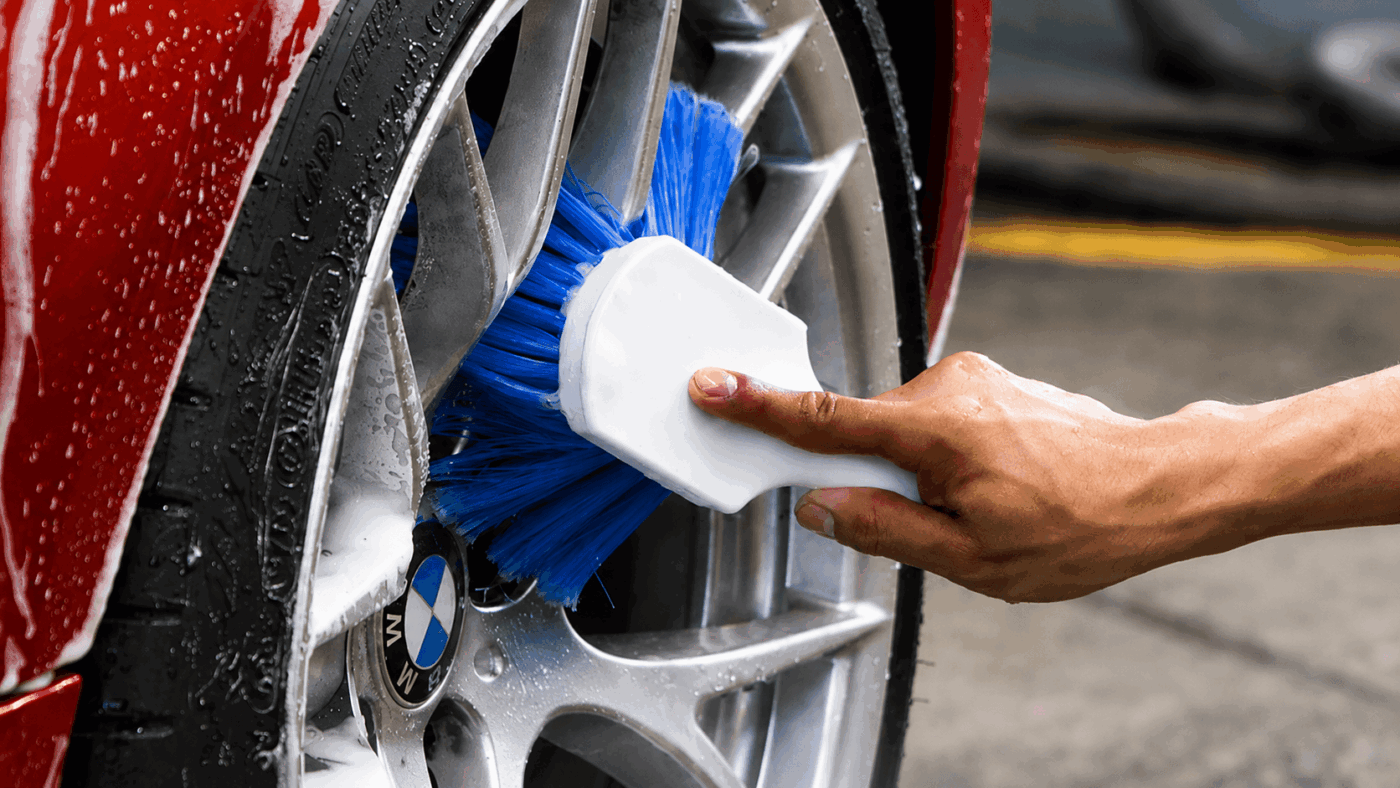
Premium Wheel Cleanser is built for that job: apply, let the pH-balanced formula break down the accumulated grime, agitate where needed with a wheel brush, and rinse thoroughly.
It’s worth being clear that Premium Wheel Cleanser isn’t just “a stronger Wheel Detailer.” Wheel Detailer is built to prevent contamination from reaching this stage. Premium Wheel Cleanser is built to reverse it once it’s already there — different jobs, different chemistry, different tools.
Compatibility note: A pH-balanced cleaner is specifically chosen to be tough on grime while remaining safe across finishes — clear-coated alloys, painted wheels, chrome, and polished aluminum — without etching or discoloring the surface the way harsh acidic “quick” wheel cleaners can.
Stage 3: Bonded Contamination — Decontaminate with Intensive Brake Dust Remover
There’s a stage beyond the ordinarily dirty. Recall that fresh brake dust is mostly iron, and iron left in contact with a surface for long enough — especially through repeated heat cycles — doesn’t just sit there. It oxidizes further and can mechanically embed itself into microscopic texture in clear coat, chrome, or bare metal, effectively welding itself in place. At that point, soap and agitation alone can’t remove it; conventional cleaning chemistry has nothing to react with.
This is where Intensive Brake Dust Remover comes in. Rather than relying purely on surfactants and agitation, decontamination chemistry is designed to target ferrous (iron-based) particles specifically, reacting with and loosening embedded metallic contamination so it can be safely rinsed away instead of scrubbed at.
This isn’t a step for every wash. It’s a periodic reset for wheels that have gone too long between cleanings, or that see heavy stop-and-go driving and aggressive pad compounds — track cars, tow vehicles, and daily commuters in dense traffic are common candidates.
⚠️ Before You Clean Your Wheels…
Wheels take the worst beating on your car — brake dust, road grime, and heat cycles all add up fast. Learn the right products and process with our wheel cleaning tips and techniques guide.
Go to Decision GuideChoose By Condition, Not by Strength
The instinct is to ask, “which product is strongest?” The better question is, “what stage is this contamination actually in?”
| Wheel Condition | What’s Happening | Product | Action |
|---|---|---|---|
| Light brake dust, fresh road film, minor water spots | Iron particles sitting on the surface, not yet bonded | Wheel Detailer (Coming soon on September 3!) | Maintain — clean + spray-applied ceramic protection |
| Accumulated brake dust, road grime, traffic film | Buildup across multiple drive cycles, needs full wash | Premium Wheel Cleanser | Clean — pH-balanced wheel wash |
| Heavy, embedded, or bonded brake dust | Ferrous particles mechanically bonded to the surface | Intensive Brake Dust Remover | Decontaminate — targeted iron-reactive treatment |
Have matte or satin wheels? Follow the same Maintain → Clean → Decontaminate process using products specifically designed for matte finishes.
Maintain. Clean. Decontaminate.
Good wheel care was never about reaching for the strongest chemistry available — it’s about matching the chemistry to what’s actually happening on the surface. Maintain light contamination before it has a chance to oxidize and accumulate. Clean thoroughly when a wheel has crossed into full grime. Decontaminate when bonded iron has gone past what conventional cleaning can touch.
Questions? Comments?
Email Us