



Summer Leaves Evidence Behind
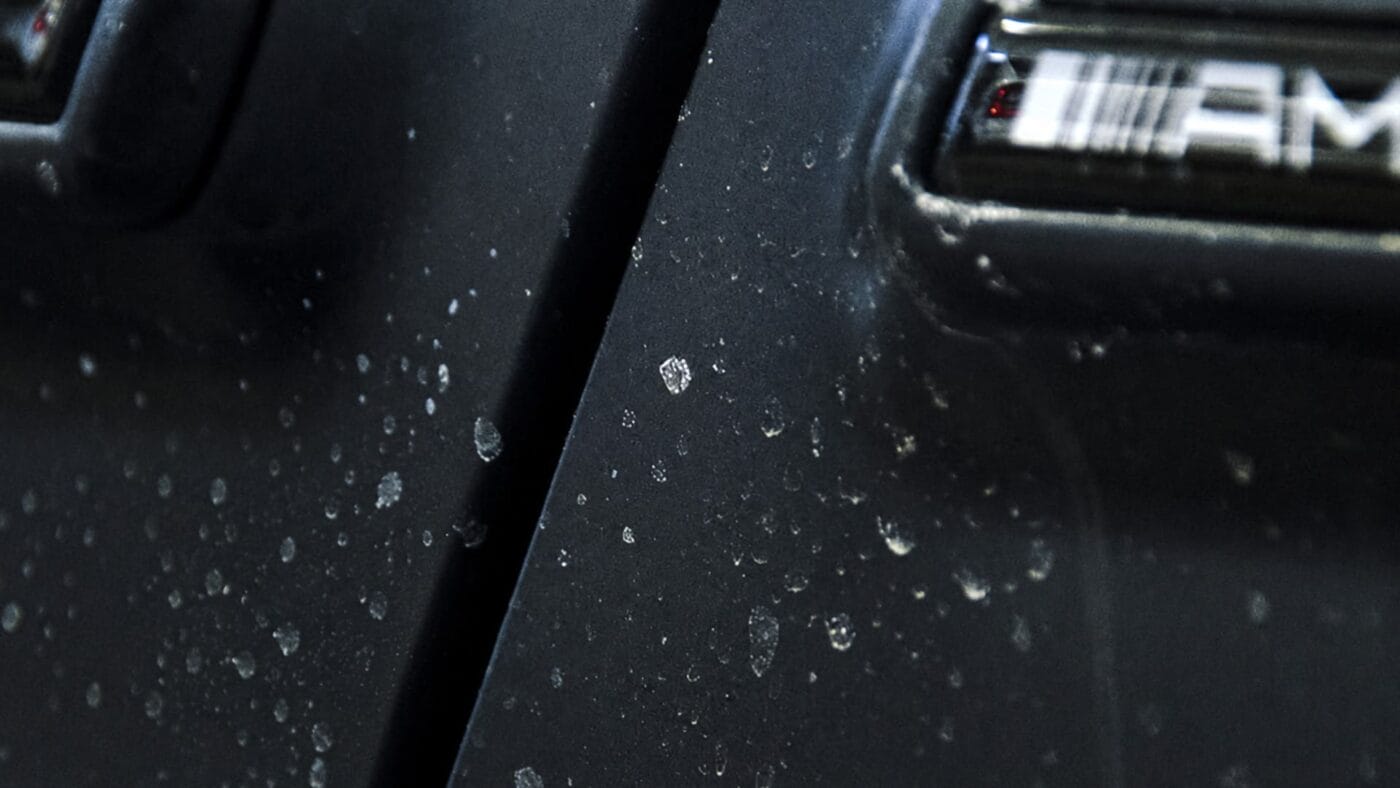
Every September, we see the same thing at the shop. A customer brings in a car they have washed faithfully all summer. It looks clean from ten feet away, but under proper lighting we see rings across the hood, cloudy patches on the roof and a roughness on the trunk lid that should not be there.
Water spots rarely come from one bad wash. They build over weeks and months, one wet-and-dry cycle at a time. Each cycle leaves more mineral contamination behind. Summer creates more of those cycles through frequent washing, rain, lawn sprinklers and outdoor storage. Heat and direct sunlight then accelerate the drying process and can bake those deposits onto the finish.
Dr. Beasley’s Water Spot Remover is an excellent first step because it chemically breaks down the mineral content sitting on the surface. If the spotting is recent, that may be enough. But we also need to be realistic: once water spots have spent time in summer heat, chemical removal alone often will not restore the paint completely.
Older water spots commonly involve three separate problems:
- Mineral deposits sitting on the surface
- Bonded contamination that leaves the paint feeling rough
- Etching left in the clear coat after the minerals are removed
That is why a complete post-summer correction often requires Water Spot Remover, clay and polishing. Each step solves a different part of the problem.
Why Water Spots Get Worse During Summer
Water evaporates, but minerals remain
Tap water, sprinkler water and even rainwater that has collected environmental contamination can carry dissolved minerals. When that water evaporates, the water leaves but the minerals remain on the vehicle.
As the droplet gets smaller, the remaining minerals become more concentrated. Once the water is gone, a visible ring or cloudy deposit is left behind on the paint, glass or trim.
Hot panels dry too quickly
On a cool vehicle in the shade, you usually have time to rinse and dry the surface properly. On a hood that has been sitting in direct summer sun, water may begin drying almost immediately.
That rapid evaporation leaves concentrated minerals on the surface before you can reach them with a drying towel. Repeated exposure can make those deposits increasingly difficult to remove.
Frequent washing creates more opportunities for spotting
Washing more often is generally good for a vehicle, but every wash creates another opportunity for rinse water to dry on the paint. Washing in direct sunlight or working too slowly around a hot vehicle makes the problem worse.
The answer is not to wash less. It is to wash on cool panels, work section by section and dry the vehicle before the water has a chance to evaporate.
Sprinklers and outdoor storage create repeated exposure
Sprinkler water is often rich in calcium, magnesium and other minerals. A vehicle parked within a sprinkler pattern may be hit several times a week. Each event leaves another layer of deposits behind.
Vehicles stored outside also collect dust, pollen and environmental fallout. When water lands on that contamination and then dries in the sun, the result can be more than a simple mineral ring. Over time, the surface may become rough and the clear coat may become etched.
Fresh Water Spots and Cooked-In Water Spots Are Different Problems
Before choosing a removal method, you need to determine how far the damage has progressed.
Fresh surface deposits
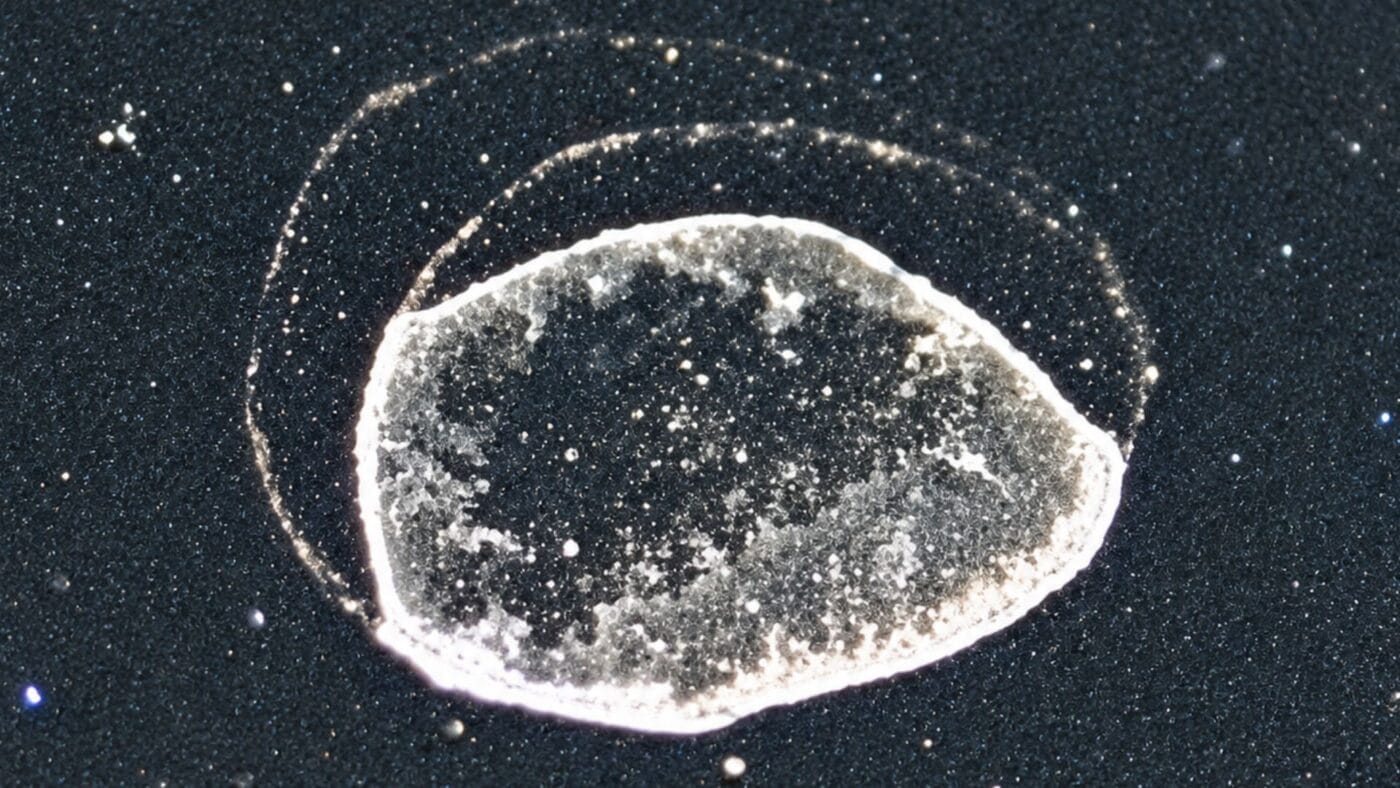
Fresh water spots usually appear as white or cloudy rings after washing. The paint may still feel smooth, and the deposits have not had much time to bond to the surface.
This is where Water Spot Remover is most likely to solve the problem by itself. The chemistry dissolves and loosens the mineral content so it can be safely removed without unnecessary abrasion.
Older, bonded deposits
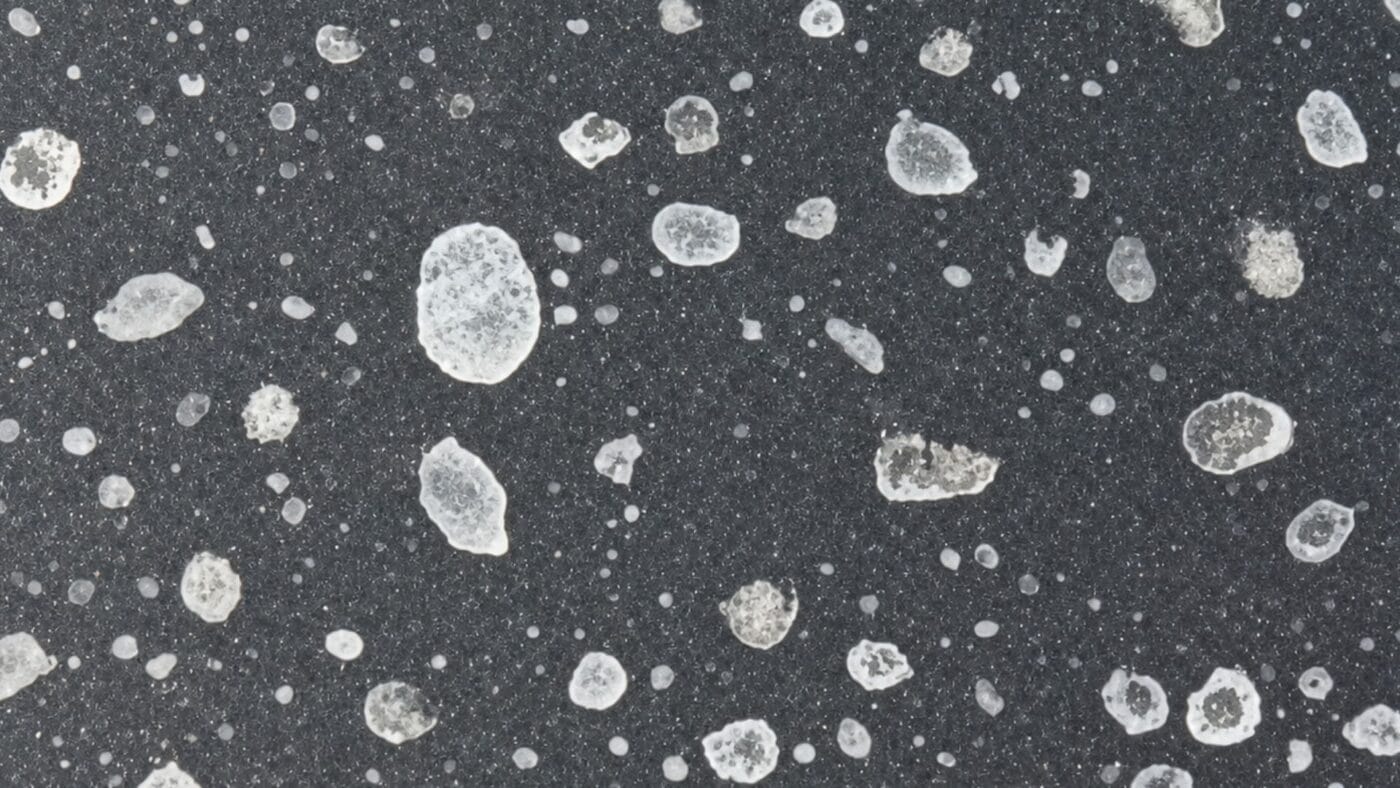
If water spots have been exposed to repeated heat and sunlight, the surface may feel rough even after washing and chemical treatment. This indicates that mineral residue and other environmental contamination have bonded more firmly to the paint.
At this stage, clay is often needed after Water Spot Remover. Clay removes bonded material sitting on the surface and prepares the paint for polishing.
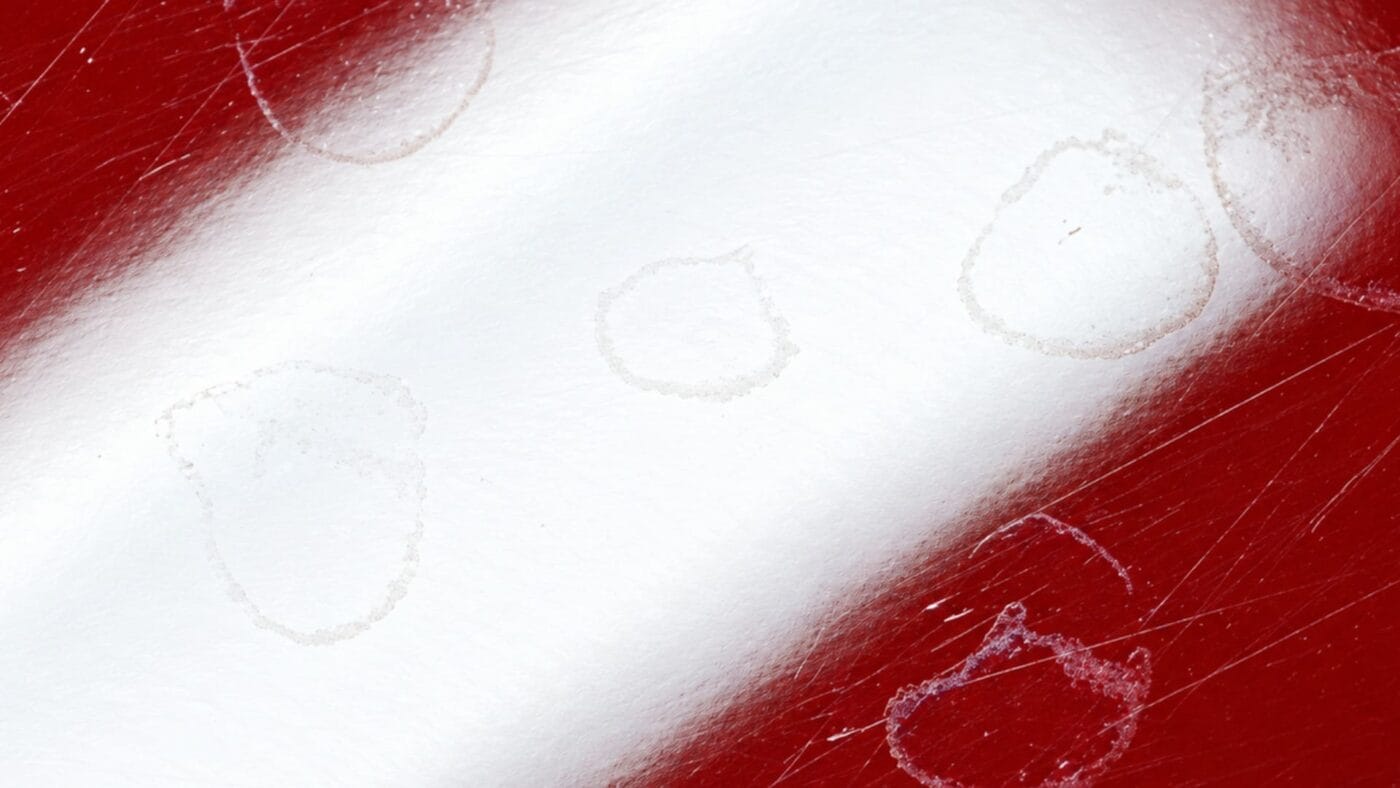
Etching in the clear coat
If the mineral deposit is gone but you can still see its ring, shadow or outline, you are no longer looking at a deposit. You are looking at damage left in the clear coat.
No chemical water spot remover can dissolve an etch mark out of clear coat. Clay will not remove it either. The affected paint must be polished to carefully level the surrounding clear coat and restore an even appearance.
How to Inspect Your Paint
You cannot choose the correct process until the vehicle is clean and properly inspected.
- Wash and completely dry the vehicle. Dirt can hide water spots and interfere with your inspection.
- Move the vehicle into the shade and allow the panels to cool. Never evaluate or treat water spots on hot paint.
- Inspect the paint under direct sunlight or a strong inspection light. Pay special attention to the hood, roof and trunk because horizontal panels hold water and receive the most sunlight.
- Feel the paint through a clean plastic sandwich bag. The thin plastic amplifies roughness and makes bonded contamination easier to detect.
- Perform a test section. Use Water Spot Remover on a small area, then inspect it again. What remains will tell you whether clay and polishing are required.
Do not be surprised if the same vehicle has all three conditions. One panel may have fresh mineral deposits while another has rough contamination and etched rings.
The Complete Post-Summer Water Spot Removal Process
Step 1: Wash and dry the vehicle
Remove all loose dirt before treating the water spots. Working on a dirty surface can drag grit across the paint and create scratches.
Use a proper automotive wash, rinse thoroughly and dry the vehicle completely. Keep the vehicle in the shade and make sure the panels are cool before moving to the next step.
Step 2: Remove the mineral deposits chemically
Start with Water Spot Remover. Even when clay and polishing will ultimately be necessary, the mineral deposits should be chemically removed first.
- Work on a cool surface in the shade
- Treat a small section at a time
- Allow the product to work according to the label directions
- Do not allow the product to dry on the surface
- Wipe away the loosened deposits and reinspect the paint
Fresh spotting may disappear at this stage. If it does, stop. There is no reason to clay or polish paint that is already clean, smooth and defect-free.
If the spotting is older, Water Spot Remover will still perform an important job. It removes the mineral content so you are not trying to abrade deposits while correcting the paint underneath.
Step 3: Clay the surface if it still feels rough
If the paint still feels rough after chemical treatment, use a Clay Bar with Clay Spray.
- Keep the paint and clay well lubricated
- Use light pressure
- Work in small sections
- Frequently inspect and knead the clay to expose a clean surface
- Stop when the paint feels smooth
Clay removes bonded contamination but does not repair etching. It can also create light marring on some softer finishes, which is another reason polishing is commonly the final step.
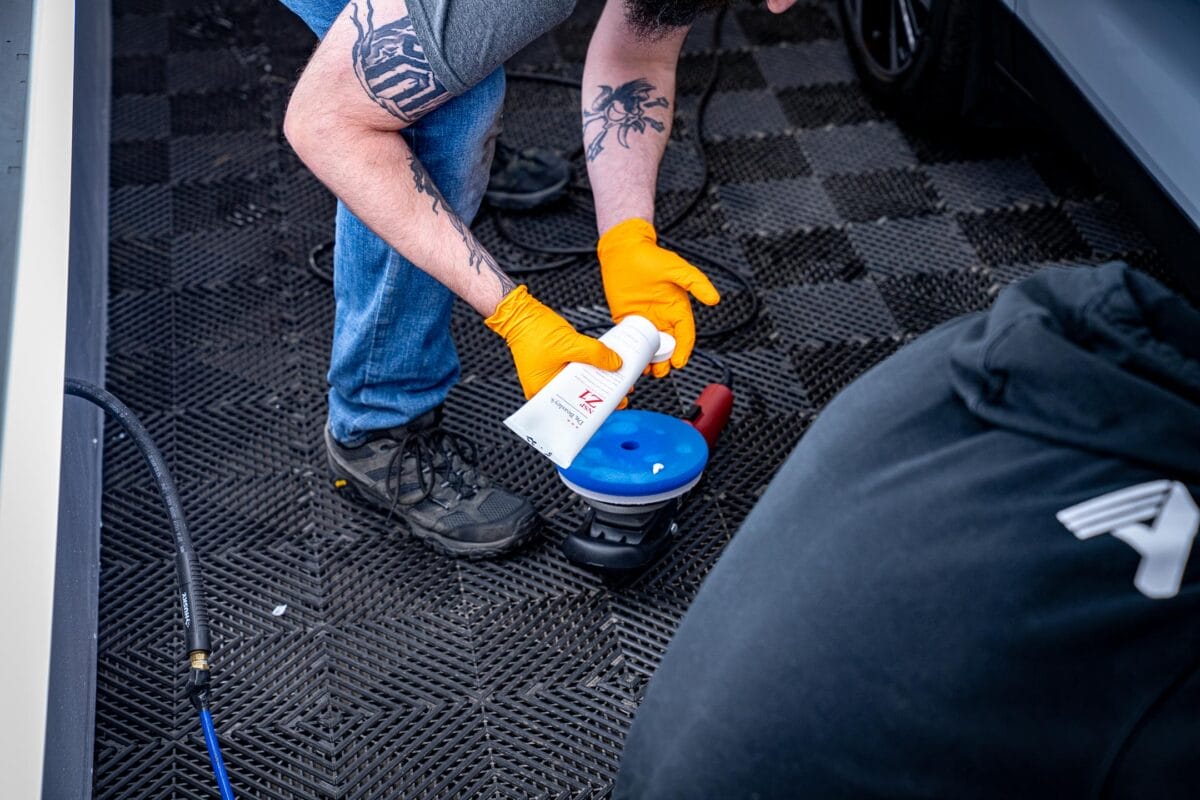
Step 4: Polish the remaining water spot etching
After the minerals and bonded contamination are gone, inspect the paint under good lighting. If rings, shadows or crater-like outlines remain, the clear coat is etched and must be polished.
For most post-summer etching, start with NSP Z1.
- Begin with a test spot
- Start with the least aggressive pad and technique likely to correct the defect
- Inspect the result under strong lighting
- If the test spot shows you need more cut, step up to a more aggressive Nano Surface Primer or pad
- Stop once the etching is removed or safely improved
Some etching goes deeper than it is safe to polish. In that case, improving it is the right call instead of removing more clear coat. The objective is not to polish as aggressively as possible. It is to remove the defect while preserving as much healthy clear coat as possible.
A more powerful machine is not automatically the answer. The polish, the precisely engineered abrasives inside it, the pad and the operator’s technique determine how effectively and safely the defect is corrected.
Common Water Spot Removal Mistakes
Expecting one product to fix every level of damage
Water Spot Remover can eliminate mineral deposits, but it cannot reverse physical damage already present in the clear coat. Older spots frequently require a complete process.
Polishing before chemically removing the minerals
Polishing should correct the etching, not serve as the first method for removing surface minerals. Dissolve the deposits first, then inspect what remains.
Working on hot paint or in direct sunlight
Heat causes products to dry too quickly and makes them harder to control. Work in the shade on cool panels.
Scrubbing aggressively with a towel
Hard rubbing does not dissolve mineral deposits or level etched clear coat evenly. It adds friction and can create more marring.
Using household acids
Uncontrolled household remedies may damage paint, trim, glass treatments or ceramic coatings. Use chemistry designed and tested for automotive surfaces.
Skipping the test spot
A test spot tells you which steps and products the vehicle actually needs. It also prevents you from repeating an ineffective or overly aggressive process across the entire car.
How to Prevent Water Spots Next Summer
Once the paint is corrected, a few habits can help prevent the same problem from returning:
- Wash early in the morning, later in the evening or in the shade
- Make sure the paint is cool before washing
- Work section by section
- Never allow soap or rinse water to dry on the vehicle
- Dry the vehicle immediately and thoroughly
- Keep vehicles away from lawn sprinkler patterns
- Remove fresh water spots before heat and time make them more difficult to correct
- Maintain an appropriate protective coating to make future deposits easier to remove
Protection cannot make a vehicle immune to mineral deposits. It gives you more time and makes those deposits easier to remove before they become a larger correction project.
Give Your Paint a Post-Summer Reset
Water spots exist at different levels, and the age of the spots matters.
- For fresh mineral deposits: Start with Water Spot Remover.
- For older deposits and rough contamination: Follow with a Clay Bar and Clay Spray.
- For rings and etching that remain: Correct the clear coat with NSP Z1.
After washing, Water Spot Remover is always the right first step because the mineral contamination should be removed before abrasion. But when water spots have spent weeks or months being heated by the summer sun, expect to clay and polish the paint to fully restore it.
The process is straightforward: remove the minerals, remove the bonded contamination, then polish the damage left behind. That is how we approach post-summer water spots in the shop, and it is the safest way to bring the paint back without removing more clear coat than necessary.
Already see etching? Shop NSP Z1
Questions? Comments?
Email Us