


Matte wheels need a different maintenance strategy than gloss wheels.
The reason is simple: if you scratch a gloss wheel, polishing may reduce or remove the defect. On a matte or satin finish, polishing changes the surface texture itself — instead of restoring the original appearance, it can create a smoother, glossier patch that stands out against the surrounding finish.
That makes prevention especially important. The goal when maintaining matte wheels between washes is to remove light contamination without dragging abrasive particles across the surface, and without changing the original matte appearance. (For the same logic applied to gloss and ceramic-coated wheels, see our companion piece on How to Clean Lightly Soiled Wheels Without a Hose).
Why Scratches Are Different on Matte Wheels
A matte finish gets its appearance from microscopic surface texture. Instead of reflecting light uniformly like a smooth gloss surface, that texture scatters light in many directions — that’s what creates the soft, low-gloss look.
Polishing works by mechanically leveling a surface. On gloss paint, that’s useful: removing microscopic defects restores a smoother, more reflective finish. On matte finishes, that same leveling action changes the texture responsible for the matte appearance in the first place. The result is a visibly glossier patch, not a repaired one.
That means a scratch on a matte wheel isn’t something you can assume will be polished away later. With matte finishes, prevention is the correction strategy.
Use Matte Wheel Detailer for Light Maintenance
A lightly dusty wheel can look harmless, but brake dust, road dust, and environmental contamination all contain fine particles that turn abrasive the moment they’re trapped between a dry towel and the wheel surface. Even if the resulting scratches are extremely fine, the problem is the same: correcting them mechanically means altering the sheen of the surrounding matte finish. Never use a dry microfiber towel to “dust off” a matte wheel — matte maintenance always requires enough liquid to wet, loosen, and separate contamination from the surface before wiping.
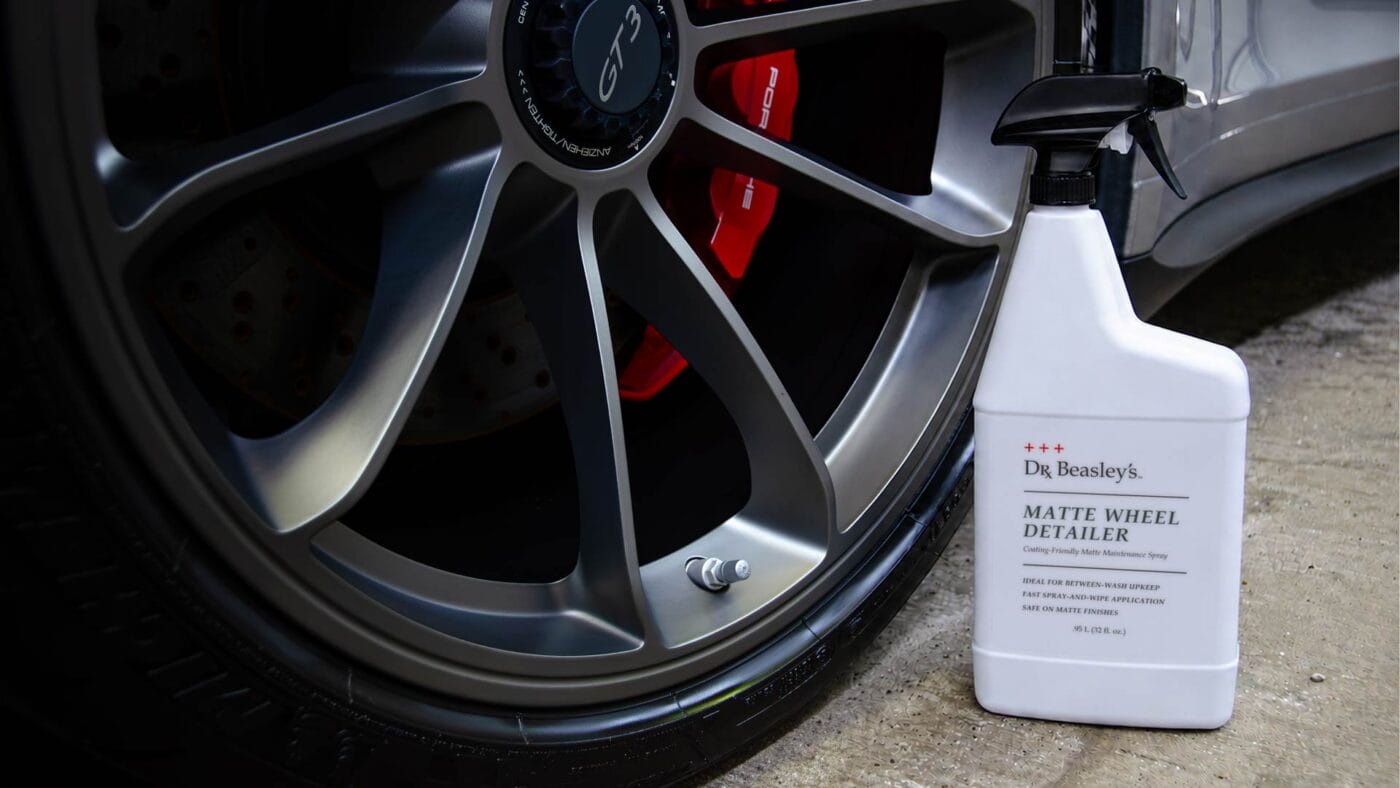
Not every matte wheel needs a complete wash every time it loses its freshly detailed look. Waterless maintenance is appropriate when contamination is still light — brake dust, environmental dust, fresh road film, minor water spotting, or light contamination from normal driving. At this stage, Matte Wheel Detailer gives you two options:
Spray & Wipe — Apply generously to a cool wheel and wipe gently with a clean microfiber towel. This lets you maintain a lightly soiled matte or satin wheel without setting up a hose, bucket, and wheel brushes.
Spray & Rinse — If water is available, spray onto the wheel and rinse thoroughly. Useful when the wheel is still lightly contaminated but you’d rather remove it without mechanically wiping the surface.
Both methods are built for maintenance, not for wheels that are already heavily dirty — and both depend on the same principle: use chemistry and lubrication to loosen the dirt instead of relying on mechanical abrasion. Matte Wheel Detailer should be applied generously enough to thoroughly wet the section you’re cleaning; that liquid loosens contamination and lubricates the space between the towel and the finish, reducing how much mechanical force the towel needs to apply. If you find yourself scrubbing hard enough that the towel is doing the actual cleaning, the wheel is too dirty for a waterless process.
Use Careful Wiping Technique
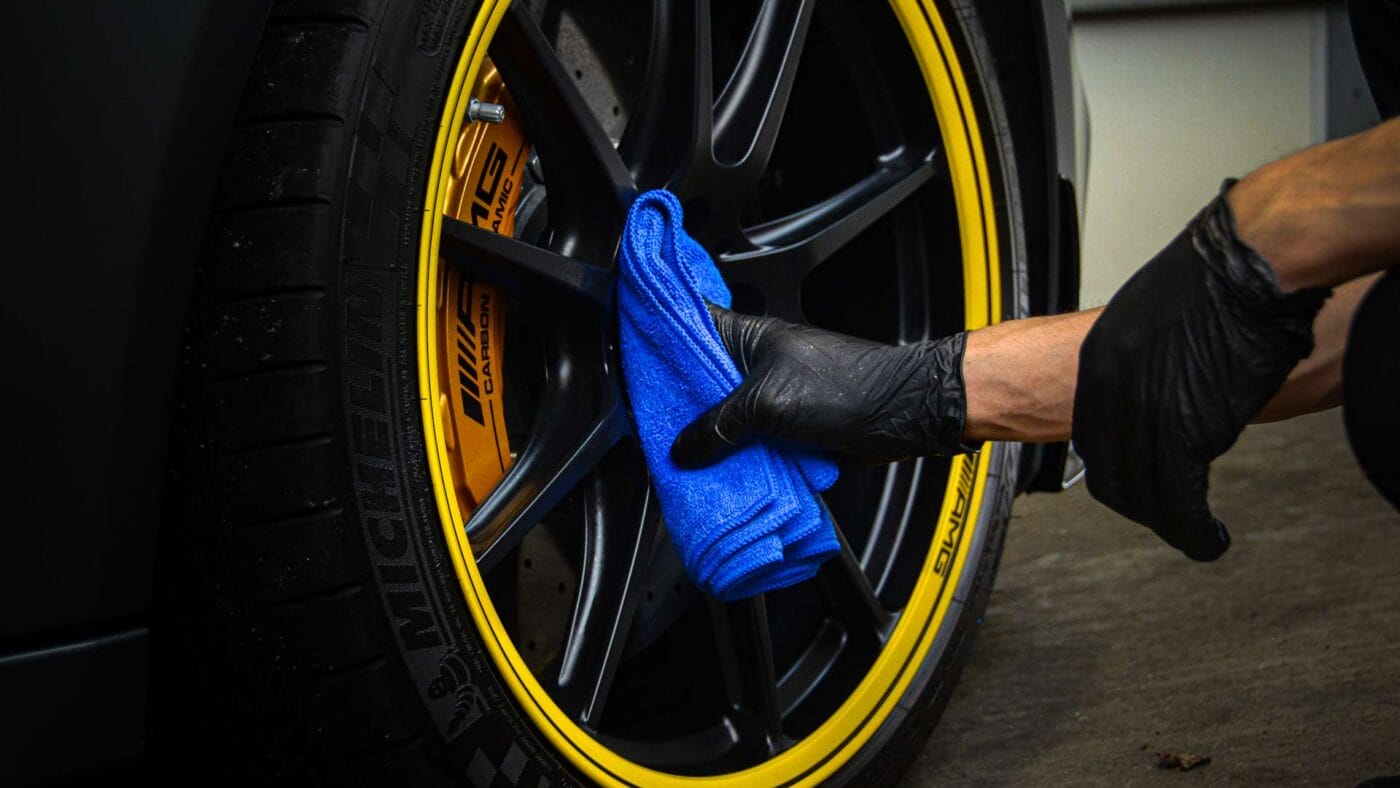
Once the surface is thoroughly wet, technique matters as much as the product. Work one small section at a time so the product stays wet and you keep control of the process, using light pressure — you’re making gentle passes to pick up contamination the product has already loosened, not scrubbing it off.
Your towel does the rest of the work, which means its condition matters too. Microfiber is effective because it traps contamination inside its fibers, but once a towel is contaminated, that dirt travels with it. Fold your towel into sections so you have several clean surfaces available, rotate to a fresh one after a few passes, and replace it outright if it becomes visibly soiled. The objective is to remove contamination from the wheel — not redistribute it across the finish.
Keep It Matte, Not Glossy
Safe maintenance isn’t only about preventing scratches — it’s also about preserving the appearance of the finish itself. Many conventional detailing products are formulated to increase gloss, deepen color, or leave behind a shiny surface. Those are desirable traits on gloss wheels and exactly what you don’t want on matte ones.
Matte Wheel Detailer is formulated specifically to maintain matte and satin finishes without adding unwanted gloss or shine. At the same time, its ceramic (silica-based) formula cross-links into a thin hydrophobic layer on the surface as it cleans — the same underlying chemistry as a standard ceramic coating, applied here in a matte-safe, faster-curing form. That creates an important distinction on matte wheels: you don’t judge the product’s performance by added shine. You see it when water hits the surface — the wheel stays matte, while water beads and sheds rapidly. That’s the goal: maintain the intended appearance while adding protection.
⚠️ Before You Clean Your Wheels…
Wheels take the worst beating on your car — brake dust, road grime, and heat cycles all add up fast. Learn the right products and process with our wheel cleaning tips and techniques guide.
Go to Decision GuideKnow When a Full Wash Is Safer
Before any waterless maintenance, look closely at the wheel. If you see sand or grit, mud, heavy brake dust, thick road grime, or contamination packed into spokes or recesses, don’t wipe it waterlessly — the larger and heavier the contamination, the greater the risk of trapping particles under the towel and dragging them across the finish. At that point, rinsing is the safer approach, and once grime has accumulated beyond light maintenance, it’s time for a complete wheel wash.
Matte Wheel Detailer is a maintenance product, not a replacement for Matte Wheel Cleanser once wheels have become substantially dirty:
- Light contamination → Matte Wheel Detailer, Spray & Wipe
- Light contamination, water available → Matte Wheel Detailer, Spray & Rinse
- Accumulated brake dust and road grime → Matte Wheel Cleanser + full wash
- Heavy or bonded contamination → Matte-safe intensive decontamination
The condition of the wheel should always determine the process. If you begin wiping and realize the wheel is dirtier than expected, stop — don’t compensate by pressing harder. Move to a process that gives you more water, more cleaning ability, and less risk of dragging contamination across the finish.
Matte Wheel Care Is Mostly About Prevention
Gloss finishes give you more options after something goes wrong. Matte finishes don’t — once the texture of a matte surface has been altered, restoring a perfectly uniform factory appearance can be difficult. That’s why good matte maintenance is deliberately conservative: remove contamination while it’s still light, use enough product, keep the surface lubricated, use clean microfiber, use light pressure, and know when it’s time to stop wiping and perform a full wash instead.
Matte wheels don’t need to become heavily dirty before you maintain them. They just need to be maintained without changing what makes them matte in the first place.
Clean it. Protect it. Keep it matte.
Questions? Comments?
Email Us