

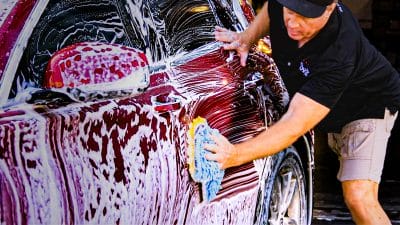


Early in the days of Simon’s Shine Shop, a detailer brought me a car that was almost finished. The interior looked immaculate except for one stain on the headliner that the team could not get out.
They had already tried the strongest cleaner in the shop, and it hadn’t touched it. Their next move was to reach for a solvent.
I understood the instinct. When you are trying to finish a car, there is a natural temptation to grab the strongest cleaner you have, because you assume it will get the job done faster. Stronger feels like more cleaning power, and more cleaning power feels like less time on the clock.
But cleaning does not always work that way.
I looked at the stain and had a pretty good idea what had happened. At some point, a soda had exploded inside the car and sprayed the headliner. So I asked whether they had tried the cleaner we used for food-based and organic contamination. They hadn’t. In their minds, that cleaner seemed milder than what they had already thrown at it, and milder felt like the wrong direction.
The problem was that they were thinking about cleaners as if they all sat on one scale: weak, stronger, strongest. But we didn’t need more strength. We needed the right chemistry.
We applied the cleaner made for that type of contamination, and the stain came out remarkably well. Matching the cleaner to the contamination didn’t just protect the headliner. It was also faster, which is the part that surprised the team most.
That lesson shows up every fall around back-to-school season, just at higher volume. There are juice boxes, coffee, snacks, sports gear, muddy shoes, backpacks, sweaty uniforms, and the occasional forgotten lunch that somehow stays hidden under a seat longer than anyone wants to admit. When one of those messes happens, the instinct is usually the same one that stumped my team on that headliner: grab a cleaner, and if it doesn’t work, grab something stronger.
That’s not really how cleaning chemistry works. A drink stain is not chemically the same as a milk spill. A lingering odor is not the same problem as visible dirt. And a stronger cleaner is not automatically better suited to remove any of them. The faster, safer approach is to identify the type of contamination first, then choose the cleaner built for it.
Three messes cover most of what shows up in a car this time of year, and each one calls for its own chemistry rather than a stronger version of the same bottle.
Cleaners Aren’t Just Weak, Medium and Strong
It’s easy to picture interior cleaners as if they sit on a ladder. A gentle cleaner at the bottom, something stronger above it, then a heavy-duty cleaner, and finally, if nothing else works, the strongest chemical you can safely use.
That model is too simple, because contamination itself isn’t one thing that just comes in different intensities. A sugary drink is chemically different from body oil. Body oil is different from road salt. Road salt is different from ink. And all of those are different from ordinary dust and grime. Cranking up the strength of the wrong chemistry doesn’t make it better at removing a particular contaminant. It just makes the wrong tool more aggressive.
Here are three messes that show up constantly this time of year, and why each one calls for its own chemistry.
1. Juice, Soda, Coffee and Other Colored Spills
A juice box spills on the seat. A coffee cup tips over. A soda gets knocked onto the carpet. At first these all look like ordinary liquid spills, but they can leave behind more than sticky residue.
Many beverages and foods contain combinations of sugars, dyes, plant-derived color compounds, and tannins. Once the water evaporates, some of that material stays attached to the fibers, which is why a stain can still be visible even after the area feels clean. You’ve removed the general dirt, but the discoloration remains.
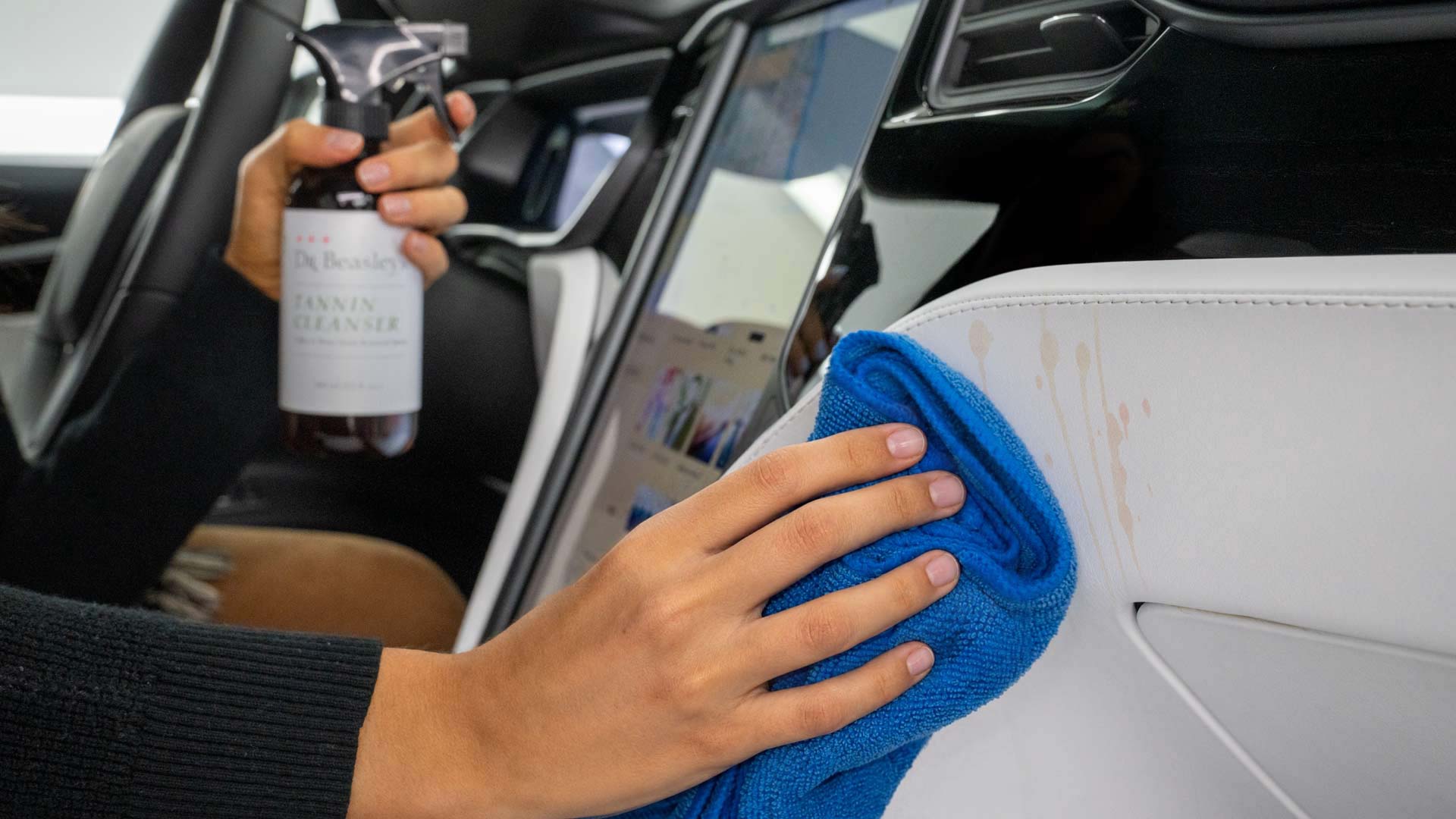
That’s where a specialty product like Tannin Cleanser makes sense. The goal isn’t to use something more aggressive. It’s to use chemistry suited to the specific staining that’s left behind. If a cleaner has lifted the ordinary soil but a brown, red, or colored stain is still there, scrubbing harder with the same product usually doesn’t solve it, and can add unnecessary wear to the material instead. The better question is what’s actually left behind, and what chemistry is built to address it. That’s the difference between cleaning by force and cleaning by diagnosis, which was exactly the difference on that headliner years ago.
2. Milk, Food and Other Organic Messes
A carton of milk leaks. Yogurt spills into the carpet. A piece of food falls between the seats and gets ground into the upholstery. These messes carry proteins, fats, carbohydrates, and other organic material, which makes them a different kind of problem than a colored drink stain.
A conventional surfactant cleaner can lift and suspend a lot of soil, but organic contamination often needs another mechanism entirely. That’s where an Enzymatic Cleanser comes in. Enzymes are biological catalysts that break larger organic molecules into smaller components that are much easier to remove. Proteases act on proteins, lipases act on fats, and amylases act on starches. The exact enzyme system varies by formulation, but the principle holds either way: sometimes the best way to clean organic contamination isn’t more chemical strength. It’s breaking it down so it lifts out with less effort.
That matters beyond the visible stain, too. Organic residue can sit below the surface, in carpet padding or deep in the fibers, even after the top looks clean. Left there, it can become a source of odor later, so with food and biological messes, the job isn’t finished just because the stain looks better. The contamination itself has to come out.
3. Lingering Odors After the Mess Is Gone
Odor is a different problem again. A soccer bag sits in the back seat all week. A wet towel gets forgotten after practice. A food spill gets cleaned, but the smell hangs around.
At that point, spraying more cleaner isn’t the answer. The first question is whether the odor source is still there, whether it’s food residue, moisture, or bacteria-supporting contamination. Covering a smell before removing its source usually gives you a day or two of relief and nothing more.
Once the source is gone and the surface is properly cleaned, a product like Neutra-Scent can address what’s left. The sequence matters: remove the source, clean the surface, then treat the lingering odor. If you can still see the mess, clean the contamination first. If the mess is gone but you can still smell it, you’re dealing with a different problem that needs a different step.
The Surface Matters Too
Contamination is only half the equation. A modern vehicle interior can carry carpet, fabric, leather, synthetic leather, vinyl, plastic, Alcantara or microsuede, headliner material, screens, and painted or gloss trim, often within a few feet of each other. The same spill can call for a different approach depending on where it lands.
That was true on the headliner in our shop. Carpet tolerates more moisture and agitation. A headliner needs restraint, because too much moisture can affect the adhesive holding the material in place, which is exactly why the wrong chemistry there is riskier than it looks. Leather brings its own concerns around coating, dye, and finish. Every cleaning decision really comes down to two questions: what’s the contamination, and what’s the surface. The right process has to account for both.
Stronger Is Not Always Faster
When people are in a hurry, they reach for the strongest cleaner because they assume it’ll get the job done faster. Sometimes it does. But when the chemistry doesn’t match the contamination, you often end up reapplying the product, scrubbing harder, burning through more towels, and trying a second or third cleaner afterward, all while raising the risk of discoloration or surface damage along the way. What looked like the faster option quietly becomes the slower one.
This is the same distinction that mattered on that headliner: cleaning strength and cleaning effectiveness are not the same thing. A highly aggressive cleaner that’s poorly matched to the contaminant can do less than a specialized cleaner that seems much milder on paper. The right tool for the job beats the strongest tool used as a blunt instrument, almost every time.
Clean Now, Then Protect for the Next Mess
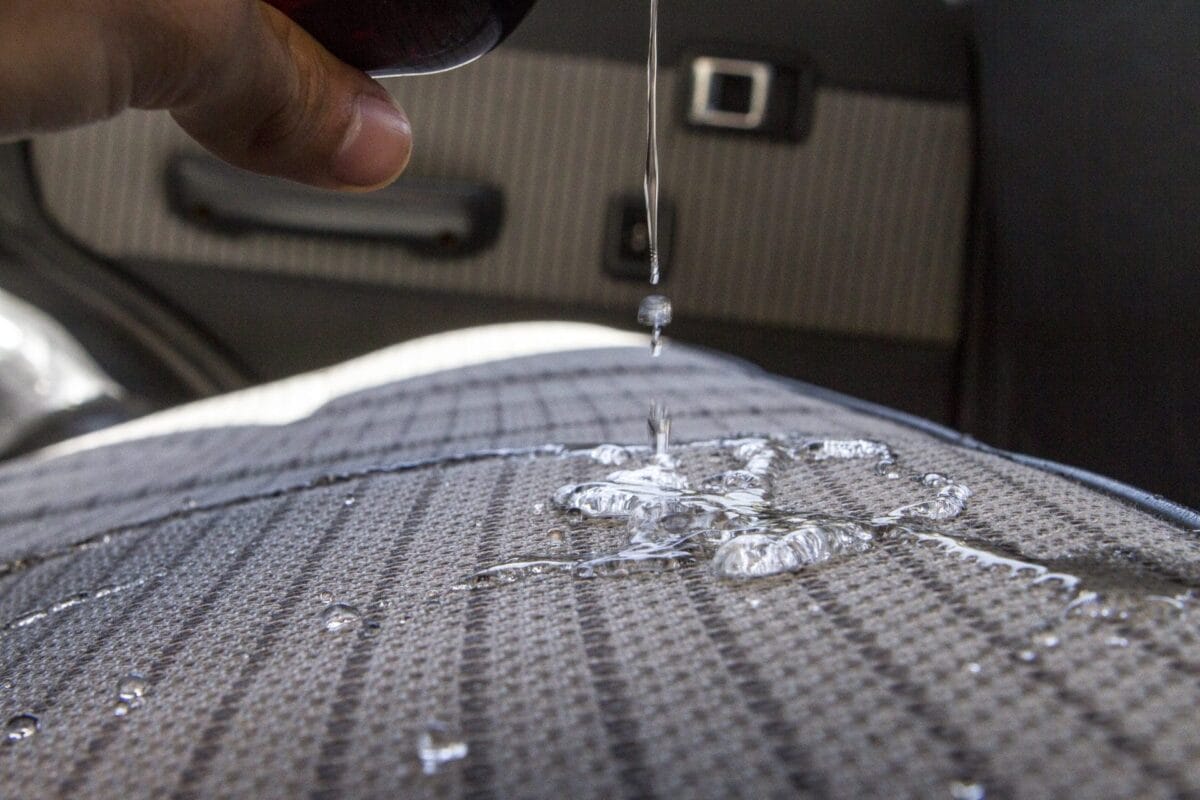
Once carpet and upholstery are properly cleaned and completely dry, that’s a good time to think ahead. Carpet & Upholstery Protection helps reduce how quickly liquids and soil penetrate the fibers, which buys you more time to respond before the next spill sets in.
Protection doesn’t make fabric stain-proof, and it doesn’t remove the need to clean. But during the school year, when snacks, sports gear, wet shoes, and daily use all pick up, that extra margin can make a real difference in how easily the next mess comes out.
A Simple Back-to-School Cleaning Guide
| Mess | What You’re Dealing With | Recommended Approach |
|---|---|---|
| Juice, coffee, tea, soda, colored food stains | Tannins, pigments, sugars, plant-derived staining | Tannin Cleanser |
| Milk, yogurt, food, organic residue | Proteins, fats, carbohydrates, biological material | Enzymatic Cleanser |
| Lingering smells after cleaning | Residual odor compounds | Neutra-Scent |
| Clean carpet and upholstery | Future spills and soil | Carpet & Upholstery Protection |
Different Mess. Different Chemistry.
The lesson from that stained headliner years ago still holds every fall when the same kinds of spills show up on a smaller, more frequent scale. Interior cleaning was never about finding one chemical strong enough to handle everything. It’s about understanding what you’re trying to remove and choosing chemistry suited to that specific problem.
A colored drink stain, an organic food spill, and a lingering odor can all happen in the same car in the same week, but they aren’t the same cleaning problem. Treating them differently usually means better results, less unnecessary scrubbing, less risk to the surface, and often less time spent cleaning overall.
Different mess. Different chemistry. Better result.
Questions? Comments?
Email Us