Category Archives: Featured

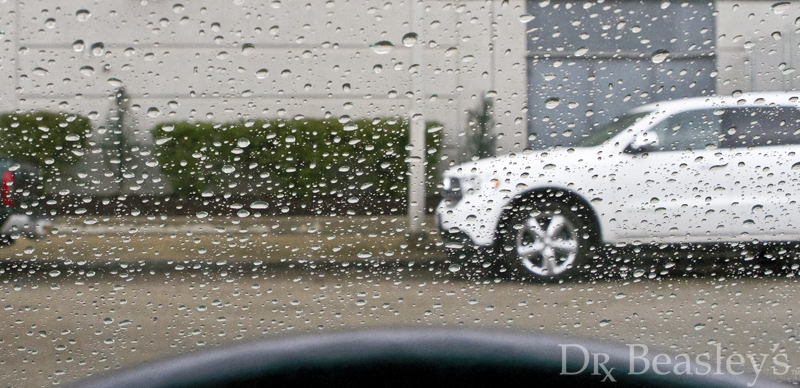
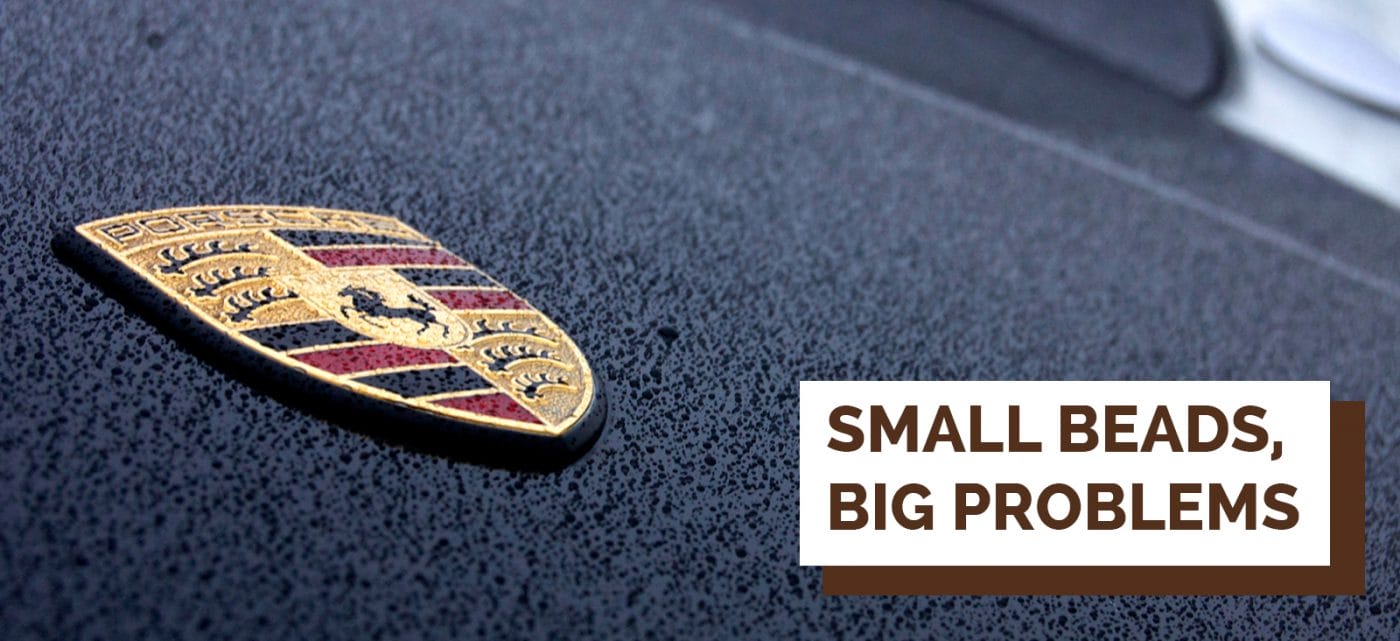
Water beading on car

Why water beads might be harming your finish

Beads are bad? What?  We know what you’re thinking: Water beading on hydrophobic (a.k.a. water repellent) coatings is amazing! It shows your paint is protected, makes it easier to dry, and it promotes self-cleaning. And above all else, it looks COOL.  Look, we get it. We’ve definitely sung beading’s praises before. We post beautiful beading shots to our […]

Whether your coating creates harmful, static beads is a big part of how to choose a ceramic coating.

How Water Beads Can Kill Your Coating

We’ve said it before and we’ll say it again: Beads Are Bad. Static water beads, that is. We know, they look cool, and they help you know how to choose a ceramic coating. But if beads aren’t rolling off your car, your coating will end up looking pretty terrible, which means you’ll need to have […]

Cleaning a Glass Serum Pro coating to restore hydrophobicity

Ceramic Coating Not Beading? You May Just Need To Clean It

A ceramic coating not beading is frustrating, to say the least. But it doesn’t always mean you need a re-application.  Years ago we put Dr. Beasley’s Glass Serum Pro on a beater Land Cruiser’s windshield, and the coating was never properly maintained after. Unsurprisingly, we saw zero hydrophobicity when we blasted it with water. We called it a […]

Beading, Sheeting, Water Spots

Beading vs Sheeting: Pros and Cons

Having good beads on a car after a rain storm may look great, but what about it’s equally talented and misunderstood younger brother? Sheeting. Beading and sheeting both have their merits and downsides. However, what’s best for your car and what do you prefer? Let’s outline a few of the pros and cons of each: […]

Header image reading “Beading Doesn’t Mean Protection,” illustrating water beading on a car surface while emphasizing that hydrophobic appearance does not necessarily indicate true coating durability or paint protection performance

Water Beads Can’t Tell You If Your Paint Is Protected

It’s probably the most common myth in automotive paint protection: If water’s beading on your paint, your coating/sealant/wax is still protecting the finish from scratching, etching, staining, UV damage, etc. But this couldn’t be farther from the truth. In reality, water beading isn’t dependent on paint protection. It can come and go without the underlying […]

sling-free tire conditioner

Tire Conditioner vs. Matte Tire Conditioner: Which One?

Tire Conditioner has been a Dr. Beasley’s best seller since its debut. It restores faded tires while simultaneously protecting them from future UV damage. It’s easy to use, doesn’t sling, and it’s a fun bright blue color. Concentrated & Thick We improved Tire Conditioner’s formula to make it thicker and more concentrated, and then we […]

Car Wash, Waterless, How to

Waterless Car Wash Techniques – What to Look For?

There’s been a severe lack of rainfall and water shortages going on in California and other parts of the west coast. It’s become very apparent how much that’s impacting our industry. People are getting fined for washing their cars in their driveways and are urged to not wash their cars at all, even in recycled […]

A Corvette showcasing Nano-Resin Pro application and professional wet sanding and paint correction work with a high-gloss protective finish

Dr. Beasley’s Authorized Detailer: Mark Cox of Birmingham Auto Detailing & Wet Sanding Studio

The professionals we accept into the Dr. Beasley’s Authorized Detailer Program are some of the most talented and hardest-working automotive appearance experts around. We’re proud to have them represent us and our ceramic coating systems, so we want to take the time to highlight each Authorized Detailer, sharing their story and what makes their business unique. To start, we’ll […]

Sanding and polishing 1970 Plymouth Superbird rear window with NSP GL by Mike Phillips

1970 Plymouth Superbird — Part 2 — Machine Sanding & Polishing Rare Back Window with NSP GL by Mike Phillips

WARNING: Machine sanding, especially when dealing with glass, is an aggressive process and should only be undertaken by an experienced individual, whether enthusiast or professional. Proceed with caution if attempting. In Part 1, 1970 Plymouth Superbird – Paint Correction with Dr. Beasley’s, I shared the process I used to do all the paint correction and […]